About Avi Perera
AI Governance Researcher · International Law Consultant · Technology Founder
Avi Perera is a British researcher, consultant, and founder working at the intersection of artificial intelligence, international law, and global security governance. Educated at the University of Cambridge and the University of Buckingham, he specialises in the legal, ethical, and strategic dimensions of autonomous AI systems — with a particular focus on lethal autonomous weapons systems (LAWS), meaningful human control, and the governance of AI-enabled force under international humanitarian law.
He has conducted research at the United Nations, contributes to international disarmament advocacy through the Campaign to Stop Killer Robots, and founded SovDash, an AI-powered governance intelligence platform. His work serves a single purpose: translating the architecture of autonomous systems into the language of international law and policy, before the technology outpaces the frameworks designed to govern it.
At a Glance
Current Affiliations
University of Cambridge · UNIDIR – UN Institute for Disarmament Research · Campaign to Stop Killer Robots · UN Office for Disarmament Affairs (UNODA) · UN Regional Centre for Peace and Disarmament in Asia and the Pacific (UNRCPD)
Education
International Relations · University of Cambridge · First Class
Law (LLB) · University of Buckingham · High Achiever Award
Data Science and AI · Northumbria University
Applied Mathematics for Machine Learning · Imperial College London
Mathematics · Open University & University of Essex
Google Scholarship Recipient
Research Profiles
ORCID: 0009-0005-1903-6868 · ResearchGate · Google Scholar · Academia.edu
Connect
LinkedIn · Bluesky · ORCID · Newsletter
Areas of Expertise
Lethal Autonomous Weapons Systems (LAWS)
Avi is a specialist in the international legal and policy dimensions of autonomous weapons — systems capable of selecting and engaging targets without meaningful human oversight. His research examines the requirements of meaningful human control (MHC) under international humanitarian law (IHL), the accountability gaps created by machine decision-making in lethal force contexts, and the international policy architecture needed to prevent the normalisation of autonomous lethality before binding treaty frameworks can be established. His article The Custom Gap, published in the SKR Youth Network Report with the Campaign to Stop Killer Robots, introduced the novel concept of an Anticipatory Objection Registry to address permissive customary international law formation around AI-enabled targeting — an original contribution to the scholarly literature on LAWS and customary IHL.
AI Governance and International Policy
Avi analyses how artificial intelligence is regulated and governed at the international level, covering treaty frameworks, soft law instruments, emerging customary norms, national AI strategies, and the evolving relationship between AI regulation and international security law. His dual technical and legal perspective — grounded in machine learning on one side and international law on the other — allows him to engage questions that most policy researchers approach from only one direction. His work on the AI Policy Tracker, AI Policy Timeline, and AI Weapons Database reflects this commitment to making governance data publicly accessible and actionable.
Algorithmic Accountability and Democratic Resilience
Prior to specialising in autonomous weapons, Avi conducted foundational research into the role of recommendation algorithms and engagement-optimised platforms in reshaping radicalisation pathways and destabilising democratic institutions. This work was recognised by The Royal Society, which invited him to assist and advise researchers involved in its publication on the online information environment. He went on to publish a mixed-methods research report on Social Media effects on Critical Thinking and Academic Achievement (2023), looking into the societal implications of AI technologies. His working paper Scholarly Analysis: The Algorithmic Reshaping of Radicalisation Pathways and its Democratic Implications (2025) represents the culmination of this research strand.
AI Regulation and Compliance Strategy
Through his consulting practice and the SovDash platform, Avi advises organisations on navigating the rapidly expanding and fragmented matrix of global AI regulation — from the EU AI Act and UNESCO Recommendations on AI Ethics to UN-level governance mandates and emerging customary international norms. His approach prioritises pre-emptive structural accountability over post-hoc compliance, on the principle that genuine governance cannot be retrofitted into systems after deployment.
→ View consulting services · Read Avi’s stance on AI
Academic Background
Avi Perera’s academic formation is deliberately multidisciplinary, built across four institutions and three distinct disciplines — a structure that reflects his conviction that the most consequential questions about AI cannot be answered from within any single field.
He began university-level study in Mathematics at the Open University and the University of Essex, consistently achieving scores of 90–100% across all modules. This quantitative foundation led him to specialise in Applied Mathematics for Machine Learning at Imperial College London, giving him direct technical grounding in the architectures underlying modern AI systems — from neural network mathematics to the probabilistic structures underpinning machine decision-making. He also received a Google scholarship supporting his work and learning, while simultaneously pursuing further studies at Northumbria University in Data Science and AI.
He subsequently studied Law at the University of Buckingham, where his academic performance was recognised through the institution’s High Achiever Award — granted for the highest grade average across the entire cohort in every discipline. Multiple examination results were recorded as the highest ever achieved for those modules since the course’s inception. This legal formation gave him the analytical rigour, doctrinal precision, and writing discipline to operate at the intersection of AI systems and formal legal frameworks.
Avi then joined the University of Cambridge, where he read International Relations, achieving a First Class result. His personal tutor was a practising international lawyer with over fifteen years of experience at the United Nations — a relationship that shaped the direction and ambition of his research. Every assignment was oriented toward the implications of artificial intelligence in international affairs, allowing him to synthesise his technical and legal training into a coherent and original research programme.
This combination — technical depth in machine learning, rigorous legal training in international law, and Cambridge-level expertise in international relations — defines the distinctive analytical contribution his work makes to the AI governance field.
Research and Publications
Avi’s research is indexed on ORCID (0009-0005-1903-6868), ResearchGate, Google Scholar, and Academia.edu.
The Custom Gap — SKR Youth Network Report, Campaign to Stop Killer Robots. Introduces the concept of an Anticipatory Objection Registry to address the formation of permissive customary international law around AI-enabled targeting — an original contribution to the LAWS governance literature.
Weapons that think must not decide: Enforcing meaningful human control in warfare — Conference poster, UNIDIR Global Conference on AI, Security and Ethics, Geneva (March 2025). Co-authored with Heramb Podar, Adrian Klaits, Rujuta Karekar, and Patience Chepchirchir. DOI: 10.13140/RG.2.2.10288.67842 · View on ResearchGate
Scholarly Analysis: The Algorithmic Reshaping of Radicalisation Pathways and its Democratic Implications — Working paper (June 2025). DOI: 10.13140/RG.2.2.15350.92489
Why Do States Comply With International Agreements and Treaties (GDPR Case Study) — Preprint (January 2025). DOI: 10.13140/RG.2.2.12596.31360
Research Report on Social Media Impacts on Critical Thinking and Academic Achievements — Empirical research report (June 2023). DOI: 10.13140/RG.2.2.21829.51684 · View on ResearchGate
→ Full research archive and publications
United Nations and International Work
Avi Perera has engaged with the United Nations system across multiple bodies, conferences, and research collaborations.
UNIDIR — UN Institute for Disarmament Research
Avi conducted research at the inaugural Global Conference on AI, Security and Ethics, convened by UNIDIR in Geneva — the first major UN-level conference dedicated to the governance of AI in security contexts. The conference brought together heads of state, senior military officials, diplomats, and civil society leaders. His research submission was commended by the panel for its quality. He was subsequently invited to participate in the second UNIDIR Global Conference on AI, Security and Ethics — one of few early-career researchers to receive successive invitations to this forum.
UNODA — UN Office for Disarmament Affairs
Avi has collaborated with UNODA on research addressing the intersection of artificial intelligence and the military domain — one of the most politically sensitive and rapidly evolving areas of international security policy.
UNRCPD — UN Regional Centre for Peace and Disarmament in Asia and the Pacific
Avi has extended his disarmament research into the Asia-Pacific dimension through collaboration with UNRCPD, reflecting both the growing strategic significance of AI-enabled weapons systems in the region and his direct empirical experience living and conducting research across Southeast and East Asia.
SovDash
SovDash is an AI-powered governance intelligence platform founded by Avi Perera. It addresses a fundamental structural problem in AI governance: the scale, pace, and geographic dispersion of AI regulatory change — spanning the EU AI Act, national AI strategies, UN mandates, and emerging customary international norms — now exceeds the capacity of most organisations to monitor, synthesise, and act on in real time.
SovDash uses AI to structure, track, and surface this information, giving policymakers, legal teams, compliance officers, and researchers a coherent and current view of the global AI regulatory landscape.
Consulting and Advisory
Avi Perera’s independent advisory practice provides rigorous governance and compliance services for organisations operating at the frontier of high-stakes AI deployment. His engagements focus on three core domains: LAWS compliance and meaningful human control for defence and security organisations; global AI regulation and compliance strategy across multi-jurisdictional frameworks; and institutional AI governance architecture for academic institutions, NGOs, and civil society organisations.
He operates independently of industry lobbying mechanisms. His mandate is uncompromised structural governance — not reputational management or post-hoc compliance cover.
→ Consulting and Advisory Services · Book a free consultation
Writing and Public Resources
Avi Perera writes extensively for both specialist and public audiences on AI governance, autonomous weapons, international relations, and the geopolitics of emerging technology. His articles are published at aviperera.com/articles and span academic commentary, policy analysis, and long-form public writing.
Selected articles:
The Consensus Trap: How Five Nations Quietly Derailed the Global Ban on Killer Robots · The Global Shell Game: What “Meaningful Human Control” Actually Means — and Why No One Agrees · The Algorithmic Battlefield: 5 Takeaways from the Silent Revolution in Warfare · The Myth of the “Third World”: Why We Must Abandon the Language of Empire
Public tools and resources maintained by Avi:
The Definitive AI Resources Repository — one of the most comprehensive collections of AI governance, AI safety, and AI learning resources publicly available · AI Policy Tracker · AI Policy Timeline · AI Weapons Database · AI Safety Resources · AI Ethics Dashboard
Frequently Asked Questions
Common questions about Avi Perera’s background, work, and research are answered in full on the FAQ page.
Get in Touch
Avi Perera is available for consulting engagements, speaking invitations, research collaborations, and media and press comment on AI governance, autonomous weapons, AI safety, and international AI policy.
Contact · Book a free consultation · FAQ · LinkedIn · Email
Beyond the Research
Avi Perera’s work in AI governance is inseparable from his conviction that technology’s consequences fall unevenly — and that the people most affected by AI systems are rarely the people who design or regulate them. He writes and advocates on AI’s disproportionate impact on marginalised communities, and on the need for governance frameworks that centre human dignity across race, class, and geography, not only in wealthy states with mature regulatory institutions. His article The Myth of the “Third World”: Why We Must Abandon the Language of Empire reflects this commitment.
He has lived and worked across more than 40 countries, mainly in Europe and Asia, with particular depth in Southeast and East Asia — experience that directly shapes how he approaches questions of AI governance in non-Western contexts, where the stakes of poorly designed regulation are highest and the voices in international forums are least represented.
He believes that open-mindedness, cross-cultural literacy, and genuine curiosity about other people’s lives are not incidental to good research. They are prerequisites for it.
Join him on this journey, and discover the world together,
one story at a time.

Latest Articles, Research and Analysis
- ⚖️ Law | 🌐International Relations (IR) | 🤖 Artificial Intelligence (AI)
Has Trump Become a Dictator? What the Evidence Shows, and What It Means for the World
I test the dictator claims against law, history and 2026 evidence: the Xi visit, the UN speech, the Iran war, loneliness and propaganda.
- ⚖️ Law | 🌐International Relations (IR) | 🛠️ Tools & Tech | 🤖 Artificial Intelligence (AI)
PHP2Shell: How an AI-Assisted Discovery Pulled Governments Offline, and What It Means for Law and Global Security
Two critical flaws in the engine behind roughly three-quarters of identifiable websites forced governments, hospitals and some financial services offline. I set out what happened, what is and is not known about banking, what the law says, and why the episode matters for international security.
- Weapons
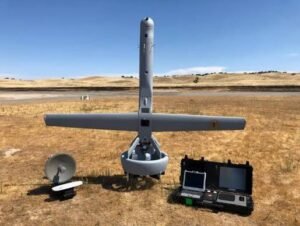
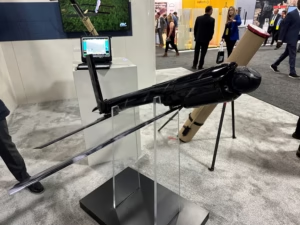
V-BAT (MQ-35)
Forensic analysis of Shield AI’s V-BAT (MQ-35): Hivemind autonomy, ViDAR sensor, targeting role, export, privacy law and international implications.
- Weapons
Norinco Fuxi and NUDT Combat Humanoids
A forensic analysis of Norinco’s Fuxi teleoperated humanoid and the PLA’s NUDT combat humanoid research: specifications, urban assault concepts, IHL, sanctions and CCW talks.
- Weapons
FEDOR Skybot F-850
A forensic analysis of Russia’s FEDOR (Skybot F-850) humanoid: specifications, the 2017 pistol demonstration, ISS flight, autonomy, IHL, sanctions and Russia’s CCW position.
- ⚖️ Law | 🌐International Relations (IR) | 🤖 Artificial Intelligence (AI)
Character.AI’s Bankruptcy Was Foreseeable: What the Collapse of an AI Companion Giant Means
Character.AI has filed for Chapter 11 after a run of wrongful death and child safety claims. I set out why the filing was predictable, what the courts have and have not decided, and what the collapse means for AI governance worldwide.
- ⚖️ Law | 🌐International Relations (IR)
US Execution Global Online Livestream and Law
On 8 October 2026, the Pentagon confirmed that it intends to livestream the execution of Nidal Malik Hasan, the former Army major convicted of murdering 13 people at Fort Hood…
- Weapons
Switchblade 300 and 600 Loitering Munitions
A forensic analysis of the US-supplied AeroVironment Switchblade 300 and 600: specifications, Ukraine and Taiwan, human control, IHL, arms transfer law and CCW talks.
- ⚖️ Law | 🌐International Relations (IR)
Abolishing Columbus Day: Genocide and historical reckoning
A few days ago, the United States marked Columbus Day. On Friday the President hosted a celebration in the East Room and issued a proclamation praising Columbus as a hero…
- Weapons
Alex Ballistic-Protected Humanoid (IHMC)
A forensic analysis of IHMC’s Alex, the US Army xTechHumanoid winner: specifications, ballistic protection, hybrid autonomy, IHL, US law and the 2026 CCW talks.