FEDOR Skybot F-850
FEDOR (Skybot F-850): Technical Dossier and Legal Analysis
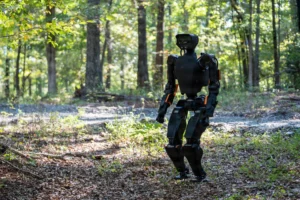
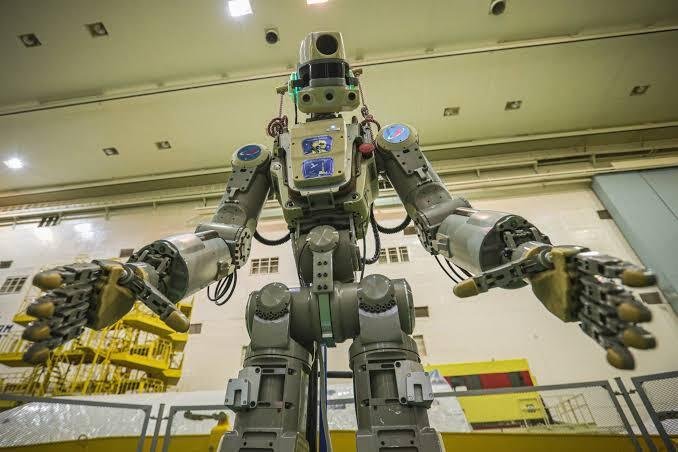
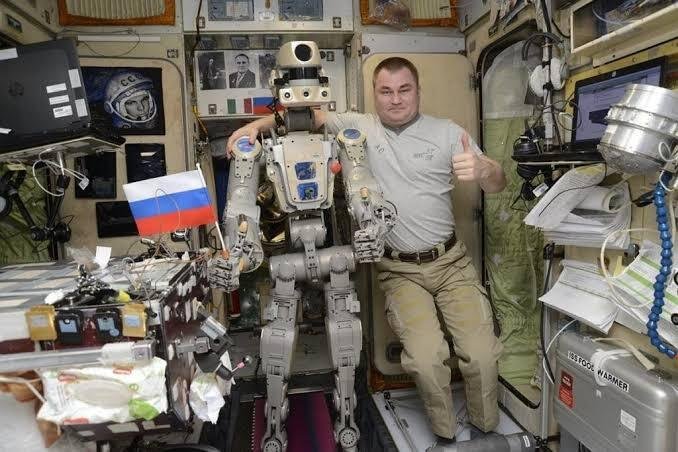
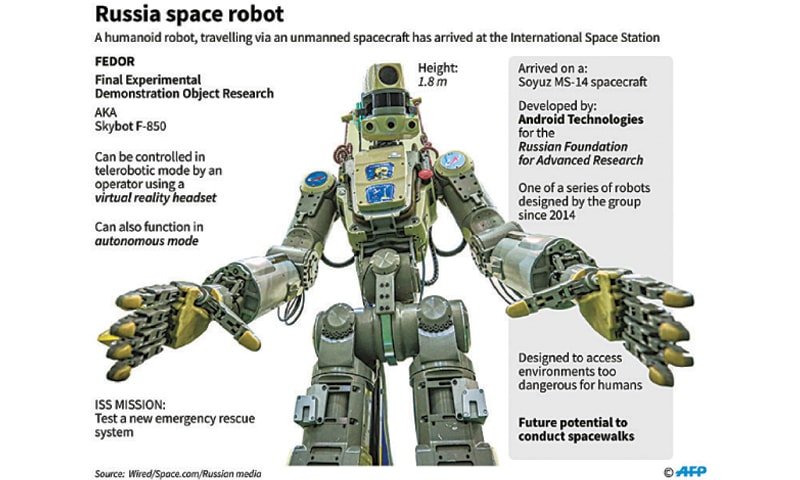
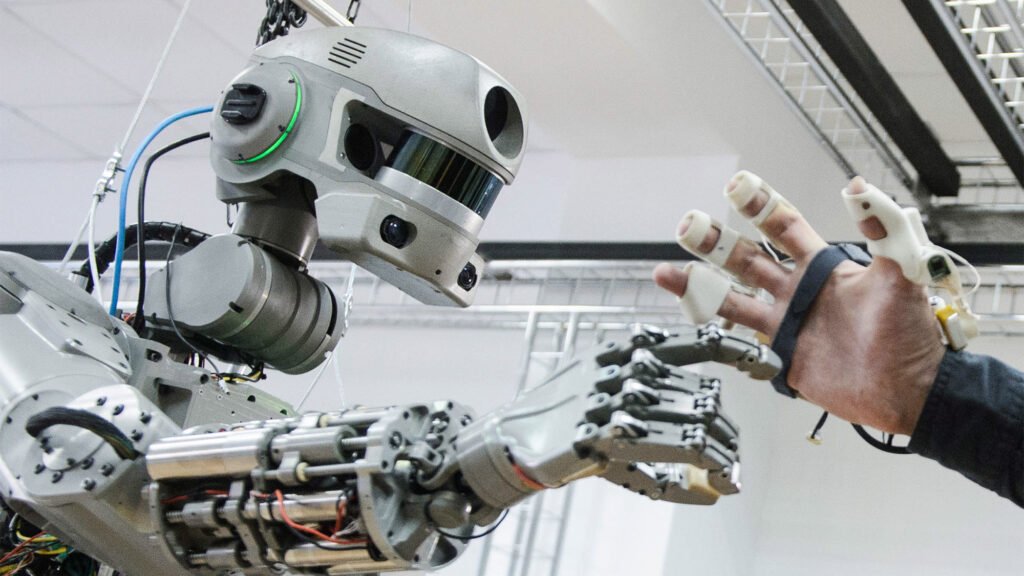
FEDOR, short for Final Experimental Demonstration Object Research, is a Russian humanoid robot built by the Moscow firm Android Technics with the state’s Advanced Research Foundation. It was designed to copy the movements of a remote operator and to perform some tasks on its own, and it was conceived for rescue work in places too dangerous for people. In August 2019, it flew to the International Space Station as the Skybot F-850. It earned its place in this database two years earlier, when the deputy prime minister responsible for the defence industry posted a video of it firing a pistol from each hand. I include it because it set the template that later humanoid programmes have followed: a general-purpose body, a civilian purpose on the label, a weapons demonstration on social media and a reassurance that nothing military is intended. Forbes describes it in the past tense, as a Russian experimental humanoid, seen on a firing range. CNBC, Forbes
Not to be confused with
Searches for this system now collide with news about a different Fedorov. Mykhailo Fedorov, Ukraine’s former defence minister, presented an “Army of Robots” project on 26 September 2026 that seeks humanoid robots to perform simple frontline tasks. That is a Ukrainian initiative and has no connection to the Russian robot in this entry. I cover it under the international relations heading below because it shows how the idea has travelled. pravda
Key takeaways
- FEDOR is a prototype and demonstrator. I found no public record of operational military use, and no new FEDOR hardware since the 2019 space flight.
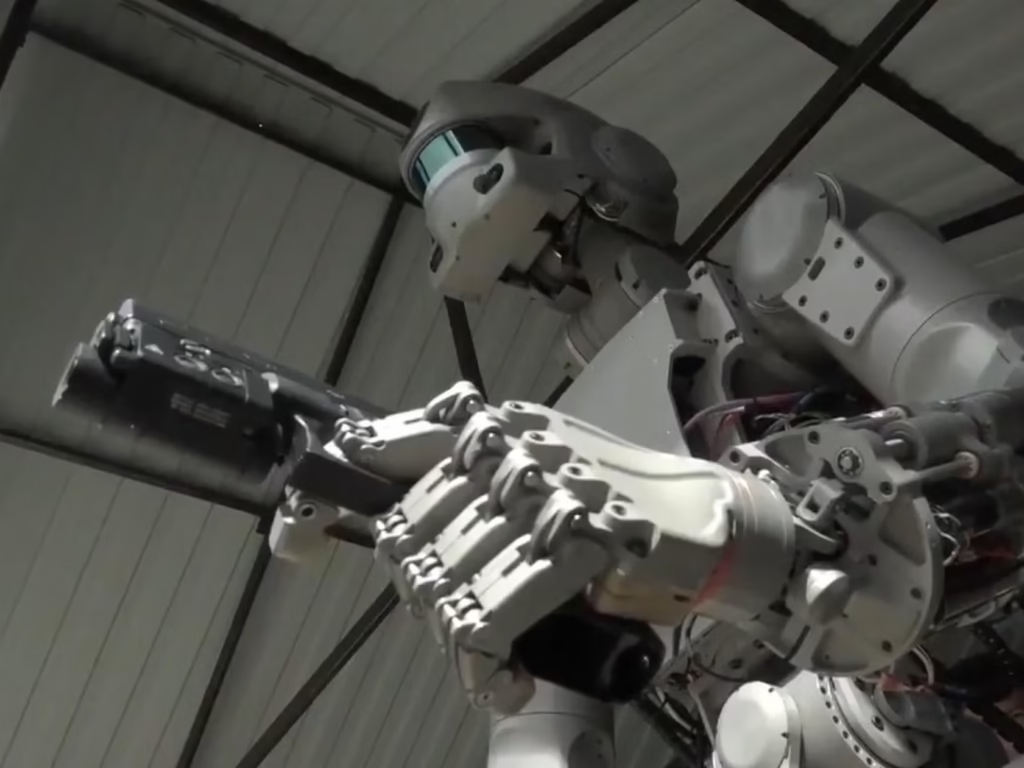
- In April 2017 Dmitry Rogozin posted video of the robot firing two pistols and wrote that shooting exercises teach the robot to set priorities and make instant decisions. He insisted the project was artificial intelligence and not a Terminator. bgr
- The manufacturer’s executive director said some foreign suppliers refused to continue supplying motors after they saw the robot learn to shoot. Al Jazeera
- Russia and the United States opposed new legally binding instruments on lethal autonomous weapons, and Russia’s delegation opposed the term “human control”, reportedly proposing “good faith human judgment and care” instead. Wikipedia
- The CCW Seventh Review Conference meets in Geneva from 16 to 20 November 2026.
Basic Weapon Facts
I. Background
| Field | Detail |
|---|---|
| Manufacturer | Android Technics (NPO Android Technics, also rendered Androidnaya Tekhnika), Moscow, Russia. The company was established in 2009, with the Advanced Research Foundation, Roscosmos and Rosatom among its key partners. |
| Suppliers | AT Drive electric motors produced by Android Technics. Flight batteries from the Orlan spacesuit. Foreign parts suppliers withdrew after the 2017 shooting video. Full supplier list: Unknown |
| Country of origin | Russia |
| Developmental stage | Prototype and demonstrator. Created between 2015 and 2019, derived from the earlier Alyosha (MPM-100). After the space flight the company’s executive director said it would not fly to the ISS again. Military service: no evidence found |
| System version | FEDOR. Skybot F-850 for the 2019 flight |
| System type | Humanoid robot, teleoperated avatar with autonomous functions, dual-use research platform FEDOR |
The programme began in 2014 when the Foundation for Advanced Research set a task code-named “Rescuer” for a combined control system for robotic systems, with Android Technics as the executor. The robot was developed for Russia’s Ministry of Emergency Situations. The Foundation is often described as Russia’s counterpart to DARPA, a comparison I make from my own knowledge. explained, therobotreport
II. General Specifications
| Parameter | Specification |
|---|---|
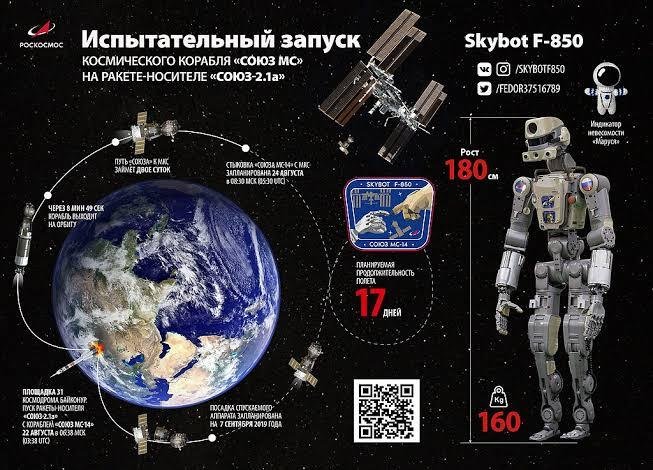
| System dimensions | Height 182 cm and shoulder width 48 cm in one technical listing. Press accounts of the 2019 flight give 1.80 m. |
| Weight | 160 kg (353 lb) in accounts of the 2019 flight model. A technical listing gives 106 kg. The figures conflict |
| Max payload | Unknown |
| Max operating time | About 1 hour of continuous operation |
| Max operating distance/reach | Unknown. One report says it carried a military standard LTE network called Tac4G for control. |
| Max speed | Walking speed of about 4 km/h |
| Control and software | A real-time operating system based on Linux |
| Unit cost | Unknown FEDOR explained +7 |
The weight discrepancy probably reflects different versions, since the flight model carried space-specific modifications, but I could not confirm that. The sources are press and reference compilations, so please check against the Android Technics datasheet before publishing.
History and operational record
Origins, 2014 to 2016. The rescue brief shaped the design. The Advanced Research Foundation’s website described it as potentially useful for working in high radiation environments, de-mining and tricky rescue missions. That list already blurs the civilian and military boundary, because de-mining and radiation work are tasks armed forces want machines to do. TASS reported in 2016 that FEDOR was to acquire self-learning abilities. gmanetworkWikipedia
The 2017 demonstration. In April 2017 Rogozin tweeted a video called “Russian battle robots,” and the clip showed FEDOR firing Glock pistols from each hand. Rogozin held the defence industry portfolio as deputy prime minister, which explains his interest. He wrote that the robot’s fine motor skills and decision-making algorithms were still being improved, and that shooting exercises were a way of teaching it to set priorities and make instant decisions. He added that Russia was creating artificial intelligence of practical significance in many fields and not a Terminator. Russian humanoid robot goes to space
The supplier reaction. The executive director of Android Technics told RIA that some partners who sold the company engines refused further supplies once they saw FEDOR learn to shoot. This is the only documented case in the series where a commercial supply chain imposed a limit on a humanoid’s development, and it deserves attention. Al Jazeera
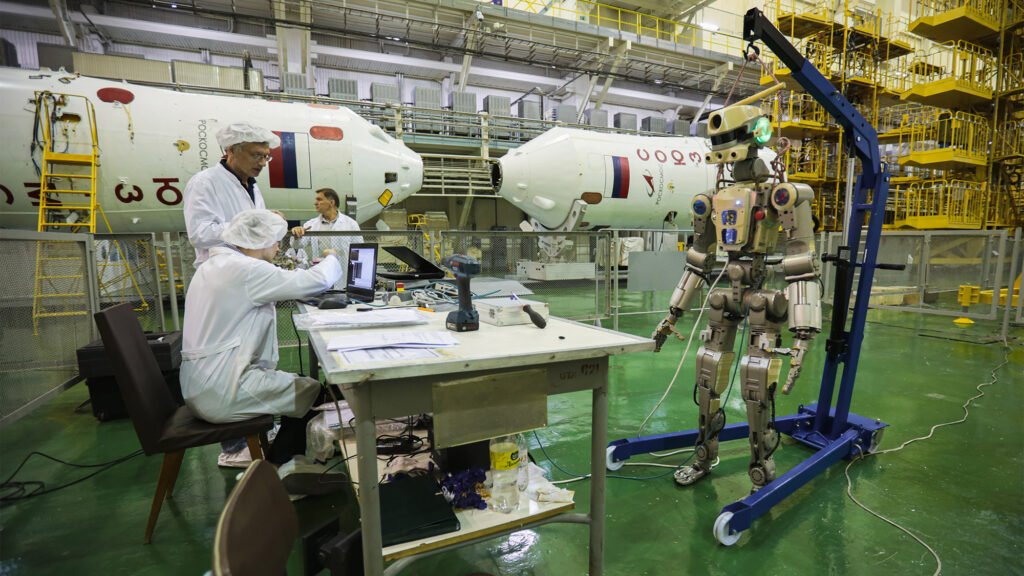
The space flight, 2019. The Skybot F-850 launched on 22 August 2019 aboard Soyuz MS-14 to the ISS, where operators could direct it using a computer or control suit and it could also work autonomously. On 30 August it matched plug connectors in weightlessness, simulating cable repair on the station’s exterior. The outcome was mixed. The robot’s legs were unwieldy in low gravity, so cosmonauts disabled them, and the company said it would not fly there again. Russia launches life-size humanoid robot into space
Afterlife. The robot was once expected to be the sole passenger on the Federatsiya spacecraft in 2021. I found no later flight or new hardware. Rogozin left government for the front, and sources describe a militia unit he led in Donbas as testing new Russian military technology through trial by fire, with a remark from him that a real war offers the best conditions for testing weapons. I rely on a reference compilation for that, and I would check it against a news source before publishing. taskandpurpose, Wikipedia
Autonomy: a forensic analysis
Sensors. The sources I could verify do not describe FEDOR’s sensor suite beyond the control interface. The system was built around an operator link, a suit or exoskeleton that captures human motion.
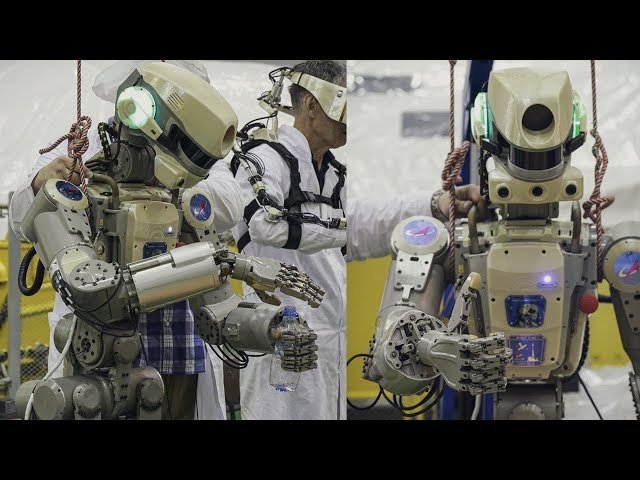
Algorithms. FEDOR could perform some tasks in an autonomous mode and could be used under full remote control, and in avatar mode it copies the movements of an operator. Its autonomous tasks in the 2019 flight included connecting and disconnecting electric cables using standard tools. The shooting demonstration is a separate matter. Russia did not publish what software controlled the pistols, whether the robot aimed autonomously or whether an operator drove it. pr, robodaily
Human intervention in the kill chain. There is no documented kill chain. The 2017 video shows a robot firing at targets on a range. The detail I find most important is Rogozin’s own explanation. He said the shooting taught the robot to set priorities and make instant decisions. Prioritising targets and deciding instantly is a description of selecting and engaging, and it is the function the CCW process defines as the core of a lethal autonomous weapon system. The chair’s March 2026 text characterised such a system as one that can identify, select and engage a target without intervention by a human operator in the execution of those tasks. I do not claim FEDOR could do this. I say that the programme’s own stated purpose for the shooting exercise points in that direction. Wikipedia
Classification. On the public record FEDOR is a teleoperated and partly autonomous humanoid prototype, and not a weapon or a lethal autonomous weapon system. It stands in this database as an early case in which a rescue robot was shown with weapons by an official responsible for arms procurement, under a disclaimer. For the modern descendants see my entries on the Norinco Fuxi and NUDT humanoids, the Foundation Phantom, the IHMC Alex and the Unitree H1 and H2.
Legal analysis
What makes something a weapon
The legal character of a means of warfare turns on its design and expected use, and a manufacturer’s label does not settle it. Article 36 of Additional Protocol I requires states parties to review any new weapon, means or method of warfare, and the ICRC’s guide to such reviews looks at normal or expected use. A rescue robot trained to fire pistols at targets has been shown in a weapon role, whatever its brief. Russia states that it fully complies with its obligations under Article 36. I know of no public review of FEDOR or any other Russian humanoid. un
Rogozin’s disclaimer and the Martens clause
“We are not creating a Terminator” is a statement about intent, and the law looks at capability and use. The Martens clause in Article 1(2) of Additional Protocol I keeps the principles of humanity and the dictates of public conscience applicable where treaty law is silent. The ICJ’s 1996 advisory opinion on nuclear weapons treated the principles of distinction and the prohibition of unnecessary suffering as cardinal rules for every weapon. A humanoid that fires on instructions it prioritises itself would be tested against both, regardless of its name.
Russia’s record and the claim that autonomy improves compliance
This is where the legal discussion gets difficult, and I want to treat it carefully. Russia argues in the CCW that autonomy and human oversight can improve compliance with humanitarian law. A West Point Lieber Institute analysis notes that this outlook rests on the conviction that current law is sufficient, and that well-documented patterns of deliberate targeting and indiscriminate harm reveal the limits of relying on technological safeguards. The documentary record on Russia’s conduct in Ukraine includes findings by the UN’s Independent International Commission of Inquiry on Ukraine and arrest warrants issued by the International Criminal Court, including in March 2024 for strikes on electrical infrastructure and in June 2024 for the former defence minister and the chief of the general staff. I cite the warrants from memory, and they are allegations that have not been tried. They matter here because a state’s claim that its machines will respect the law carries less weight where independent bodies have documented violations by its forces, and because the Rome Statute’s war crimes provisions on intentionally targeting civilian objects and disproportionate attacks apply to humans who use machines. westpoint
Sanctions and export controls
The supplier refusals in 2017 foreshadowed a formal regime. Since 2022 the EU, the United States and others have imposed wide-ranging export controls on Russia covering advanced electronics, which I cite from memory and recommend checking. A humanoid needs motors, sensors and high-performance computing, and sanctions make those harder to obtain legally. Where Russia obtains them is an open question, and I found no source documenting it for humanoids. The point matters for the Arms Trade Treaty’s logic as well. Russia is not a party to the treaty, and supplier states must assess diversion risks under its Articles 6 and 7.
Teleoperation and accountability
An avatar robot raises the same operator information questions I discuss in my Fuxi entry, including the reasonable commander standard from Prosecutor v. Galić, IT-98-29-T (ICTY, 2003). For any Russian operator, accountability runs through a military justice system whose independence on this subject is open to serious doubt.
The CCW position
Russia’s 2021 working paper to the GGE considers existing legal regulation sufficient, opposes a legally binding instrument on lethal autonomous weapons within the GGE and opposes a moratorium. Reaching Critical Will also reports that Russia objected to the participation of observers in the GGE. In 2026 its delegation opposed the term human control, and the proposed alternative “good faith human judgment and care” tells me something. Good faith is a subjective standard. It describes the attitude of a decision maker and says nothing about how much information, time or ability to intervene that person has. I regard the phrase as weaker than the standard I describe on my stance page. documents.un.org
International relations implications
A template that others followed. Look at the sequence. A humanoid with a civilian purpose, a weapons demonstration by an official on social media, a statement that this is not a military project, and a growing programme behind it. Compare it with the American company in my Phantom entry, the Chinese state firm in the Fuxi entry and the Ukrainian project described above. The Russian case is the earliest, and it shows that disclaimers have never slowed the trend.
Ukraine as everyone’s laboratory. Russia treats the war as a proving ground, as the Donbas militia remark suggests, and an American firm has sent humanoids there, as my Phantom entry records. Mykhailo Fedorov has said his initiative aims for the first enemy soldier killed by a humanoid robot in six months and the first assault with no infantry in twelve. Breaking Defense notes that fully humanoid robots have never been deployed in active military combat and reports scepticism in Ukraine about the project. The first lethal use of a humanoid may therefore occur in a war between two states with documented records of testing technology in conflict, and neither side has published a legal review. kyivindependentbreakingdefense
Reliability and hype. Russia’s record with robots in combat is sobering. Press reports said the Uran-9 armed ground vehicle performed poorly in Syria in 2018. FEDOR’s legs failed on the space station. I would not read the history as a reason for complacency, because machines improve. I read it as a reminder that announcements and capabilities are different things, and that the risk is greatest where a state is willing to deploy before the technology is ready. Wikipedia
Sanctions as accidental arms control. The 2017 supplier episode and the post-2022 controls suggest that supply chains constrain Russian humanoid development more effectively than any treaty does. This is a fragile form of restraint. It depends on other countries, including China, whose firms dominate humanoid production, and the Unitree H1 and H2 entry describes that supply base.
Russia in the treaty process. Reuters reported on 4 September 2026 that opposition from the United States and Russia had raised doubts about agreement on a document that could pave the way to international rules, with the US position supported by states including Russia, India and Turkey. Backers of a binding treaty include Brazil, Ireland and several African states. On 5 September the GGE reached consensus among 128 states on a non-binding document, though critics argue major military powers weakened it. France says the text clarifies human control and judgment and that the Review Conference must decide next steps. The UN Secretary General and the ICRC jointly called on 25 August for the November conference to begin binding negotiations, and the ICRC urges states to launch negotiations on a new protocol. Russia can use the consensus rule to block language it regards as restrictive, as the Reaching Critical Will report and the UNODA briefing describe. The November conference is therefore partly a test of whether the CCW can function when a nuclear power uses its procedural veto to block even preliminary steps. thestarthestar
Declaratory policy. Moscow’s stated commitment to human responsibility for lethal decisions, as the Lieber analysis describes it, sits beside a record of rejecting any binding definition of control. The same pattern appears in the Chinese position I discuss in the Fuxi entry. States agree human control matters, and they differ sharply on whether to write it down.
My assessment
FEDOR is hard to take seriously as a weapon, and that is partly the point. The video is faintly absurd, with a silver robot firing pistols from both hands, a disclaimer about Terminators and a space mission on the side. I have watched states and companies use this register repeatedly. Make it look like a gimmick, say it is a research project and let the capability develop. By the time the technology is serious, the norms have been shaped by years of treating it as a joke.
What I take from the case is a plain lesson about disclaimers. The Russian official said the shooting taught the robot to prioritise and decide instantly. If you believe that is a research method, you should ask who is supposed to be prioritising targets in the end. I would put the same question to every programme in this series. The honest statement of the problem is that a general-purpose body can be given any task, and a promise about intent does not bind the next owner.
I also want to record the supplier episode, because I find it hopeful in a small way. Some engineers and companies looked at what their motors were being used for and refused to continue. That kind of due diligence is what the UN Guiding Principles on Business and Human Rights envisage, and it happened here without a treaty. It is also a reminder that such restraint is voluntary, fragile and absent from most supply chains. My position remains the one on my stance page. Meaningful human control has to be specified, attached to identifiable people and written into law that binds every state, including those that prefer vaguer language. I explain how I came to this work in my story, the wider risks are on my AI safety page, and I track the response in my research and the AI Policy Tracker. See also my article on meaningful human control.
Frequently asked questions
What is Russia’s FEDOR robot?
A humanoid robot built by Android Technics with Russia’s Advanced Research Foundation, designed to copy the movements of a remote operator and perform some tasks autonomously. It flew to the International Space Station in 2019 as the Skybot F-850.
Is FEDOR a combat robot?
It was designed for rescue and space work. In 2017 a Russian official published video of it firing two pistols, and denied that the project was military. I found no record of combat use.
What does FEDOR stand for?
Final Experimental Demonstration Object Research.
Is FEDOR connected to Mykhailo Fedorov’s Army of Robots?
No. Fedorov is Ukraine’s former defence minister, and his Army of Robots is a separate Ukrainian project announced in September 2026.
What is Russia’s position on regulating autonomous weapons?
Russia says existing law is sufficient, opposes a legally binding instrument and a moratorium, and in 2026 opposed the term human control in the CCW talks.
Sources
Manufacturer website: N/A (Android Technics has no verified current English site in the sources I could open)
News reports and analysis
- CNBC, Russia launches life-size humanoid robot into space (22 August 2019)
- AFP via GMA, Russia sends Fedor, its first humanoid robot into space (2019)
- Al Jazeera, Russian humanoid robot goes to space (2019)
- The Robot Report, Skybot humanoid robot grounded after Russian space flight
- Task & Purpose, This Russian Gun Slinging Robot Is Definitely Not a Terminator (18 April 2017)
- BGR, Russia’s gun-wielding robot is definitely not Terminator (2017)
- The New Daily, Russia has built a combat robot that shoots with both hands (2017)
- Interesting Engineering, A Closer Look at Russia’s Terrifying Gun Wielding Robot FEDOR
- Forbes, Humanoid Combat Robots May Be Much Closer Than You Think (9 October 2026)
- Kyiv Independent, Ex defense minister Fedorov announces new Army of Robots initiative (26 September 2026)
- Ukrainska Pravda, Ukraine’s ex defence minister Fedorov unveils new Army of Robots project
- Breaking Defense, Ex defense minister’s futuristic Army of Robots raises eyebrows in Ukraine (October 2026)
- Reference compilations (check against primary sources): Wikipedia, FEDOR, Wikipedia, Tsar’s Wolves, Wikipedia, Uran-9, HandWiki, FEDOR
Government, military and diplomatic documentation
- Russian Federation, Working Paper to the CCW GGE on LAWS, CCW/GGE.1/2021/WP.1
- Lieber Institute, West Point, No New Rules Needed: Russia’s Minimalist Vision of Human Oversight for LAWS (13 April 2026)
- Reuters via The Star, Opposition by US and Russia raises doubts over autonomous weapons talks outcome (4 September 2026)
- Reaching Critical Will, CCW Report vol. 13 no. 1 (2025)
- Wikipedia, Group of Governmental Experts on LAWS (secondary, for the March 2026 chair’s text)
- ICRC, Autonomous Weapons advocacy paper (June 2026)
- France, GGE communiqué (10 September 2026)
- UNODA, CCW GGE LAWS briefing
- Reaching Critical Will, CCW Report (January 2026)
- UN Independent International Commission of Inquiry on Ukraine, reports; ICC arrest warrants in the Situation in Ukraine (2023 and 2024); EU and US export controls on Russia (from 2022)
Treaties, statute and case law
- Additional Protocol I, Arts 1(2), 36, 48, 51, 57 (ICRC database)
- Rome Statute, Art 8(2)(b)(i) and (iv)
- Arms Trade Treaty, Arts 6 and 7
- UN Guiding Principles on Business and Human Rights; UNGA Resolution 78/241 (2023)
- ICJ, Legality of the Threat or Use of Nuclear Weapons, Advisory Opinion (1996)
- Prosecutor v. Galić, IT-98-29-T (ICTY, 2003)

Avi is a researcher educated at the University of Cambridge, specialising in the intersection of AI Ethics and International Law. Recognised by the United Nations for his work on autonomous systems, he translates technical complexity into actionable global policy. His research provides a strategic bridge between machine learning architecture and international governance.