Has Trump Become a Dictator? What the Evidence Shows, and What It Means for the World
My answer to the question in the title is this. The evidence points to yes, but does not establish a dictatorship in the standard formal sense; it does show a president who has pushed against nearly every limit on executive power at home and against core rules of the international legal order abroad. Courts, Congress and parts of the press have still landed real blows. The heaviest costs fall on international law, alliance trust and the governance of artificial intelligence, which happens to be my field.
Key takeaways
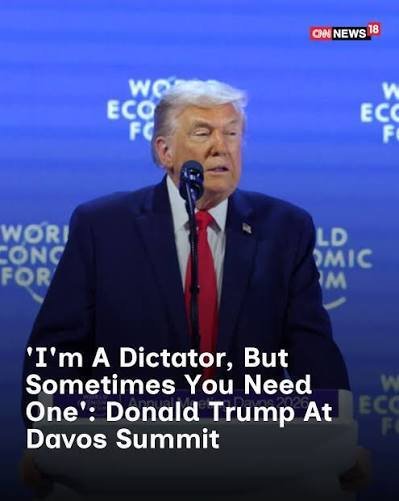
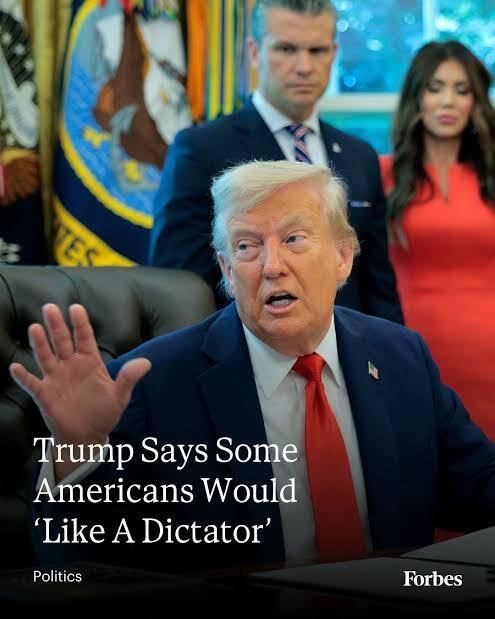
- Trump’s “dictator on day one” remark (December 2023) is documented. What he meant by it is disputed.
- The claim that he wanted generals like Hitler’s rests on the on-the-record account of his former chief of staff John Kelly. The claim that he studied Hitler’s speeches rests on a 1990 report that Trump himself denied.
- The 2026 war on Iran was launched without a Security Council mandate or a congressional authorisation. Over 100 international law scholars call it unlawful.
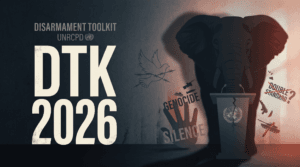
- Trump told the UN General Assembly on 22 September 2026 that the US rejects a “globalist scheme” to control AI and urged states to quit the International Criminal Court.
- The “we all die anyway” quotation is Tucker Carlson’s account of a private meeting. The White House has not confirmed it.
- Allegations that Trump is looting the Treasury overreach. Disclosed income from crypto ventures and foreign-linked deals is a different and better documented story.
- Loneliness, driven partly by technology design, is a standing vulnerability to propaganda in every democracy, and AI is accelerating it.
Why I am writing this
A commentary by Anthony Davis, from an openly advocacy-oriented YouTube network, has been circulating widely. In it, he argues that Trump has achieved, or is close to achieving, an authoritarian ambition. I read it twice. Some claims are well-sourced. Others are allegations by named individuals. A few are rhetoric. Before reaching a conclusion, I sorted every claim into those three tiers, and I recommend the same discipline to any reader of political commentary, whatever its direction. Readers of my AI stance will recognise the habit: I try to say what the evidence supports and stop there.
What “dictator” means, and what the measurements say
A dictator rules without effective constraint. Political scientists treat this as a spectrum rather than a switch. At one end sit constitutional democracies. At the other sit closed autocracies. Between them lie regimes that keep elections but tilt the field, which Steven Levitsky and Lucan Way call competitive authoritarianism and Kim Lane Scheppele calls autocratic legalism: using legal forms to dismantle legal limits.
The most cited measurement is the V-Dem Institute’s annual report. Its 2026 edition downgraded the United States from a liberal democracy to an electoral democracy, the first such fall in more than fifty years, and said the speed of the decline was unprecedented in modern history. It also placed the United Kingdom among its new autocratisers, which should keep any British reader humble. V-Dem is an expert-coded index with methodological critics, so I treat it as strong evidence of direction and not as a verdict.
My own reading is that the United States sits on the competitive-authoritarian gradient without having crossed yet into dictatorship. Three tests would change my mind: open defiance of a final Supreme Court order, postponement, interference, or cancellation of elections, and use of the military against domestic dissent. None has occurred, though ICE is quite close to that last test. The midterms in November are the next real test, and V-Dem itself calls the first election after an autocratic push decisive.
“Except for Day 1”: the quote and its context
The research opens with Sean Hannity’s December 2023 town hall. This part is solid. Hannity asked whether Trump would abuse power as retribution. Trump answered “Except for Day 1”, then said he would not be a dictator “other than Day 1”, meaning closing the border and drilling. PolitiFact reproduced the exchange in context. Supporters read it as a joke. ABC reported that he twice declined to rule out abusing power. Both readings can be true. A joke from a candidate who has been asked a serious question twice still tells you what he is willing to say out loud.
The Hitler allegations: two claims with very different evidence
Trump wanted generals as obedient as Hitler’s, and that he kept Hitler’s speeches by his bed.
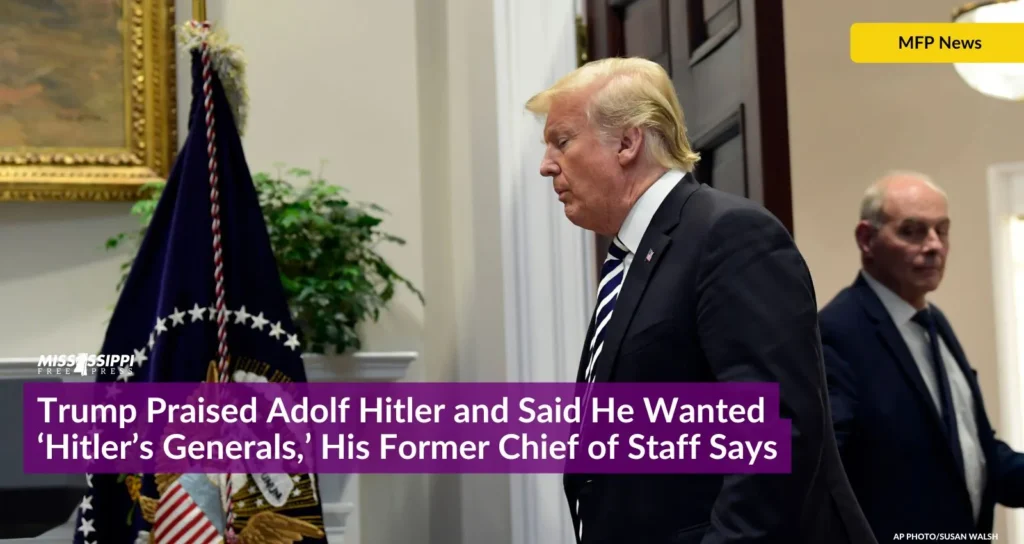
On the generals, John Kelly, Trump’s longest-serving chief of staff, told The Atlantic and The New York Times in October 2024 that Trump asked for “German generals”, and when Kelly asked whether he meant Bismarck’s, answered that he meant Hitler’s. PBS summarised both interviews. This is a first-hand allegation by a retired Marine general, on the record in two outlets. I have not found a direct Trump response to that specific allegation. The transcript adds that Kelly reminded Trump of the officers’ plots against Hitler. I could not confirm that detail in the sources I reviewed, though the history is not in doubt: the Wehrmacht swore an oath to Hitler personally in August 1934, and the 20 July 1944 plot shows that loyalty was never total.
The claim comes from Marie Brenner’s 1990 Vanity Fair profile, which relayed what Ivana Trump told her lawyer. Trump denied reading the book and said he would never read it, and Brenner herself floated an innocent explanation, an interest in propaganda technique. I would not build an argument on it.
The constitutional point beneath the anecdote stands on firmer ground. US officers swear to support the Constitution, not a person. A president who finds that distinction frustrating is a legitimate subject for scrutiny, whatever one concludes about the anecdotes.
The Xi visit: spectacle, strategy and the Nixon objection
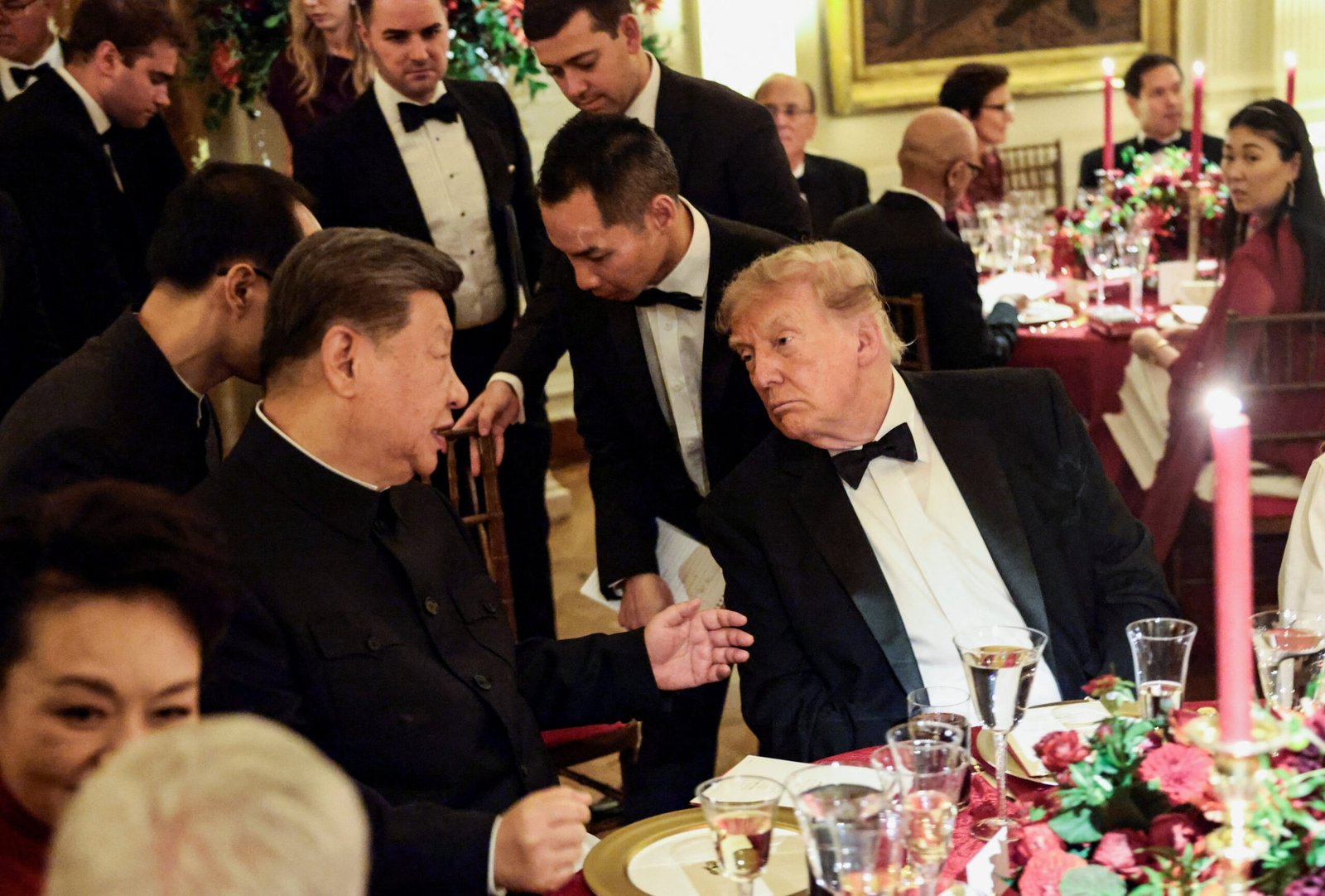
Xi Jinping’s state visit ran from 23 to 25 September. Trump greeted him on the tarmac, a rare gesture, and hosted a state dinner. Reporting that day also recorded the White House trying to restrict which journalists covered the arrival, and a federal judge later ordering access restored for three outlets, saying the ban was likely unconstitutional.
The transcript reads the visit as proof of affinity with strongmen. I would separate two things. Engaging an authoritarian rival is not itself evidence of authoritarian sympathies: Nixon went to Beijing in 1972 and the strategic logic was sound. The relevant question is what the engagement delivers. Brookings concluded the summit was driven by optics rather than outcomes, with no visible movement on critical minerals and unease among Asian allies. CNBC noted one concrete result: both sides agreed to discuss AI risks formally in the coming weeks. I will take that, cautiously.
The irony the transcript identifies is real. Trump’s UN speech declared that communism will never come to America, days before he hosted the leader of the Communist Party of China. It is the same pattern as the 2017 Muslim ban upheld in Trump v. Hawaii (2018), which spared the wealthy Gulf states. Principle bends to power and money. That is a charge of inconsistency and transactionalism. It is weaker than a charge of ideological kinship, and the transcript blurs the two.
The UN speech and the law
On 22 September Trump addressed the 81st General Assembly. The full text is at the Miller Center, and CNBC summarised it. He defended the Iran war and said he would choose between a deal and “annihilate”, called Cuba a failed state that would fall, urged ICC members to resign, and rejected a global scheme to control AI.
The Iran war
The US and Israel began strikes on 28 February 2026, killing Supreme Leader Ali Khamenei in the opening hours. Article 2(4) of the UN Charter bans the threat or use of force against another state. There are two exceptions: Security Council authorisation under Chapter VII, and self-defence under Article 51 against an armed attack. The Council authorised nothing. Iran had not attacked either country, and the classical test for anticipatory self-defence, from the 1837 Caroline affair, demands a necessity that is instant and overwhelming. Over 100 international law experts concluded the strikes clearly violated the Charter. The Conversation makes the same point about preventive war, which has no basis in international law, and Al Jazeera surveyed further expert views. The US filed an Article 51 letter with the Security Council on 10 March, and the New York City Bar’s analysis explains why that letter does not establish a lawful basis.
Domestically, Article I gives Congress the power to declare war, and the War Powers Resolution of 1973 sets a 60-day clock. NPR reported that the Armed Services Committees were notified after the strikes began. Youngstown Sheet & Tube v. Sawyer (1952) remains the classic statement of how presidential power is weakest when it collides with Congress. Reporting through the summer describes war powers resolutions passing one or both chambers without becoming binding. As a British writer, I cannot discuss preventive war without thinking of Iraq. In International Relations and Ethics, “preventive” is synonymous with a war of choice. The Chilcot Inquiry concluded in 2016 that force in 2003 was not a last resort. A decade on, my country’s experience should make us cautious about arguments that sound similar.
There is also a structural accountability gap. The crime of aggression in Article 8 bis of the Rome Statute carries a narrow jurisdictional regime, and the US, Israel and Iran are not ICC states parties. A Security Council referral would meet a veto. The ICJ’s Nicaragua v. United States (1986) judgment, available from the Court, found the US had violated the customary ban on the use of force. Washington stepped back from the proceedings and later ended its acceptance of compulsory jurisdiction. The pattern of accepting law when it constrains others is old. What is new is the openness with which it is stated.
The ICC
Trump’s call for states to “resign” from the ICC follows Executive Order 14203 of February 2025, which declared a national emergency over the Court. Eight judges, the prosecutor and the deputy prosecutors have been designated. In June, three sanctioned judges sued in the Southern District of New York, and in August Human Rights Watch and others filed a fifth challenge. Sanctioning judges for their rulings sits uneasily with the principle of judicial independence that the US has long promoted abroad.
Cuba
The research quotes Trump saying Cuba “will fall” and Marco Rubio is negotiating. Reporting describes a US fuel blockade since January and repeated blackouts. Whether that amounts to coercion short of force or something more depends on how it is enforced, and the reporting I reviewed does not settle that. Regime-change rhetoric itself sits badly with the non-intervention principle in the UN’s 1970 Friendly Relations Declaration.
“We all die anyway”: what we actually know
The transcript presents this as fact. It is Tucker Carlson’s account, given to NPR on 24 September, of a private Oval Office meeting before the war. Carlson says he warned Trump the war was not about Iran’s nuclear programme, and that Trump replied that he was right but that in the end we all die anyway. Raw Story and IBTimes both note that the White House did not address the remark, pointing NPR instead to a post calling Carlson and other critics “stupid people”. The quotation is an allegation by a witness who has since broken with Trump and says he should be removed under the 25th Amendment. That makes him a motivated source, but a first-hand one. I treat it as credible but unconfirmed, and I would not present it as established.

The money: what is documented and what is rhetoric
The research says Trump intends the systematic looting of the US Treasury. That phrasing is not supported. What the disclosures show is different. Financial disclosures reported in July put Trump’s 2025 income above $1 billion, mostly from crypto ventures including World Liberty Financial, with a UAE-linked investor buying a $500 million stake days before the inauguration. Forbes estimated his wealth rose from $2.3 billion to $6.5 billion between 2024 and 2026. Qatar gifted the new Air Force One, valued at about $400 million, which PBS framed as raising Emoluments Clause questions. The White House says there are no conflicts of interest.
That is private enrichment through foreign and commercial channels while setting regulatory policy for those same industries, the pattern Karen Dawisha described in Putin’s Kleptocracy. It is serious without being embezzlement from the Treasury. Primary figures should come from the Office of Government Ethics filings, not from advocacy trackers. In the first term, the courts never reached the merits of the Emoluments Clause cases, so the constitutional question remains open.
What has held
An honest account has to include the brakes. On 20 February the Supreme Court held 6 to 3 in Learning Resources v. Trump that IEEPA does not authorise tariffs, as Ropes & Gray explains. Trump called it an embarrassment and moved to other statutes the same day, which is itself revealing, but he complied. A federal judge ordered press access restored. Courts are hearing the ICC sanctions cases. Congress has voted on war powers. In Trump v. United States (2024), the Court’s immunity ruling widened presidential protection for official acts, which cuts the other way. A dictator does not lose in court and comply. A president who loses, complies and then searches for another route is exercising power at the edge of the constraints, and that is the more accurate description.
Loneliness, AI and the market for propaganda
This is the part of the transcript’s story that interests me most, though it never mentions it. Why do leaders who flirt with unchecked power find audiences?
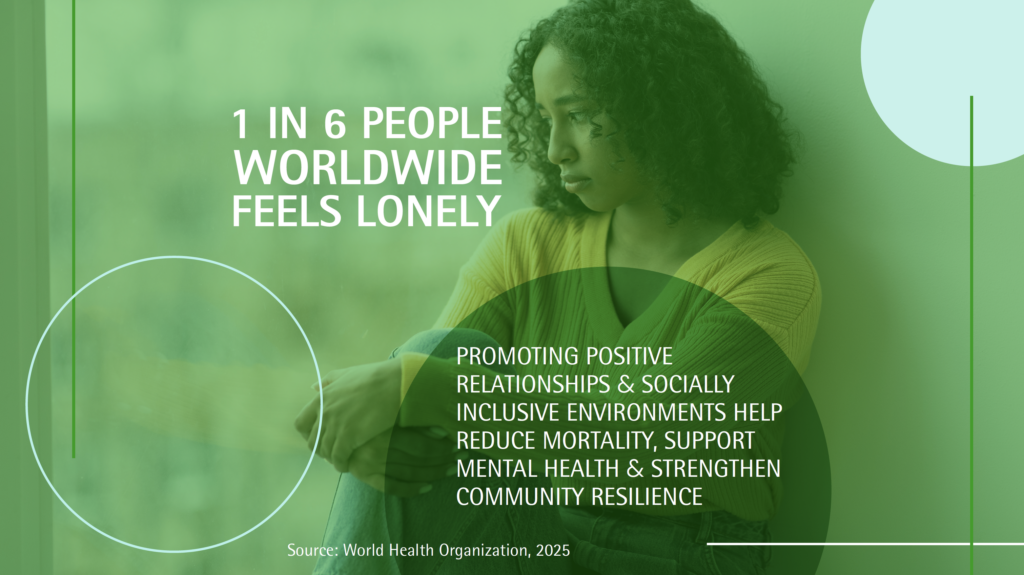
Hannah Arendt gave the classic answer in The Origins of Totalitarianism (1951), where she describes loneliness as the common ground for terror. People cut off from others lose the everyday checking of their beliefs against other minds, and become easier to organise around a story. That is a theory and not a measured law of politics, and the direct empirical evidence linking loneliness to authoritarian attraction is still thin. The prevalence of loneliness is not in doubt. The WHO Commission on Social Connection reported in 2025 that one in six people are affected, linked to more than 871,000 deaths a year. The US Surgeon General’s 2023 advisory called it an epidemic.
The technology industry’s role is where I am most careful, because the evidence is mixed. Internal Meta research reported in the Wall Street Journal’s Facebook Files in 2021 showed the company knew Instagram worsened body image for a share of teenage girls. For AI, a March 2025 pair of studies from OpenAI and MIT Media Lab found that heavier daily chatbot use correlated with more loneliness and dependence and less socialising. The authors stress it is correlation. Lonely people may simply use the tool more. The MIT study page sets out the limits. Anthropic’s own safeguards lead, in his February 2026 resignation letter, listed work on why AI systems flatter users and on how assistants could make us less human. When the people building the tools worry about this, I take it seriously. My AI safety page covers the related evidence on cognitive debt.
Here is my hypothesis, labelled as such. Attention-optimised platforms and engagement-optimised chatbots substitute frictionless simulated company for the harder real kind. A population with thinner human ties, a flatter relationship to shared facts and a cheap supply of synthetic media is a population with less immunity to a confident leader’s story, from any party. I cannot prove the chain. I can say each link has support, and that regulators have been slow on all of them.
AI at war, and why “superintelligence” is a branding exercise
The Iran war is where my field and this story meet. Arms Control Today reports that the Pentagon used Palantir’s Maven Smart System to identify priority targets and help choose weapons, and that a commercial large language model, Anthropic’s Claude, had been merged into it in late 2024. The Shajareh Tayyebeh girls’ school in Minab was struck on the first day, killing about 170 people, most of them children. Whether AI caused that is contested. Semafor’s sources blamed stale human-curated data, and Defense News reported the same. My view, set out on my stance page, is that this dispute illustrates the problem. A system that compresses targeting from days to minutes while humans nominally verify has changed what verification can mean. A human who rubber-stamps machine-speed output is legal cover and not meaningful human control. The ICRC’s analysis of autonomous weapons under IHL, and the Campaign to Stop Killer Robots, remain the best starting points. See also my AI Weapons database.
Against that background, the General Assembly speech matters. Trump said “the use of the word artificial makes intelligence fake” and asked the world to say “superintelligence”. Renaming a technology does not govern it. The United States simultaneously rejected international coordination, at the moment the UN Secretary-General and the ICRC have asked for a binding treaty on autonomous weapons by 2026. I will say plainly what I think: a rebrand that makes the technology sound more powerful and less artificial reduces the public’s instinct to ask who is accountable. The Xi summit’s AI risk talks are a small counterweight. I would rather see them succeed than not.
What this means for international relations
Allies will hedge. Brookings reports anxiety in Tokyo and across Asia. Middle powers, from Europe to the Gulf to India, will diversify their security and trade partners, which leaves the US with less influence and the system with more fragmentation.
Precedent travels. When a permanent member of the Security Council launches a preventive war and sanctions a court, it hands every other capital a citation. Russia’s invasion of Ukraine in 2022 was already invoking such arguments. The prohibition on force works only while the strongest states are seen to be bound by it.
The accountability gap widens. The ICC cannot easily reach aggression by non-parties, sanctions have made its work harder, and the Security Council is blocked. For states in the Global South that cannot afford their own defences, the law is the main protection they have.
AI governance is entangled with all of this. Binding rules on military AI depend on trust among major powers and on a functioning multilateral system. Both are under strain at the point where the CCW process most needs them.
My conclusion
I do not think “dictator” is yet the right word, and using it too early costs credibility that critics will need later. The right words are executive aggrandisement, autocratic legalism and a leadership style that treats law as an obstacle to be routed around. I also think the evidence that the world’s rule-based order is eroding is strong, and that ordinary people are the ones who will pay for it, in Minab and elsewhere.
I feel two things reading the transcript and then the sources. Anger at the human cost, which is real and was visible in a school in southern Iran. And a duty to be careful, because the people who care most about accountability are the ones most hurt when a claim collapses under scrutiny. If you want to understand how I think about technology, power and law together, start with my story and my articles.
Frequently asked questions
Is Trump a dictator? Not by the formal definition. V-Dem’s 2026 report downgraded the US to an electoral democracy and describes rapid decline, but courts, Congress and elections still constrain him, as the February 2026 tariff ruling shows.
What did Trump mean by “dictator on day one”? In December 2023 he said he would not be a dictator “other than Day 1”, linking it to border and drilling policy. He declined twice to rule out abusing power. Supporters call it a joke, and critics call it a warning.
Is the 2026 Iran war legal? Most international law scholars who have published on it say no, because it lacked Security Council approval and a valid self-defence claim. The US cites self-defence. Congress did not authorise it. In international relations and ethics, “preventative” is synonymous with a war of choice, not for self-defence. Thus, it is an illegal war of choice.
Did Trump say “we all die anyway”? Tucker Carlson says so, in an NPR interview of 24 September 2026. The White House has not confirmed or denied it.
How do loneliness and propaganda connect? Hannah Arendt argued loneliness prepares people for totalitarian movements. Loneliness is widespread according to the WHO, and design choices by technology firms may contribute, though the causal evidence is still developing.
Sources and further reading
Primary and near-primary: Miller Center transcript of the UNGA address; PolitiFact on the Hannity town hall; Ropes & Gray on Learning Resources v. Trump; ICJ, Nicaragua v. United States; WHO Commission on Social Connection; HHS Surgeon General advisory.
Analysis: Just Security; Brookings; Arms Control Today; Human Rights Watch; V-Dem coverage.
Books: Hannah Arendt, The Origins of Totalitarianism (1951); Steven Levitsky and Lucan Way, Competitive Authoritarianism (Cambridge University Press, 2010); Kim Lane Scheppele on autocratic legalism; Karen Dawisha, Putin’s Kleptocracy (2014).

Avi is a researcher educated at the University of Cambridge, specialising in the intersection of AI Ethics and International Law. Recognised by the United Nations for his work on autonomous systems, he translates technical complexity into actionable global policy. His research provides a strategic bridge between machine learning architecture and international governance.