
The Global Shell Game: What “Meaningful Human Control” Actually Means—and Why No One Agrees
Executive Summary
The battle for the future of global security is currently being waged over a single phrase: "meaningful human control". Explore how lexical fissures and strategic ambiguity are shaping the lethal autonomous weapons debate.
Every major military power claims their autonomous weapons systems maintain “meaningful human control.” None of them use the same definition. That ambiguity is deliberate.
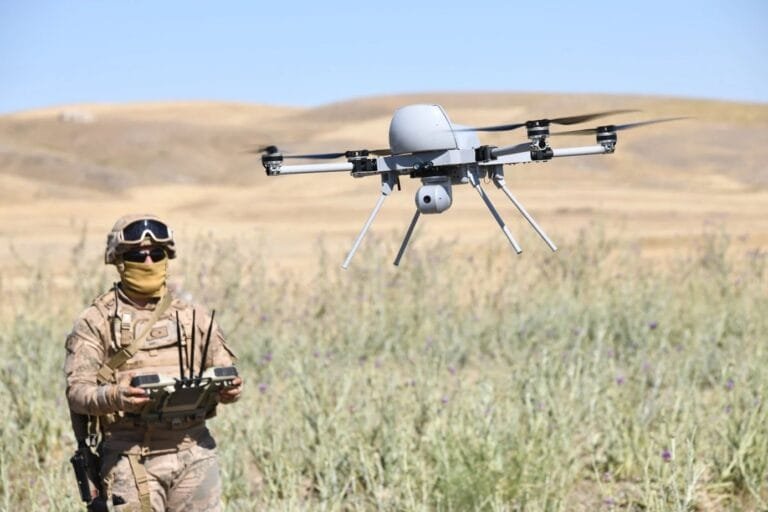
While the term “killer robots” sounds like the province of science fiction, a profound lexical fissure has cracked the foundations of the Convention on Certain Conventional Weapons (CCW) in Geneva. The real battle for the future of global security is currently being waged in conference rooms over a single phrase that dictates how much agency a human must retain before an algorithm authorises lethal force. This is more than a semantic dispute; it is a high-stakes struggle to reconcile 100 years of international humanitarian law with the strategic imperatives of an AI arms race where machine speed is the ultimate currency.
1. The “Cumulative Trap”—Strategic Ambiguity as Great Power Manoeuvre
China’s approach to “Meaningful Human Control” (MHC) is a masterclass in strategic ambiguity, designed to counter U.S. technological superiority while shielding its “Peaceful Rise” narrative. Beijing publicly calls for a legally binding treaty to prohibit the use of fully autonomous weapons, yet its criteria for what constitutes an “unacceptable” system are engineered with a calculated loophole known as the “cumulative trap.”
According to Chinese position papers, a weapon system is only prohibited if it meets five specific criteria simultaneously:
- Lethality: It must be designed to kill.
- Full Autonomy: It must operate without any human intervention across its entire task cycle.
- Impossibility of Termination: It cannot be stopped or turned off once activated.
- Indiscriminate Effects: It must be incapable of distinguishing between targets.
- Uncontrolled Evolution: Its algorithms must adapt in ways humans cannot predict.
The strategic brilliance of this framework lies in its cumulative nature. If a system fails even one criterion—for instance, a lethal, fully autonomous drone that possesses a simple “off” switch—it is considered “acceptable.” This allows Beijing to signal a commitment to humanitarian norms while relentlessly pursuing its “AI Dream” of military modernisation.
“China’s ambiguous stance is a strategic intention… helping China in achieving ‘China’s Dream’ to achieve a Great Power status.” — Putu Shangrina Pramudia, Global: Jurnal Politik Internasional
2. Judgment vs. Control—The Lexical Fissure of the Great Powers
The international community is split between two philosophies of warfare. The United States and its closest allies prefer the standard of “appropriate levels of human judgment,” while a coalition of middle powers and NGOs insists on “meaningful human control.”
This is not a debate over synonyms; it is a disagreement over whether human agency must be present at the “point of impact” or integrated throughout the “lifecycle.”
| Feature | Appropriate Human Judgment (U.S. Approach) | Meaningful Human Control (NGO/Article 36) |
| Primary Goal | Lifecycle Oversight: Judgment is integrated through design, testing, and Rules of Engagement. | Point-of-Impact Control: Human judgment must be applied to every individual “attack.” |
| Key Actors | Engineers & Lawyers: Agency is exercised by those who validate the system’s logic before deployment. | Operators: A human must be “in the loop” to make the final, specific decision to fire. |
| Operational Context | Defensive Speed: Vital for scenarios like hypersonic interception where human reflex is too slow. | Offensive Intent: Necessary to ensure moral responsibility for any proactive lethal force. |
The U.S. “lifecycle approach,” codified in Department of Defense Directive 3000.09, argues that human judgment is not lost in autonomous systems; it is front-loaded. This is a functional necessity in the age of hypersonic defence, where the speed of incoming threats makes a human-in-the-loop trigger technically impossible.
3. The 20-Second Rubber Stamp—When Oversight Becomes a Mirage
The theoretical ideal of human oversight often collapses under the pressure of active conflict. As the speed of warfare approaches “speed-of-machine” decision-making, the human capacity for critical review effectively disappears, turning MHC into a nominal gesture.
Recent conflict data provides a sobering case study. According to analysts at the Lieber Institute, operators tasked with approving AI-generated targets in Gaza did so in an average of only 20 seconds. This “oversight” resulted in a staggering 10% error rate, leading to massive, quantifiable failures in the principle of distinction. When a human is forced to process complex targeting data at that velocity, they are no longer exercising judgment; they are simply acting as a rubber stamp for a “black box” they cannot fully comprehend. This suggests that as militaries face drone swarms and lightning-fast sensors, the human in the loop becomes a bottleneck they are strategically incentivised to bypass.
4. The Accountability Gap—The Legal “Black Box”
When an algorithm fails and a civilian is killed, international law enters a “responsibility vacuum.” Current legal frameworks are built on a hierarchical human structure that fails when decision-making is delegated to a machine.
Lethal Autonomous Weapons Systems (LAWS) create three “insurmountable hurdles” for justice:
- Criminal Liability: International law requires proving mens rea (intent). It is nearly impossible to prove a commander “intended” a war crime caused by an unpredictable algorithmic “glitch.”
- Command Responsibility: This doctrine assumes a commander has “effective control” over subordinates. However, algorithms are not subordinates. The lack of traceability—the ability to understand why an AI made a specific choice—makes the “should have known” standard impossible to apply.
- Civil Remedy: Victims seeking compensation often face the wall of sovereign immunity. Because AI training data is frequently classified, the evidence required to prove negligence remains hidden in a “black box.”
“The dispersal of responsibility among humans and AI generates a void… a legal responsibility vacuum where no single individual can be blamed for an unforeseen ‘glitch’.” — Lieber Institute for Law & Land Warfare
5. Autonomy is a “Behaviour,” Not a “Thing”
A fundamental “category mistake” in policy debates is treating autonomy as a piece of hardware. In reality, a weapons system is an entire ecosystem of sensors, munitions, and personnel. Autonomy is the behaviour of that system—such as “swarm self-coordination” or “latent warfare,” where machines loiter in anticipation of a conflict.
Machines operate on “deductive syllogism,” which lacks the moral common sense required by International Humanitarian Law (IHL). An AI can follow a logical chain:
- Major Premise: All enemy combatants are targets.
- Minor Premise: This individual is an enemy combatant.
- Conclusion: This individual is a target.
While logically sound, the machine lacks the capacity to weigh the moral and legal significance of a soldier becoming hors de combat (out of the fight) by attempting to surrender. The machine sees a target signature; the law requires a human to see a person entitled to protection. Without common sense, the most “logical” machine becomes an indiscriminate killer.
Conclusion: The Precipice of Algorithmic Conflict
The clock is ticking on the UN’s Group of Governmental Experts (GGE), which faces a 2026 deadline to reach a consensus. Given the requirement for unanimity, a binding treaty remains unlikely within that forum, prompting a shift toward the UN General Assembly for a majority-vote treaty.
However, the lack of a commonly understood framework for these systems creates a classic “Security Dilemma.” As nations race to deploy LAWS to maintain a “strategic edge,” the risk of inadvertent escalation—where one party’s defensive AI behaviour is interpreted as an offensive provocation by another—skyrockets.
We are standing at a threshold where the character of war is changing faster than the laws meant to govern it. If we cede the decision of who lives and who dies to an algorithm today to maintain a strategic edge, can we ever claw back human agency once the machines are faster than our thoughts?

Avi is a researcher educated at the University of Cambridge, specialising in the intersection of AI Ethics and International Law. Recognised by the United Nations for his work on autonomous systems, he translates technical complexity into actionable global policy. His research provides a strategic bridge between machine learning architecture and international governance.