Alex Ballistic-Protected Humanoid (IHMC)
Alex Ballistic-Protected Humanoid: Technical Dossier and Legal Analysis
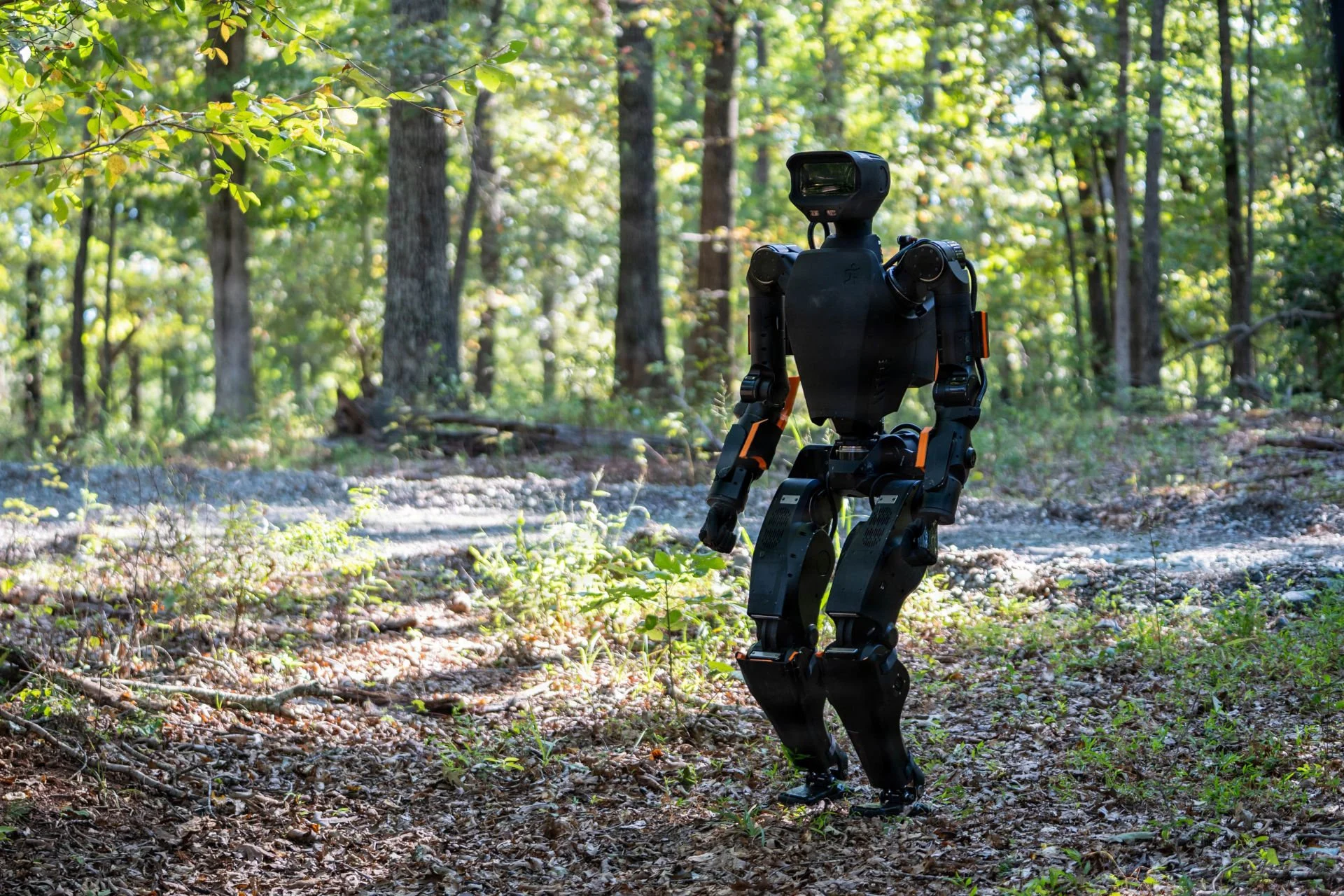
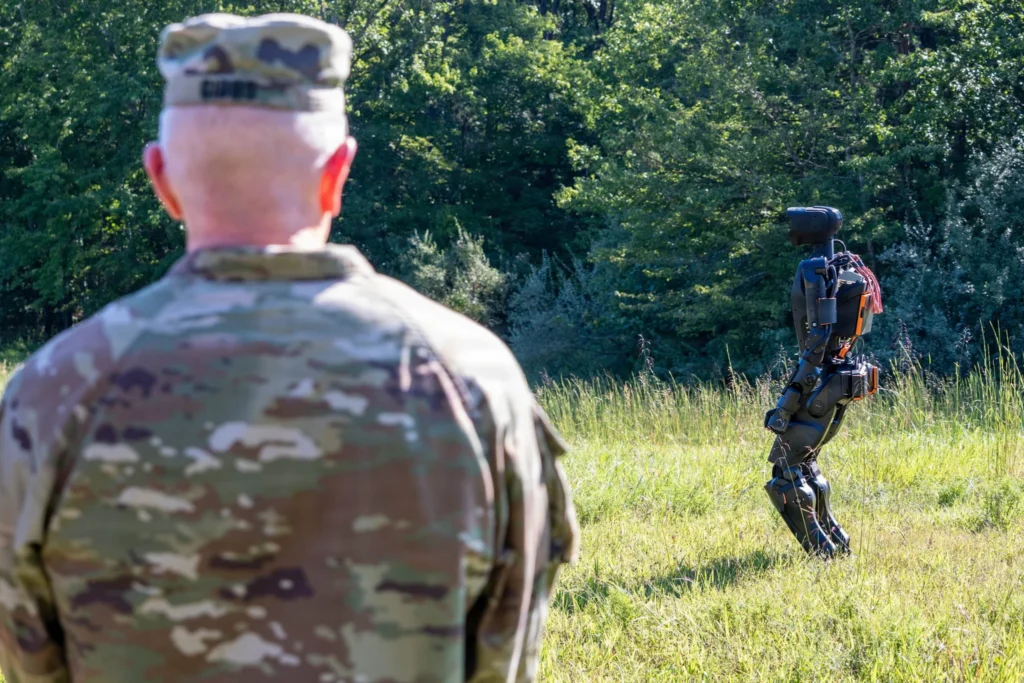
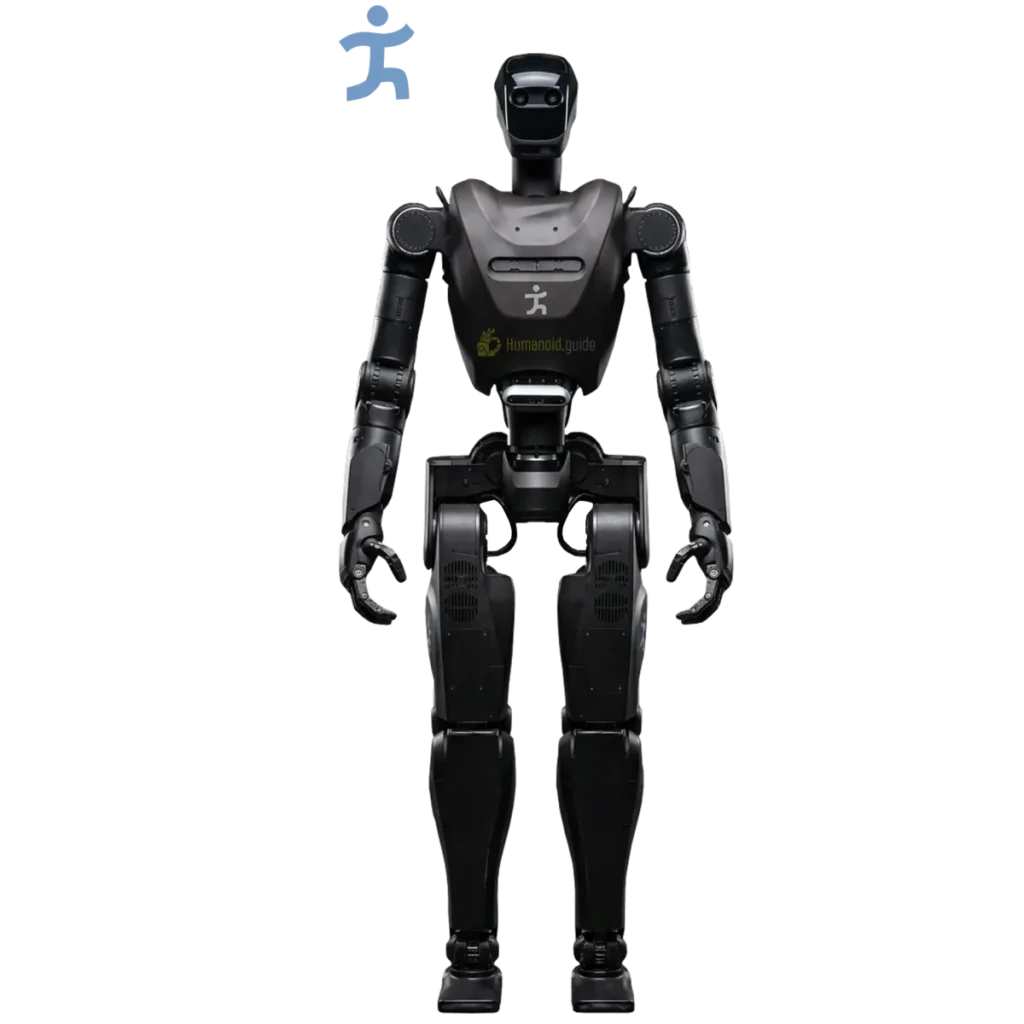
Alex is a fully electric bipedal humanoid robot built by the Florida Institute for Human and Machine Cognition (IHMC) in Pensacola, Florida, with Office of Naval Research funding. On 11 September 2026, the US Army named IHMC one of five winners of its xTechHumanoid competition, describing Alex as a humanoid with impact-resilient actuators, ballistic protection and hybrid autonomy combining artificial intelligence and human control for complex and dangerous missions. I have catalogued it because it is the clearest public example of an armoured humanoid designed to take hits for soldiers. On the public record, it carries no weapon, no combat role has been announced, and no fielding schedule exists. Its relevance to this database lies in what the armour signals and in who has now started paying for it. army
Not to be confused with
Search results for this system are crowded with namesakes. Alex Miller is the Army’s chief technology officer and is quoted in the same announcement. Several commercial products also carry the name Alex. The robot in this entry is IHMC’s Alex. army
Key takeaways
- Alex is a prototype. The Army has not announced a combat role or fielding schedule. armyrecognition
- The Army has not specified the ballistic protection standard, the material or the coverage area, and no live fire test data appears in available sources. gadgetreview
- The Army says it is exploring humanoids to reduce soldier exposure to dangerous and physically demanding tasks. It has not said which missions it has in mind. army
- The Army’s Humanoid Community of Collaboration, set up in December 2023, is already working on power and energy constraints that could shape operational use. army
- The CCW Seventh Review Conference meets in Geneva from 16 to 20 November 2026.
Basic Weapon Facts
I. Background
| Field | Detail |
|---|---|
| Manufacturer | Florida Institute for Human and Machine Cognition (IHMC), Pensacola, Florida, USA. The Alex team is led by Dr Robert Griffin. |
| Suppliers | PSYONIC Ability Hands, five-fingered anthropomorphic hands with six degrees of freedom each, as used in IHMC’s published research. Custom high-power electric actuators developed in-house. Funding from the Office of Naval Research and the Army Research Laboratory. Armour supplier and materials: Unknown |
| Country of origin | United States |
| Developmental stage | Prototype and field evaluation. Nine finalists demonstrated at Marine Corps Base Quantico on 9 and 10 September 2026, and Alex was selected from 103 submissions. |
| System version | Alex (first generation). No version designation published |
| System type | Bipedal humanoid robot with ballistic protection, teleoperated with AI assistance. Unarmed on the public record Meet Alex, IHMC’s next generation humanoid robot – IHMC |
II. General Specifications
| Parameter | Specification |
|---|---|
| System dimensions | About 179 cm tall per one robotics database (listed at 179 cm). IHMC figure: Unknown |
| Weight | About 85 kg with battery, an estimate from IHMC, against about 100 kg for its predecessor Nadia |
| Max payload | Unknown officially. One database lists 15 kg or more. |
| Max operating time | Unknown |
| Max operating distance/reach | Unknown |
| Max speed | Unknown officially. One database lists 1.5 m/s or more. IHMC says it aims for human-level speeds. |
| Degrees of freedom | 29 overall. An earlier preview described 19, so the figure grew during development. |
| Actuation | Custom high-power electric actuators with low-friction transmissions. Joints reach 9 radians per second, wrists give up to 300 degrees of motion, and back driving torque is below 1 N·m. |
| Protection | Ballistic protection of unspecified standard, material and coverage |
| Unit cost | Listed at $500,000 by inquiry as a prototype Alex by IHMC — ui44 |
The dimensions, payload and speed figures come from third-party robotics databases and not from IHMC or the Army, so please check them against an IHMC datasheet before publication.
History and operational record
Lineage. Alex builds on IHMC’s Nadia, a humanoid that gained attention through ping pong and boxing demonstrations, and on IHMC’s long record in humanoid control research. The dissertation that uses Alex as its main evaluation platform also ran its behaviour software on Boston Dynamics’ Atlas, NASA’s Valkyrie, Nadia and Unitree’s H1 2. Alex is a research platform that grew out of that work. ihmcarxiv
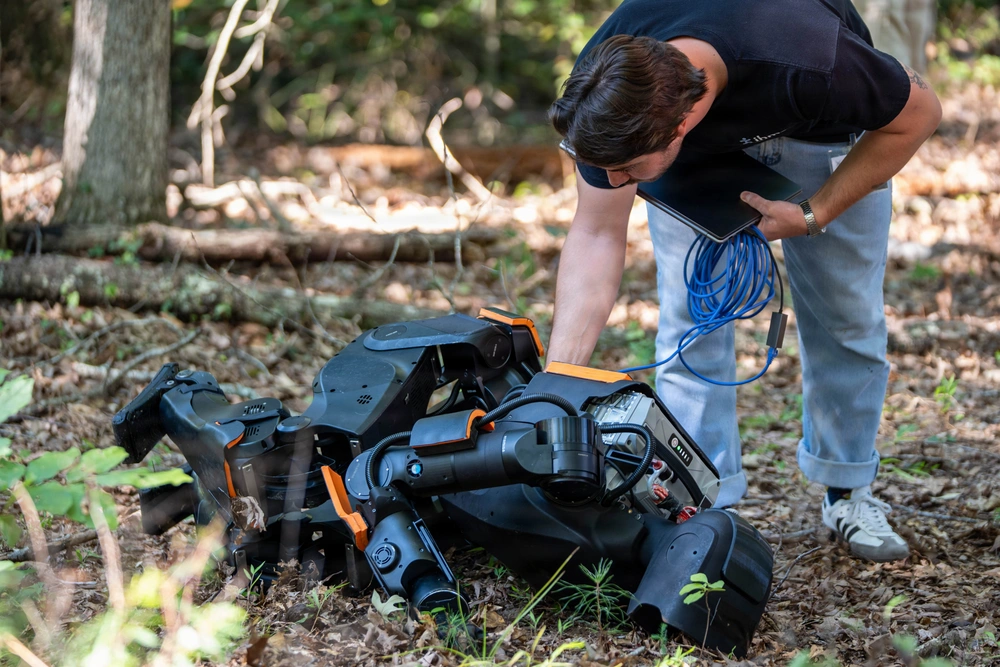
Public unveiling, November 2025. IHMC announced Alex as a multi-year, multimillion-dollar project funded through the Office of Naval Research, designed for out-of-the-lab testing. IHMC described scenarios from military operations to disaster response, with Alex as a human avatar in emergencies that keeps responders at a safer distance. ihmcricksblog
The Army competition. The Army’s FUZE xTech programme and the Humanoid Community of Collaboration launched xTechHumanoid to identify promising commercial approaches and establish a technical baseline. It drew 103 white paper submissions, and the Army named five winners on 11 September 2026: ACES Group (power systems), IHMC (Alex), Hydroplane (portable power generation), Ras Labs (tactile fingertip sensors) and Velocity Explorations (command and control software). Alex was the only complete humanoid platform among them. Robotics competition winners advance military exploration of humanoid capabilities
The Army’s own framing. The Army says the work should preserve combat power and give commanders more options, and its chief technology officer describes xTech as a way to fast-track promising technology and avoid yearslong studies. Humanoid designs appeal because they can, in principle, use equipment, vehicles and buildings made for people. I read the competition as a market survey, with Alex as the most mature body on offer. Robotics competition winners advance military exploration of humanoid capabilities
What the competition does not show. The announcement gives no combat deployment for Alex and no detailed protection, payload or endurance figures. Armour adds weight and raises the energy needed to move, and the Army has said power and energy are the next problem. IHMC’s own researchers want to reduce the weight. Dr Griffin said the team plans to cut the robot’s overall weight to improve speed and performance. US Army Evaluates Armored Humanoid Robot Alex
Autonomy: a forensic analysis
Sensors. I could not find a published sensor suite for Alex. IHMC describes its manoeuvrability, durability, autonomy and search capabilities, and its earlier Nadia work covered perception sensing and virtual reality teleoperation. The thermal, optical and ranging payloads that would turn a search robot into a targeting robot are not described. ricksblog, ihmc
Algorithms. Alex’s onboard computing runs IHMC’s whole body control and behaviour software, supported by an open software development kit. The research behind it describes a behaviour architecture that coordinates locomotion, whole body motion, perception, contact and operator supervision. The Army’s summary of the system calls this hybrid autonomy, and the public descriptions concern mobility, manipulation and search. I found no target recognition or engagement software. humanoid, arxiv
Human intervention in the kill chain. There is no kill chain in the system as described. The Army and the press both place the human at the centre. One review says Alex is not presented as an independent battlefield decision maker, and that human operators remain central, particularly where tasks carry the most risk. I treat that as a reasonable reading of the Army’s wording and not as a verified design specification. gadgetreview
Why the armour matters. Ballistic protection is a design choice that says what the machine is expected to survive. A robot that is meant to take rounds is meant to be somewhere rounds are fired. That makes the question of what it will carry, and who decides when it acts, a matter for the Army to answer before fielding and not afterwards. IHMC describes the intended role as an integrated member of a squad. nextgendefense
Classification. On the public record Alex is an unarmed armoured humanoid with human control and AI assistance. It is not a weapon system and not a lethal autonomous weapon system. I have placed it in the database because the Army’s wider humanoid effort, which Reuters reported in September included a competition for militarised humanoids with potential roles in reconnaissance, security, obstacle clearing and offensive and defensive urban missions, points toward armed use as a plausible later step. I discuss the commercial armed track in my Foundation Phantom entry and the Chinese track in my Unitree H1 and H2 entry. The general principle is on my stance page.
Legal analysis
Current legal position: an unarmed system
Because Alex is not armed, the treaty rules on weapons do not yet apply to it directly. Department of Defense Directive 3000.09 governs autonomy in weapon systems, and it is not triggered by a robot that carries no weapon. What does apply to the Army’s programme is the broader framework of its AI policy: the Department’s 2020 ethical principles for AI, and the 2023 US-led Political Declaration on Responsible Military Use of AI and Autonomy, which I cite from memory and which you should verify. Those instruments are non-binding. They would be tested the moment a weapon is added.
The armour and the law of armed conflict
A robot with ballistic protection remains a military objective under Article 52(2) of Additional Protocol I, and an adversary may lawfully attack it. It has no protected status, and a machine that is destroyed raises no humanitarian concern in itself. The legal weight falls on its use. A robot sent through a door ahead of soldiers puts a machine in front of whoever is inside, and the rules of Articles 48, 51 and 57 on distinction, proportionality and precaution bind the humans who direct it. Article 57(2)(c) requires effective advance warning of attacks that may affect civilians, unless circumstances do not permit. A robot that arrives silently in a room, controlled remotely by an operator who sees through its sensors, can leave a civilian with no warning and no way to know whether it is a threat. I flag that the Army has published nothing on rules of engagement for such a use.
One point of proportionality deserves honest treatment. Preserving friendly forces is widely accepted as part of military advantage, although its weight is debated. A robot that absorbs fire in place of a soldier changes the calculation for the commander, and the legal position does not say how far.
Who operates the robot
IHMC is a research institute and not a military unit. If its staff operate a robot in support of military operations in an active conflict, the question of direct participation in hostilities arises. The ICRC’s 2009 Interpretive Guidance sets a three-part test of threshold of harm, direct causation and belligerent nexus. I mention it as a general principle, because there is no public suggestion that such a deployment is planned. It is a live issue for any programme that moves research platforms toward the field.
Domestic law and homeland roles
IHMC says Alex could serve as a human avatar for first responders, so domestic use is foreseeable. Thermal sensing of homes is a search under Kyllo v. United States, 533 U.S. 27 (2001), and a humanoid entering a building under law enforcement authority would engage Fourth Amendment doctrine, including the use of force standards in Graham v. Connor, 490 U.S. 386 (1989). The politics of lethal force by robots in policing have already surfaced. In late 2022 San Francisco’s Board of Supervisors voted to allow police use of armed robots in extreme cases and reversed itself a week later. I cite all three from memory, so please verify them.
Accountability and export controls
The accountability gap I described in the Phantom entry applies here too, including the contractor defences in Boyle v. United Technologies Corp., 487 U.S. 500 (1988), and Saleh v. Titan Corp., 580 F.3d 1 (D.C. Cir. 2009). A robot with ballistic protection is also likely to face US export licensing, because protective armour technologies are commonly controlled. I have not seen a classification for Alex, and that point is my inference.
The international framework
China’s army publication on humanoids and the Army’s competition are two sides of the same trend, and the CCW process has no instrument that addresses either. I describe the position below.
International relations implications
Two models of humanoid militarisation. Reuters reported on 7 September 2026 that China’s military is accelerating humanoid research and procurement and that Chinese manufacturers shipped about 95 percent of global humanoids in 2025. Alex shows the other model. It is a high-cost, low-volume US prototype, listed at around $500,000, with the Army buying components and competition results in place of fleets. Unitree’s H2, which I examine in the H1 and H2 entry, sells for a fraction of that price. The strategic question is whether quality can offset scale, and the Army’s own wording about establishing a technical baseline suggests it has not decided.
Power as the limiting factor. The Army chose to fund power generation, battery systems and tactile sensing alongside the one complete robot. That tells me the service sees energy and dexterity as the bottleneck, and not intelligence. Armour makes the energy problem worse, so the constraint on armoured humanoids is physical, and it may hold for years.
Armour and the cost of entering buildings. If a robot can survive the first moments of contact, commanders face less pressure to hold back from urban assaults, and the human cost shifts toward the people inside the buildings. The counterargument is real, and I want to state it fairly. A robot that goes first can look before force is used, and better information before a strike can protect civilians. Which effect dominates depends on rules the Army has not published.
Allies and standards. The US has led the Political Declaration on responsible military AI, and it has historically favoured non-binding measures at the CCW over a new treaty, which I cite from memory. Allied armies will watch xTechHumanoid for interoperability. A US programme that sets expectations for human control and testing could shape allied practice, and one that leaves them vague will do the same.
The treaty moment. On 5 September 2026, the CCW Group of Governmental Experts reached consensus among 128 states on a document addressing lethal autonomous weapons systems, though critics argue major military powers weakened it. France says the text clarifies human control and judgment and that the Review Conference must decide next steps. The UN Secretary General and the ICRC jointly called on 25 August for the November conference to begin binding negotiations, and the ICRC urges states to use it to launch negotiations on a new protocol. A humanoid that is unarmed today and might be armed tomorrow is the kind of system a definition tied to current weapons would miss. The relevant Reaching Critical Will report and the UNODA briefing track the process.
My assessment
I want to be fair to this one. Alex is a research robot built by a research institute, funded through the Navy and the Army, and described by its own team as something that might one day let a first responder search a collapsed building from a distance. I find that picture appealing. The Army announced it with careful language and did not claim a combat role. Of the systems I have written about in this series, it is the one where the public record gives me the least cause for alarm.
I still think the armour tells us something the announcement does not say. Nobody fits ballistic protection to a robot they expect to use in a laboratory. The sensible reading is that the Army wants a machine that can be where soldiers cannot afford to be, and the next sensible step is to ask what it will carry once it is there. That is the question I would want answered now, while the system is a prototype and the cost of answering is small. A published statement of the intended missions, the legal review that applies, the rules for civilians in buildings and the audit trail for any use of force would be a modest request. The Army’s own phrase for the exercise is establishing a technical baseline, and I would like the baseline to include the law.
I also think researchers carry some of this. IHMC’s work has real humanitarian promise, and dual-use research deserves a clear public account of its limits. That is a view from my own training, and I do not mean it as an accusation. My position is the one on my stance page: meaningful human control has to be specified before capability matures, attached to identifiable people and written into law. I explain how I came to this work in my story, the wider risks are on my AI safety page, and I track the response in my research and the AI Policy Tracker. For the concept of control itself see my article on meaningful human control.
Frequently asked questions
What is the Alex humanoid robot?
A fully electric bipedal humanoid built by IHMC in Pensacola, Florida, with Office of Naval Research funding. It has ballistic protection, impact-resilient actuators and a hybrid autonomy system combining AI and human control.
Is Alex armed?
Not on the public record. The Army has announced no weapons, no combat role and no fielding schedule.
Why did the Army select Alex?
It won the xTechHumanoid competition on 11 September 2026, chosen from 103 submissions as the only complete humanoid among five winners, to help the Army establish a technical baseline for humanoids that reduce soldier exposure to danger.
How heavy is Alex?
About 85 kg with its battery, according to IHMC, which is about 15 kg lighter than its predecessor Nadia.
Is Alex autonomous?
It uses hybrid autonomy, with AI assisting and human operators remaining central. No autonomous targeting capability has been reported.
Sources
Manufacturer website: IHMC Robotics, Meet Alex
News reports and analysis
- US Army, Robotics competition winners advance military exploration of humanoid capabilities (30 September 2026)
- TechRepublic, US Army Evaluates Armored Humanoid Robot Alex for Dangerous Tasks
- Army Recognition, US Army Selects Ballistic Protected Humanoid Robot for High Risk Battlefield Mission Experiments
- Defence Blog, US Army scouts armored humanoids for risky missions
- Militarnyi, US Army Selects Five Winners in Humanoid Robot Competition
- NextGen Defense, A Humanoid Robot With Armor and AI Just Caught the US Army’s Eye
- Gadget Review, US Army Picks Five Humanoid Robot Winners
- Humanoid Guide, Welcome, Alex!
- Interesting Engineering, Humanoid robot Alex gears up for debut
- IHMC dissertation using Alex, A System for Fast, Resilient, and Adaptable Loco-Manipulation Behaviors on Humanoid Robots
- Reuters via The Express Tribune, From dance floor to war: China readies humanoid robots for combat (7 September 2026)
- Specification databases (check against IHMC data): ui44, Alex by IHMC and Humanoid Robots IO, Alex
Government, military and diplomatic documentation
- Department of Defense Directive 3000.09, Autonomy in Weapon Systems (updated January 2023)
- Department of Defense AI Ethical Principles (2020); Political Declaration on Responsible Military Use of AI and Autonomy (2023)
- ICRC, Autonomous Weapons advocacy paper (June 2026)
- ICRC, Interpretive Guidance on the Notion of Direct Participation in Hostilities (2009)
- France, GGE communiqué (10 September 2026)
- UNODA, CCW GGE LAWS briefing
- Reaching Critical Will, CCW Report (January 2026)
Treaties, statute and case law
- Additional Protocol I, Arts 36, 48, 51, 52, 57 (ICRC database)
- UNGA Resolution 78/241 (2023)
- Kyllo v. United States, 533 U.S. 27 (2001)
- Graham v. Connor, 490 U.S. 386 (1989)
- Boyle v. United Technologies Corp., 487 U.S. 500 (1988)
- Saleh v. Titan Corp., 580 F.3d 1 (D.C. Cir. 2009)

Avi is a researcher educated at the University of Cambridge, specialising in the intersection of AI Ethics and International Law. Recognised by the United Nations for his work on autonomous systems, he translates technical complexity into actionable global policy. His research provides a strategic bridge between machine learning architecture and international governance.