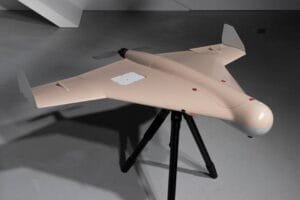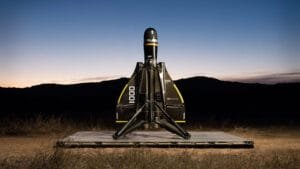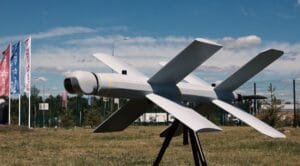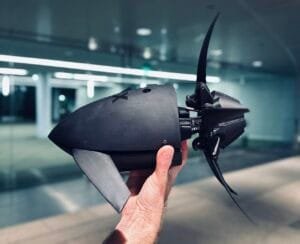
STM Kargu-2 UAV
STM Kargu-2: Technical Dossier and Legal Analysis
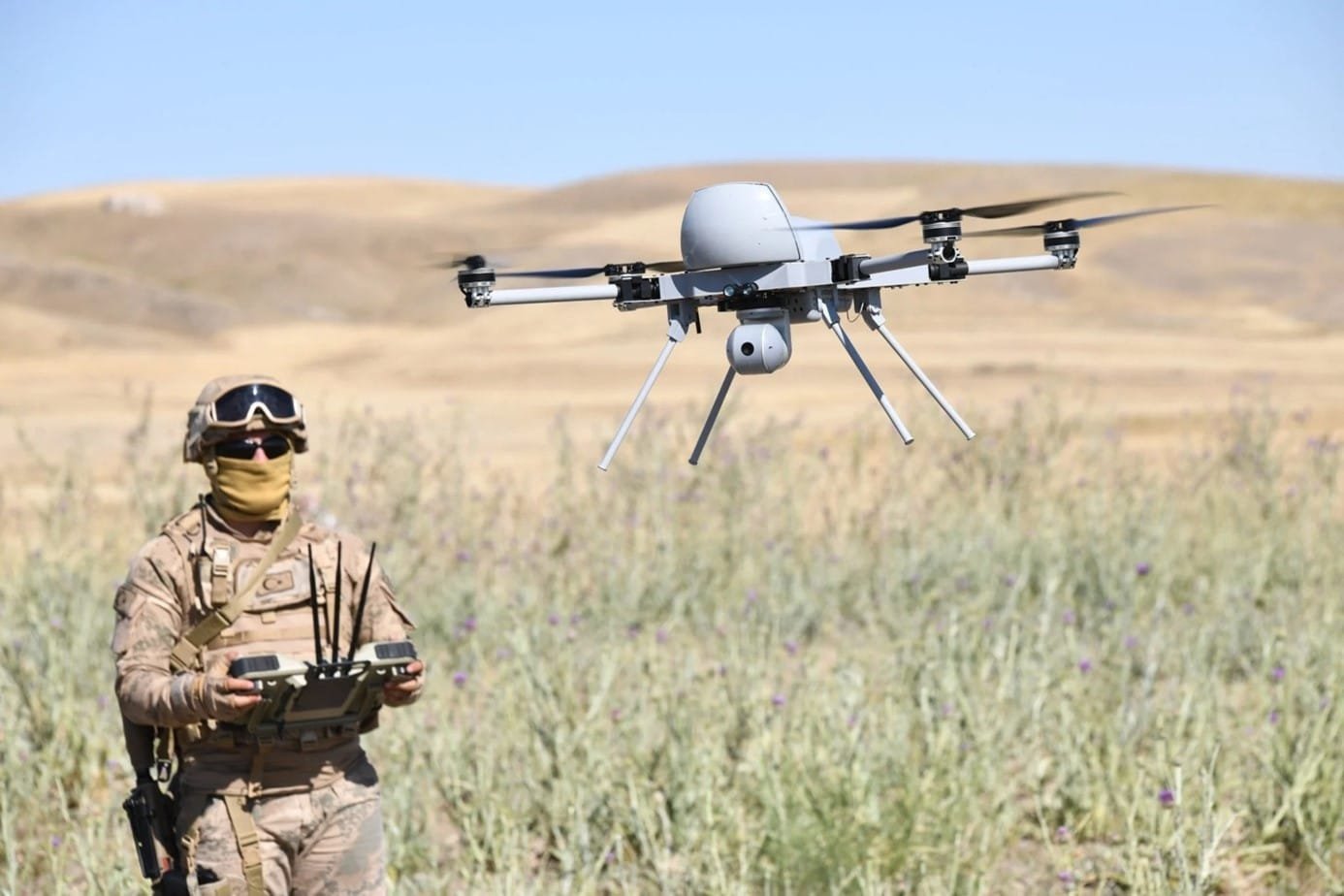
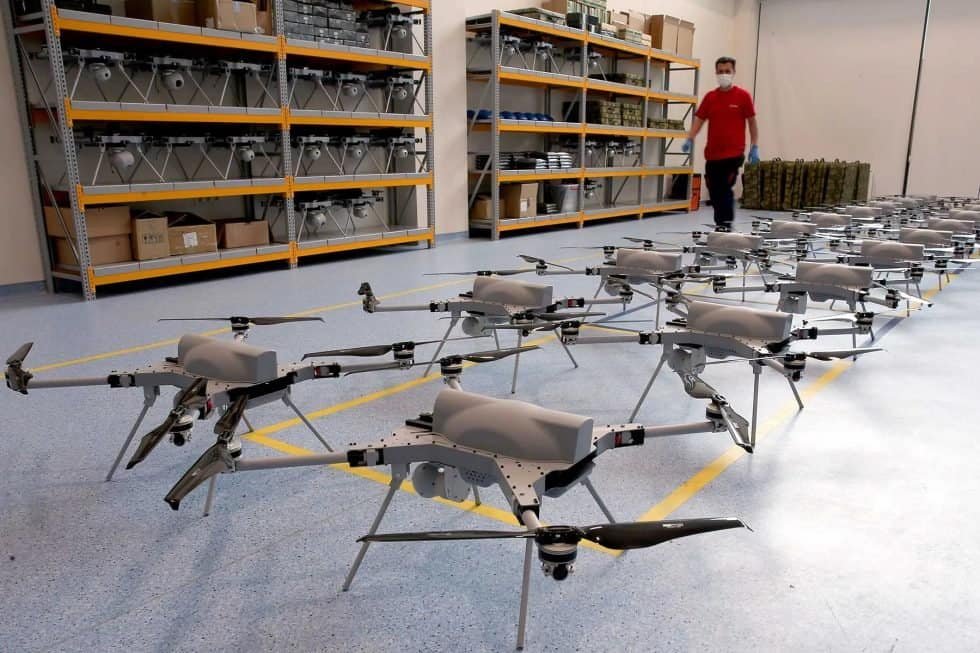
STM’s Kargu-2 is a quadcopter Unmanned Aerial System (UAS) with extensive autonomous strike capabilities. The Kargu-2 was initially designed as a reconnaissance system. Later editions have been equipped with explosives to carry out kamikaze-style precision strikes on individual human targets. The system has facial-recognition and swarming features.
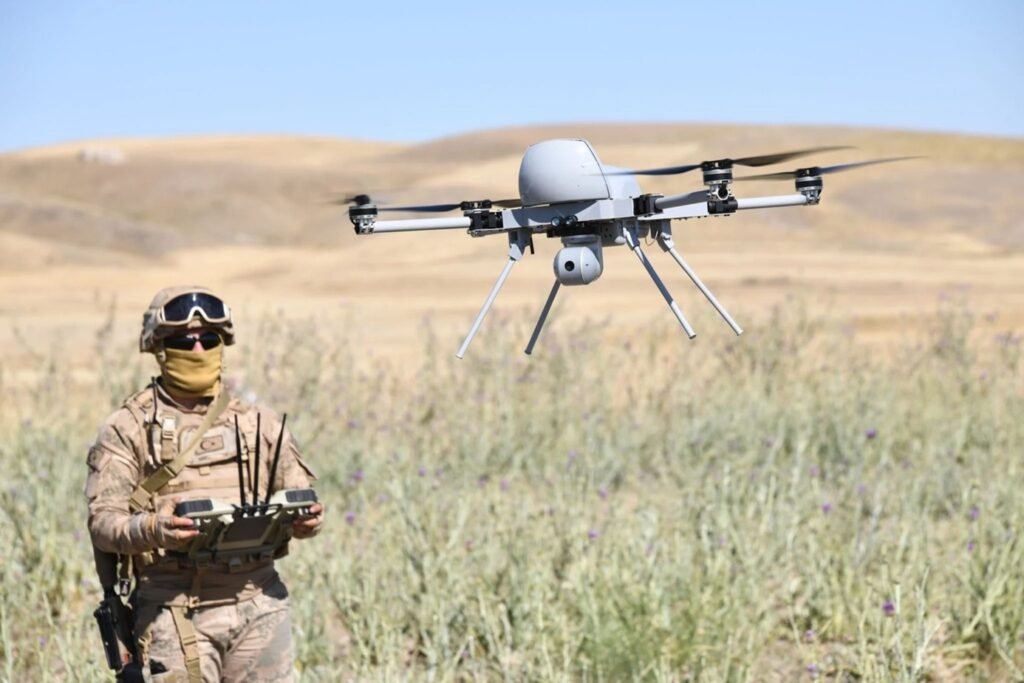
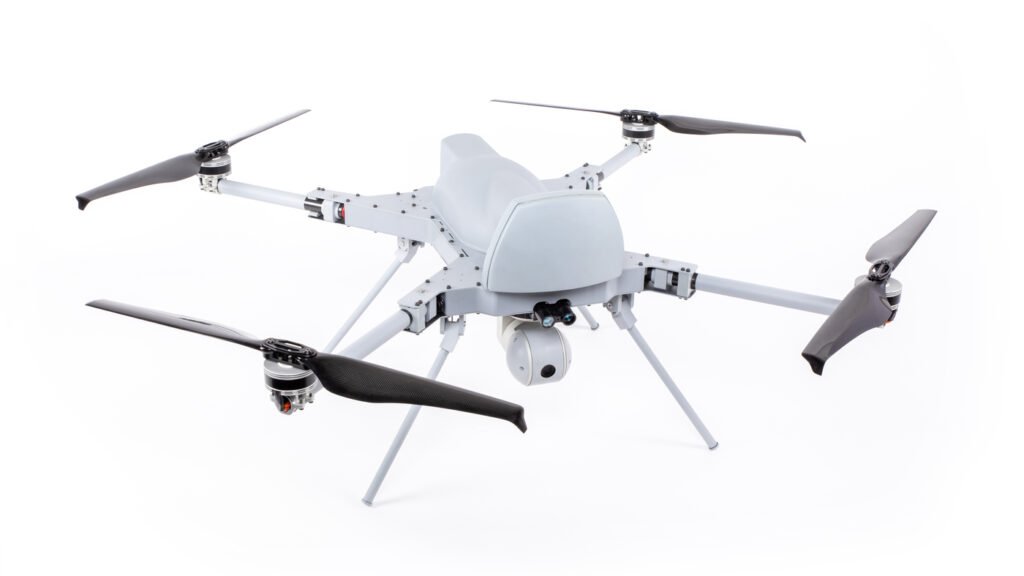
The Kargu-2 is a portable, four-rotor loitering munition made by STM, a Turkish defence company based in Ankara. Turkish sources describe it as designed for anti terrorist operations and asymmetric warfare, and operable by a single soldier in autonomous and manual modes. It is the weapon at the centre of the most cited paragraph in the autonomous weapons debate. In March 2021 the UN Panel of Experts on Libya reported that logistics convoys and retreating forces had been hunted down and remotely engaged by unmanned combat aerial vehicles or lethal autonomous weapons systems such as the Kargu-2. I include it because every serious discussion of lethal autonomy eventually arrives here. It is also a lesson in how hard it is to establish, after the fact, what a machine was actually doing. airforce-technology, icrc
Key takeaways
- The UN Panel reported that these systems were programmed to attack without requiring data connectivity between operator and munition, in effect a “fire, forget and find” capability. icrc
- The report does not settle the key facts. NPR noted that it did not make clear whether the Kargu-2 was operating autonomously or manually, and it does not say explicitly that the system killed anyone. NPRasiatimes
- The Panel found Turkey in repeated non-compliance with the UN arms embargo on Libya, and Turkey’s spokesperson called the allegations baseless. audacy
- STM has signed its first European export of Kargu and Alpagu to an unnamed NATO country, for integration onto armoured vehicles. janes
- The CCW Seventh Review Conference meets in Geneva from 16 to 20 November 2026.
Basic Weapon Facts
I. Background
| Field | Detail |
|---|---|
| Manufacturer | STM Savunma Teknolojileri Mühendislik ve Ticaret A.Ş. (STM Defence Technologies Engineering and Trade), Ankara, Turkey. Ownership structure: Unknown here |
| Suppliers | Munition integration in cooperation with MKE, and an STM-designed proximity fuse and automatic target recognition system. The JINN electronic warfare pod, developed by EHSIM, completed field tests on Kargu. Other suppliers: Unknown |
| Country of origin | Turkey |
| Developmental stage | Operational and exported. First flight in 2017, introduced in 2020, with Turkey and Azerbaijan as primary users. STM says it entered the Turkish inventory in 2018. The dates conflict |
| System version | Kargu (also Kargu-2). Companion fixed-wing system: Alpagu |
| System type | Man portable, rotary wing loitering munition with machine vision, operator in the loop with autonomous options kargu |
II. General Specifications
| Parameter | Specification |
|---|---|
| System dimensions | Unknown. One STM brochure table lists 800 x 800 x 500 mm, but it sits among several products and I could not attribute it with confidence |
| Weight | About 7.06 kg |
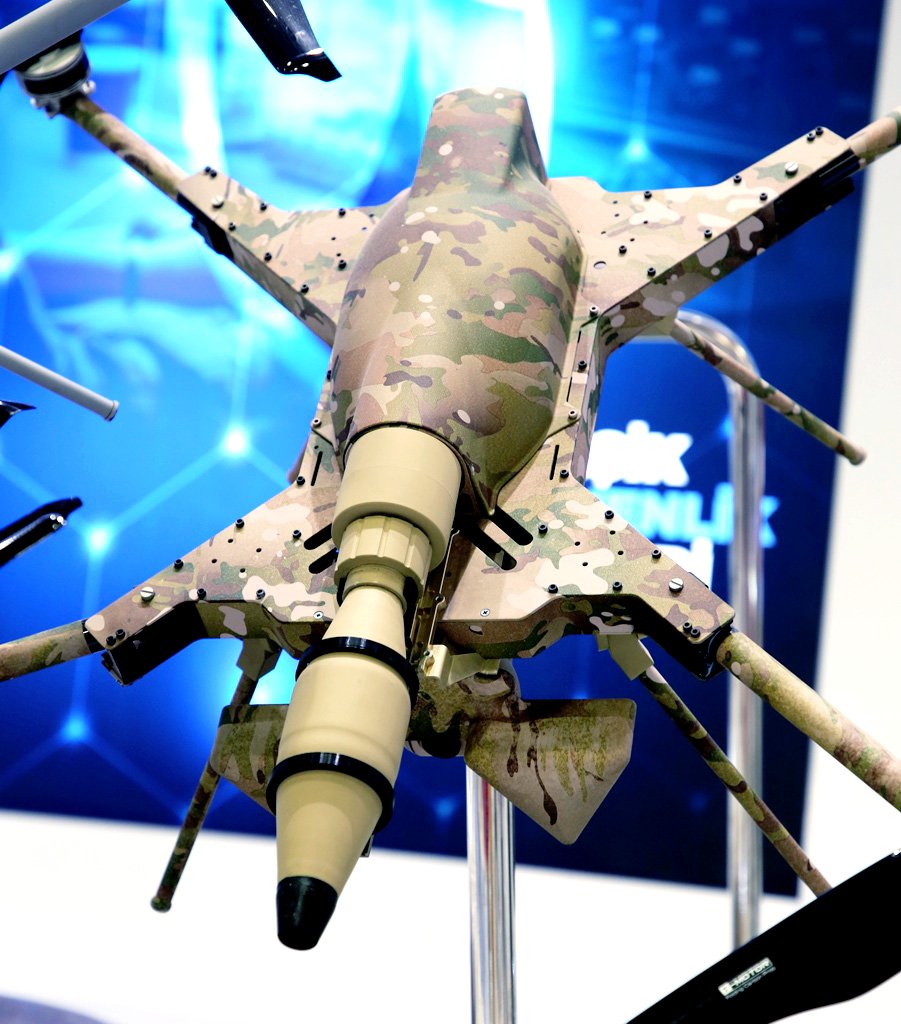
| Max payload (warhead) | Warhead capacity of 1.3 kg in an STM brochure. Fielded in anti-personnel or armour-piercing versions, changed in the field. |
| Max operating time | 25 to 30 minutes |
| Max operating distance/reach | Mission range of 10 km. One trade source gives 5 km. |
| Max speed | 72 km/h |
| Swarm capability | Swarms of up to 20 platforms are claimed |
| Unit cost | Unknown STM Kargu +7 |
The range figures conflict, and STM’s brochure data merges several products. Please check against a current STM datasheet.
III. Autonomy
Autonomous Targeting capabilities:
The Kargu-2 performs “precision strike missions … fully performed by the operator, in line with the Man-in-the-Loop principle” according to STM’s 2024 website. However, earlier versions of the system’s publication list “Autonomous and Precise Hit with Minimal Collateral Damage” and “Embedded and Real-Time Object Tracking, Detection and Classification” as capabilities. Kargu-2 drones were possibly used to strike targets autonomously in Libya in 2020; according to a U.N. report, targets were “hunted down and remotely engaged.” STM has subsequently denied the autonomy of these attacks.
History and operational record
Syria and Turkey’s own operations. STM says Kargu has been used in counter terrorism, special operations and cross-border missions by various security forces. Public detail is limited. stm
Libya, 2020. The Panel’s account concerns the offensive launched in late March 2020. After Prime Minister Serraj announced Operation Peace Storm on 27 March 2020, GNA-affiliated forces moved to the offensive along the coast, and logistics convoys and retreating Haftar-affiliated forces were hunted down. A second paragraph says the retreating forces were subject to continual harassment from these systems and suffered significant casualties. The drones may have been operational since January 2020, according to the experts. Turkish forces supported the GNA in the conflict. The Panel said that GNA-affiliated forces had likely received Kargu drones, specifically the Kargu-2 model. Libya, The Use of Lethal Autonomous Weapon Systems
Azerbaijan. Azerbaijan is listed as a primary user. I found no reliable open-source detail on Kargu use in the 2020 Nagorno-Karabakh war and mention the association only as reported. Wikipedia
Export. STM confirmed to Janes that both Kargu and Alpagu will be operationally deployed under an autonomous systems project, integrated onto armoured land vehicles with STM responsible for battle management and combat management software integration, and intended as a reference for broader European adoption. The buyer is unnamed, and the date is early 2026 according to Janes. janes
Electronic warfare. STM says Kargu can perform missions independently of satellite navigation, remain resilient in electronic warfare environments, and carries the JINN pod, which blinded enemy radars in field tests. The company has also added the electronic warfare capability recently, which tells me jamming is the problem its customers are worried about. stm
Autonomy: a forensic analysis
Sensors. STM lists optical guidance and target tracking, advanced image stabilisation, a target recognition system and a precision landing sensor. Janes describes AI-supported image processing from electro-optical and infrared sensors. stmjanes
Algorithms. The claims here are the most consequential on the page. STM says Kargu uses deep-learning-based computer vision for real-time object detection, classification, recognition and tracking, and that swarm software provides task sharing and target prioritisation across the system. STM’s brochure says the platform performs fully autonomous navigation through its own flight control system and includes an STM-designed automatic target recognition system. A reference compilation notes that STM suggested a facial recognition capability, and that the swarm’s ability to autonomously identify, select and coordinate attacks on a target has never been demonstrated by STM in reality. I rely on that compilation for the facial recognition point, and I recommend checking it against STM’s own material. A Reuters columnist reported that an STM video describes a fire-and-forget mode that implies the drone can loiter, find a target and engage automatically, while the same video shows a deliberate human decision to engage. STM Defence – KARGU Combat Proven Rotary Wing Loitering Munition System
Human intervention in the kill chain. The product is designed with both modes. STM lists mission abort and return home capabilities and operation by a single person. The kill chain depends on which mode is selected, and the public record does not say which was used in Libya. Here is the position as I read the evidence. stm
- The platform is capable of autonomous engagement by STM’s own description, with an onboard recognition system and no data link requirement.
- The Panel described programming that matches that capability. It did not describe an investigation that confirmed the mode of any individual attack.
- An expert quoted in the ICRC casebook said it is sensible to say the Kargu-2 as a platform is open to being used in an autonomous way, which is a statement about capability and not about what happened. icrc
Classification. If used in its autonomous mode, the Kargu-2 matches the definition used in the CCW process. The chair’s March 2026 text characterised a lethal autonomous weapon system as one that can identify, select and engage a target without intervention by a human operator in the execution of those tasks. That is why it is the paradigm test for the definition. I classify it as a loitering munition with documented autonomous capability and an unresolved record of use. Compare the Switchblade in my loitering munition entry, where the human commits each strike and the open question is link loss. The Kargu-2 begins where that question ends. Wikipedia
The Libya report examined
The paragraph is short, so the reading matters. I treat it in four parts.
What it says. Convoys and retreating forces were hunted down and remotely engaged by combat drones or autonomous weapons such as the Kargu-2, which were programmed to operate without a data connection to the operator.
What it does not say. It does not state explicitly that an autonomous weapon killed anyone, and a drone expert quoted by NPR questioned whether the weapon used in Libya actually caused any casualties and noted that loitering munitions have been used in combat for a while. The language moves between “unmanned combat aerial vehicles” and “lethal autonomous weapons systems” without telling the reader which one did what. asiatimesNPR
The evidential problem. The Panel was monitoring an arms embargo and not investigating weapons autonomy. Its source material, its method for concluding that a system was operating without a link, and the technical expertise behind that conclusion are not set out in the paragraph. I do not say this to diminish the report. It is the only official finding of its kind, and it was produced by sanctions monitors with a different task. That is the point. No one with a mandate and the technical means has examined what happened.
The aftermath. I found no public follow-up investigation by the UN, Turkey, STM or any other body. The report triggered a wave of commentary, including legal analysis from the Lieber Institute and the ICRC’s casebook, and little else. Five years on, the question of what the Kargu-2 did in Libya is still unanswered.
Legal analysis
The conflict and the governing law
The Lieber analysis treats the Libya setting as what appears to be a non-international armed conflict. That means common Article 3 of the Geneva Conventions, Additional Protocol II where applicable, and customary rules on distinction, proportionality and precautions. Turkey, as far as I know, is not a party to Additional Protocols I or II, which I cite from memory, so the treaty duty to review new weapons under Article 36 of Additional Protocol I does not bind it as a treaty matter. The customary rules still apply to its forces and to its support for the GNA. westpoint
Retreating fighters
The Panel’s language about retreating forces raises the most important legal question. A fighter who is retreating is not for that reason out of the fight. Persons are protected as hors de combat, under Article 41 of Additional Protocol I and its customary equivalent, only when they are in the power of the adverse party, clearly express an intention to surrender, or are incapacitated and abstain from hostile acts. A retreating column can include fighters who have abandoned their weapons and are trying to surrender, and a camera cannot always tell. A weapon that hunts a retreating force with no operator watching has to distinguish those cases by software. I regard this as the clearest statement of why the ICRC has warned that autonomous systems may struggle to read surrender, and why it urges states to prohibit autonomous weapons designed or used to apply force against persons. The Kargu-2 carries an anti-personnel warhead option.
Distinction by machine
The Lieber analysis argues that machine learning-based object classification may go some way to satisfy the distinction requirement if the system was trained to recognise features common among legitimate military targets such as uniforms, and it also notes that technical challenges remain. I agree with both halves. A classifier trained on uniforms will fail where combatants wear civilian clothes and where civilians wear military clothing, and neither case is unusual in a conflict like Libya’s. The facial recognition claim adds a different problem. Targeting a named individual by face presupposes that the person is a lawful target, and that the database is right. westpoint
The arms embargo
This is the clearest legal finding in the record. The UN Security Council imposed an arms embargo on Libya in resolution 1970 of 2011, and later resolutions strengthened it. The 2011 embargo obliged states to prevent the direct or indirect supply of weaponry to Libya, and the Panel described it as totally ineffective. The Panel found that arms transfers by Turkey and the United Arab Emirates since their more direct engagement had been extensive, blatant and with complete disregard for the sanctions, and that Turkey and the UAE were in repeated non-compliance. It cited Turkey’s transfer of at least 10 types of military equipment. The Panel’s Kargu-2 observation came in this context. Turkey denied the allegations. The legal significance is that an AI-enabled weapon entered a conflict in breach of a binding Security Council measure, which means no export licensing system or end-use control had the chance to examine it. Global perspective: Human stories
International criminal law
Libya is within the jurisdiction of the International Criminal Court by virtue of Security Council resolution 1970 (2011), which referred the situation to the Court, a point I cite from memory. The Rome Statute’s war crimes provisions on intentionally directing attacks against civilians and on disproportionate attacks therefore reach conduct in Libya whatever the nationality of the perpetrator, and Turkey’s status as a non-party does not remove it. If a Kargu-2 attack had struck civilians or persons hors de combat, the question would be who the responsible individuals were. The operator, the commander who authorised the programming mode, the officer who supplied the system and the manufacturer all sit in a chain that has no public investigation.
The CCW guiding principles
In 2019 the GGE agreed 11 guiding principles, including that humans must always be held responsible for the engagement of these weapons. The Kargu-2 episode tests that principle directly, because a programmed autonomous mode with no link leaves the question of which human is responsible for a specific engagement unanswered on the public record. letemps
The exports
The Janes report of a European NATO export raises a different question. Most NATO members are parties to Additional Protocol I, so Article 36 binds the buyer as a treaty matter. A state integrating Kargu onto armoured vehicles with its own battle management software will have to review what the weapon can do in each mode, including the modes STM advertises. Turkey is not, as far as I know, a party to the Arms Trade Treaty, which I cite from memory. The treaty’s risk assessment criteria therefore do not bind Turkish exports, and range limits mean Kargu falls outside the Missile Technology Control Regime, which covers unmanned aircraft with a range of 300 km or more, another point I cite from memory. Few export controls reach a 10 km loitering munition.

International relations implications
Mid-sized powers as arms producers. The Kargu-2 shows that the frontier of autonomous weapons development is no longer limited to the United States, China and Russia. A middle power with a strong defence industry and few export constraints can field machine vision munitions, test them in a foreign conflict and sell them to a NATO ally. Turkey’s drone industry is better known for larger platforms, and Kargu shows the same approach applied to autonomy at the small end.
Proving ground and embargo. Libya was a proving ground for several states’ systems, and the embargo was ignored by both sides and their backers. I draw the lesson that arms embargoes are weakest where they matter most, in conflicts with active foreign patrons. A rule on autonomous weapons will depend on enforcement mechanisms that do not now exist.
A European export and alliance consequences. A NATO member integrating a Turkish autonomous munition onto its vehicles brings the issue inside the alliance. Interoperability and shared doctrine will make the Alliance’s collective position on autonomy more concrete than any statement. I would watch how that buyer describes human control.
Forensics and verification. The Libya paragraph shows the verification gap. No one can currently determine, from outside, which mode a loitering munition was in. A future instrument will need transparency measures: logging of operating mode, retained engagement data, and technical inspection after incidents. I would put this on the agenda ahead of definitions.
Turkey in the treaty process. Reuters reported on 4 September 2026 that the US position, favouring guidelines over a binding treaty, was supported by states including Russia, India and Turkey. On 5 September the GGE reached consensus among 128 states on a non-binding document, though critics argue major military powers weakened it. France says the text clarifies human control and judgment and that the Review Conference must decide next steps. The UN Secretary General and the ICRC jointly called on 25 August for the November conference to begin binding negotiations, and the ICRC urges states to launch negotiations on a new protocol. The Reaching Critical Will report and the UNODA briefing follow the process. A state that opposes binding rules while exporting a munition with a documented autonomous mode holds an uncomfortable position, and it is the one the conference will have to address.
Link loss and autonomy again. STM advertises GNSS-independent operation and electronic warfare resilience. The same logic drives my MQ-9 Reaper entry, where link loss pushes toward autonomy, and the Switchblade entry, where a jammed link raises the question of what a committed munition does. The Kargu-2 is where that pressure leads when it is designed in from the start.
My assessment
I return to the Libya paragraph more often than any other text in this field. The words “hunted down” appear in an official UN document, applied to people in retreat. I try to keep two things in view. First, I do not know what happened. The report is ambiguous; careful commentators have said so, and I would be doing the work a disservice if I wrote as though the first autonomous killing was settled fact. Second, the ambiguity is itself the finding. Five years after a UN panel put a weapon in a war zone with a description that implies no human was deciding, no one with the technical means and the mandate has told us what it did. That should alarm people more than the weapon does.
The company’s own marketing deserves equal scrutiny. A product page that advertises deep learning recognition, swarm task sharing and target prioritisation, next to a video of a human decision, is selling both stories at once. I am not suggesting dishonesty. I am saying the buyer and the public cannot tell which story is true, and that the answer should not depend on a brochure.
My position is the one on my stance page. Meaningful human control has to be specified, attached to identifiable people and written into law that binds every state, and it needs verification to mean anything. I explain how I came to this work in my story, the wider risks are on my AI safety page, and I track the response in my research and the AI Policy Tracker. See also my article on meaningful human control. If the November conference does one practical thing, I would like it to mandate technical forensics for incidents like this one.
Frequently asked questions
What is the STM Kargu-2?
A portable four-rotor loitering munition made by the Turkish company STM, with onboard machine vision, an optional swarm mode and anti-personnel or armour-piercing warhead options.
Did the Kargu-2 kill people autonomously in Libya?
The UN Panel of Experts reported in March 2021 that autonomous weapons such as the Kargu-2 were programmed to attack without a data link to the operator and were used against retreating forces. The report does not say explicitly that anyone was killed autonomously or which mode was used.
What does “fire, forget and find” mean?
A weapon that, once launched, finds and attacks targets without further operator input. It is the Panel’s description of the programming of the systems it mentions.
Did Turkey violate the Libya arms embargo?
The UN Panel found Turkey in repeated non-compliance with the arms embargo. Turkey’s spokesperson called the allegations baseless.
Has the Kargu-2 been exported?
STM signed its first European export of Kargu and Alpagu to an unnamed NATO country in early 2026, for integration onto armoured vehicles. Azerbaijan is a reported user.
Sources
Manufacturer website: STM Defence, KARGU and STM press release, KARGU Receives Advanced Electronic Warfare Capabilities
News reports and analysis
- NPR, A Military Drone With A Mind Of Its Own Was Used In Combat, U.N. Says (1 June 2021)
- Asia Times, Autonomous drone may have killed in Libya: UN report (June 2021)
- Reuters (Peter Apps) via CNBC Africa, New era of robot war may be underway unnoticed (2021)
- Le Temps, Des robots tueurs ont ils fait leurs premières victimes en Libye?
- Janes, STM secures first European export of Kargu and Alpagu loitering munitions (2026)
- Airforce Technology, Kargu Rotary Wing Attack Drone, Turkey
- AP via WWL, Experts: Libya rivals UAE, Russia, Turkey violate UN embargo (September 2020)
- UN News, Libya arms embargo “totally ineffective”: UN expert panel (March 2021)
- Reference compilation (check against STM material): Wikipedia, STM Kargu
Government, military and diplomatic documentation
- UN Security Council, Final report of the Panel of Experts on Libya, S/2021/229 (8 March 2021), para 63
- ICRC Casebook, Libya: The Use of Lethal Autonomous Weapon Systems
- Lieber Institute, West Point (Hitoshi Nasu), The Kargu-2 Autonomous Attack Drone: Legal and Ethical Dimensions (10 June 2021)
- STM, KARGU technical brochure (via Turkish Defence)
- UN Security Council resolutions 1970 (2011), 2292 (2016) and 2509 (2020) on Libya
- Reuters via The Star, Opposition by US and Russia raises doubts over autonomous weapons talks outcome (4 September 2026)
- ICRC, Autonomous Weapons advocacy paper (June 2026)
- France, GGE communiqué (10 September 2026)
- UNODA, CCW GGE LAWS briefing
- Reaching Critical Will, CCW Report (January 2026)
- CCW Group of Governmental Experts, Guiding Principles on LAWS (2019)
Tap or hold

Avi is a researcher educated at the University of Cambridge, specialising in the intersection of AI Ethics and International Law. Recognised by the United Nations for his work on autonomous systems, he translates technical complexity into actionable global policy. His research provides a strategic bridge between machine learning architecture and international governance.