The Thucydides Trap Returns: What Xi Told Trump in the Oval Office, and What Washington Chose Not to Hear
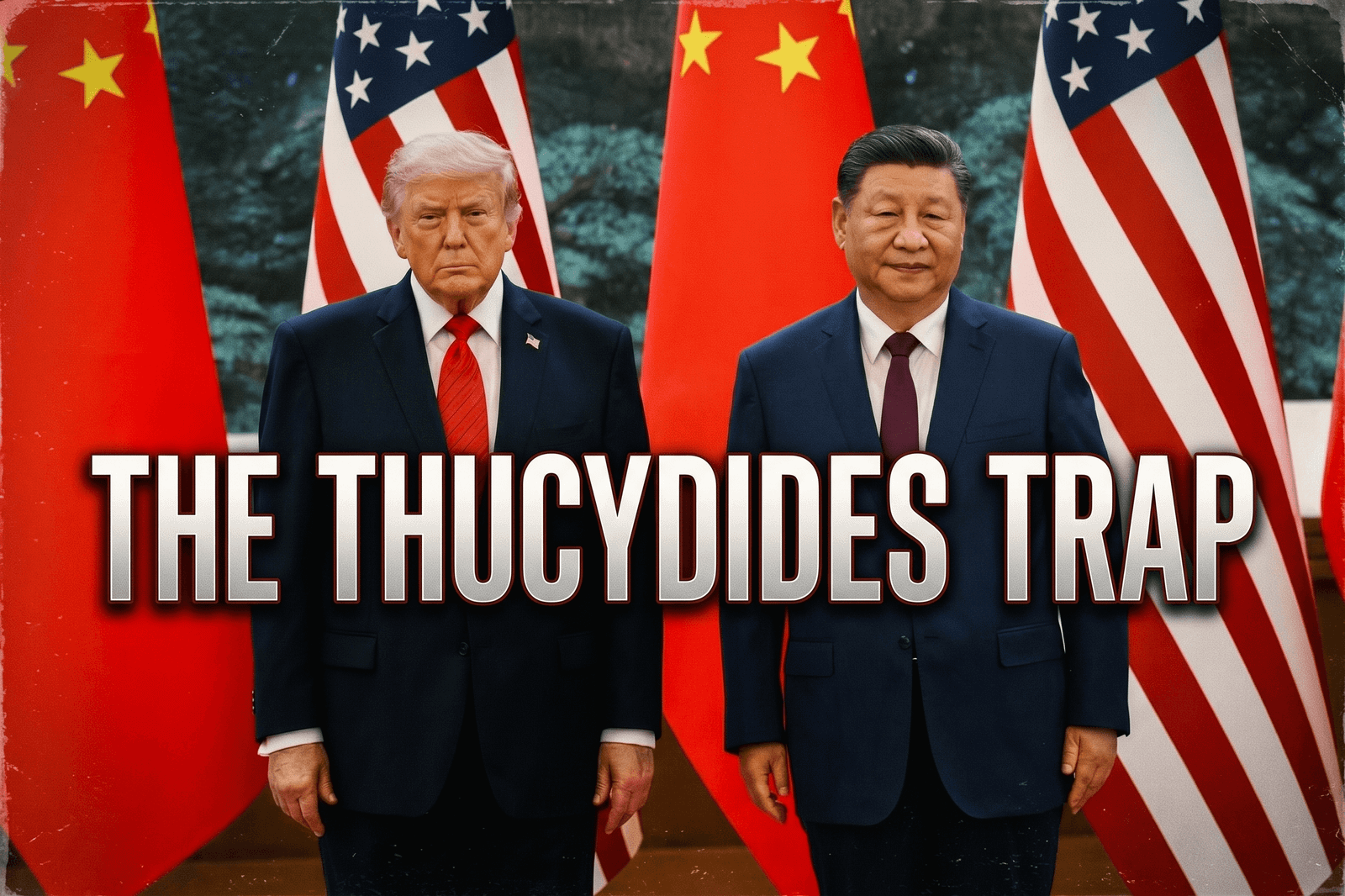
When Xi Jinping told Donald Trump that “the Thucydides Trap can be overcome,” he was not offering diplomatic small talk. He was issuing a carefully calibrated statement about the trajectory of the two most consequential powers in the international system, delivered in front of cameras, on American soil, at the most symbolically loaded venue Washington has to offer. According to CNBC’s account of the September summit, Trump’s own remarks on Xi’s arrival emphasised general collaboration and left Taiwan entirely unaddressed. That gap between what was said and what was heard is, in miniature, the story of the current state of US-China relations, and it deserves a proper accounting.
What the Thucydides Trap actually means
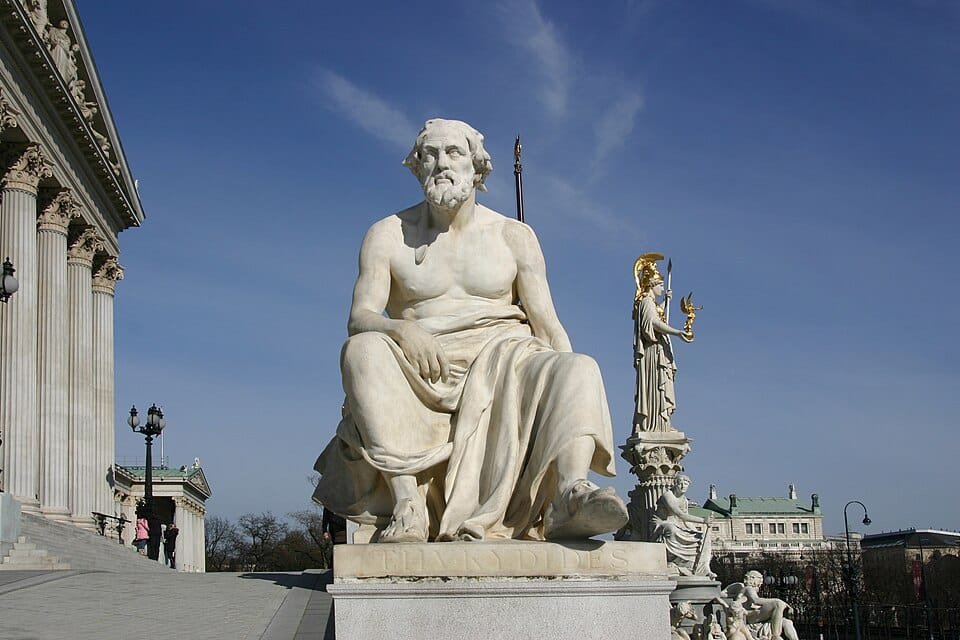
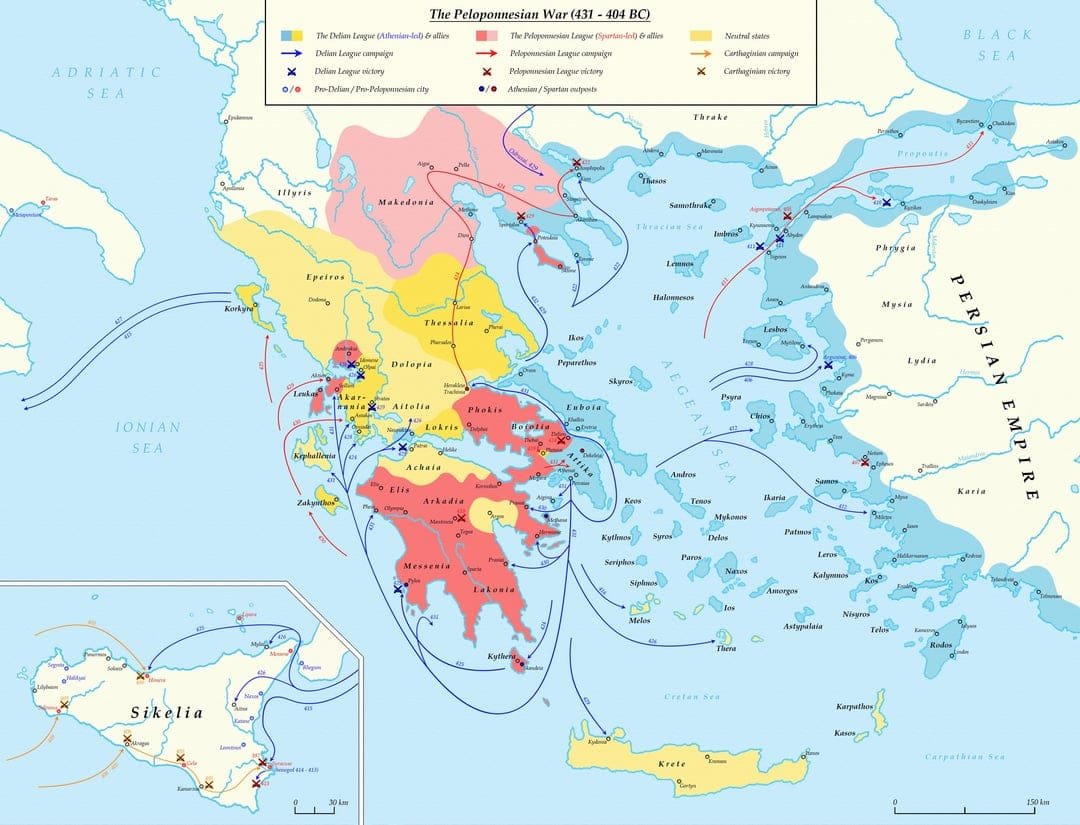
The phrase draws its name from Thucydides, the Athenian general and historian who chronicled the Peloponnesian War, the twenty-seven-year conflict between Athens and Sparta that ran from 431 to 404 BCE. Thucydides was not a neutral observer. He commanded Athenian forces, was exiled after a military failure, and used his exile to write what remains one of the founding texts of realist political thought. His central diagnostic claim, distilled by generations of scholars since, was that the war became structurally difficult to avoid once Athens’ growing power began to unsettle Sparta, the established hegemon of the Greek world. Fear of displacement, not any single provocation, did the damage.
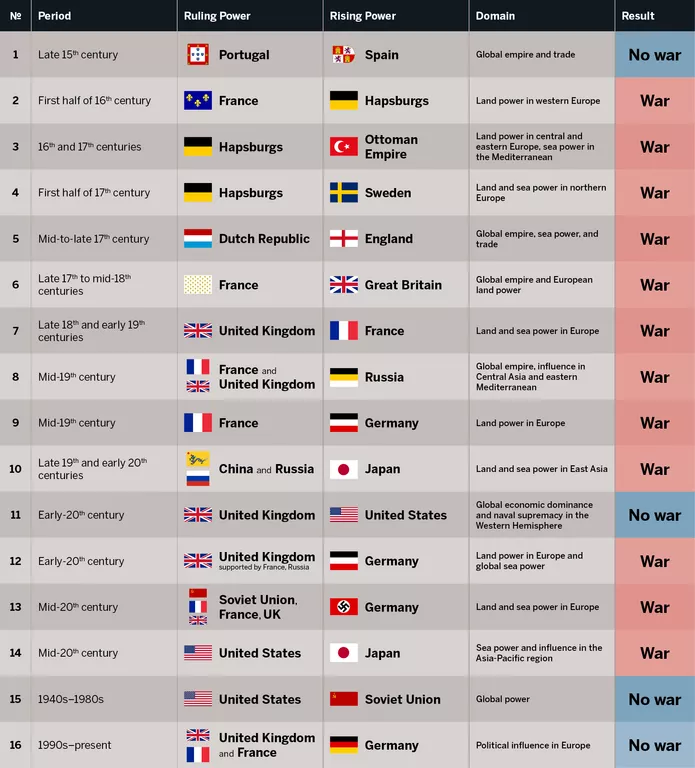
The Thucydides Trap describes the historical tendency for war to break out when a rising power’s growth unsettles an established one, a pattern Harvard’s Graham Allison found in twelve of sixteen cases over the past five hundred years.
The term “Thucydides Trap” itself is much newer than the war it describes. It was coined by Graham Allison, the Harvard political scientist and founding dean of the Kennedy School, first in a 2012 Financial Times essay and then at length in his book Destined for War: Can America and China Escape Thucydides’s Trap? Allison’s contribution was empirical as much as conceptual. His research team at Harvard’s Belfer Center for Science and International Affairs surveyed sixteen historical cases over the past five centuries in which a rising power confronted an established one, and found that twelve of those sixteen ended in war. Germany and Britain before 1914. Japan and the United States before 1941. Athens and Sparta at the origin of it all. The four cases that avoided war are the ones the Belfer Center’s own case file treats as instructive rather than fatalistic.
This distinction matters and is routinely lost in popular usage. Allison’s own position, laid out clearly on the Belfer Center’s case file page, has never been that war between a rising and a ruling power is inevitable. It is that the structural pressure toward war is real, historically recurrent, and dangerous enough that leaders on both sides need to work deliberately against it rather than assume goodwill or economic interdependence will handle the problem on its own.
Why the framework fits, and where it strains
I want to be honest about the limits of this concept before I apply it, because a Cambridge education in international relations trains you to distrust metaphors that flatter themselves. As Wikipedia’s summary of the scholarly reception notes, the Thucydides Trap has drawn considerable criticism for treating states as if they were vessels driven by fear rather than by leaders capable of choice, and scholarly opinion on its value for the US-China case remains genuinely divided. Reducing the government of a nuclear-armed state with a Politburo Standing Committee, or the government of a nuclear-armed state with a Congress and a free press, to a single Spartan or Athenian impulse understates the role that policy choices, institutions, and individual leaders play in whether a rivalry turns violent. Structural pressure is not destiny.
With that caveat lodged, the structural description of the US-China relationship is hard to argue with. China has undergone the fastest and largest expansion of economic and military capability of any rising power in the historical dataset Allison assembled. The United States remains the incumbent power across most of the metrics that matter, but its margin is narrowing on several fronts simultaneously, and narrowing fastest in the domain I study for a living. Trade frictions, the semiconductor export regime, contested claims in the South China Sea, and the unresolved status of Taiwan all sit on top of that structural rivalry like kindling. The Thucydides Trap is not a perfect description of Beijing and Washington. It is, however, a genuinely useful one, and that is precisely why Xi keeps invoking it.
Two summits, two very different sentences
Xi has referenced the trap before, going back to a 2015 speech in Seattle and again in a 2023 meeting with then Senate Majority Leader Chuck Schumer, as Harvard Kennedy School’s own account documents. What changed in 2026 is the register in which he delivered the line, and the stage on which he delivered it.
At the Beijing summit in May, as Time reported, Xi framed the trap as a question, asking whether the two countries could overcome it and build a new paradigm of major-country relations. A question is diplomatically safe. It invites the other side to answer, to commit, to reveal something about its own intentions, while leaving Xi’s own position deliberately unstated.
By September, hosting the reciprocal state visit at the White House, Xi had dropped the question mark entirely. Bloomberg’s coverage of the arrival ceremony records the shift: a flat declarative statement, delivered before the two leaders had even finished the formalities of the welcome. He paired it with language about healthy competition rather than confrontation, describing the relationship he wants as a race in which both sides improve rather than a contest with a single winner and loser, and called for the two militaries to strengthen crisis communication.
The shift from question to statement is not a stylistic flourish. It is Xi asserting the answer rather than soliciting it. Read against the structural logic of the trap itself, in which the rising power’s growing confidence is precisely the variable that makes the established power anxious, the shift is Xi signalling that Beijing now regards itself as secure enough in its own trajectory to declare the outcome rather than ask about it.
What Washington actually said back
It did not get a response equal to that weight. By CNBC’s reporting on the September summit, Trump’s public comments on Xi’s arrival emphasised general collaboration, and the American president had, at the time of that report, yet to comment on Taiwan at all, despite Xi having raised the underlying dynamic directly. A president who receives a structural warning about the risk of great-power war and responds only with generalities has either decided, as a matter of strategy, that public silence on Taiwan serves American interests better than engagement, or has failed to register the warning as a warning at all. Both readings are available from the public record. Neither reflects well on the seriousness with which this specific exchange was handled, and Xi’s repetition of the line in September, delivered even more confidently than in May, suggests Beijing has noticed the pattern.
The AI dimension nobody in that room dwelt on
Both summits reportedly touched on artificial intelligence as a subject alongside trade, per the same CNBC coverage, and this deserves more attention than it received, because it is the terrain I know best. The classical Thucydides Trap concerned fleets, land armies, and alliance systems. The twenty-first century version runs at least as much through compute, model capability, and the governance regimes either side builds, or fails to build, around autonomous and lethal applications of that capability. An arms race conducted openly, with treaties and verification regimes, is manageable even when tense. One conducted substantially in private, across labs and defence ministries with very different transparency norms, is far harder to stabilise, because neither side can be confident it knows where the other actually stands.
The safety side of this competition, and why I think verification matters more than declarations, is covered in my AI safety notes.
What actually escaping the trap would require
Language is cheap, and both leaders know it. If the two governments were serious about the substance of what Xi raised, three things would need to follow that neither summit produced: a genuine, tested crisis-communication mechanism between the two militaries; an honest bilateral conversation about the boundaries of AI and autonomous weapons development; and a willingness from Washington to state its position on Taiwan clearly enough that ambiguity stops doing the work that clarity should be doing. None of that happened in September. Allison’s original point, the one that keeps getting lost in the retelling, is that the trap is escapable, but only through deliberate work by leaders who take the risk seriously enough to act against their own worst instincts.
Frequently Asked Questions About the Thucydides Trap
What is the Thucydides Trap?
The Thucydides Trap is the structural tension that arises when a rising power threatens to displace an established one, often with war as the result. The term was coined by Harvard political scientist Graham Allison and draws on Thucydides’ account of the Peloponnesian War between Athens and Sparta. Allison’s team at the Belfer Center reviewed sixteen historical cases over five hundred years and found that twelve ended in war.
Did Xi Jinping mention the Thucydides Trap to Trump?
Yes. At the May 2026 Beijing summit Xi raised it as a question, asking whether the two countries could overcome it. At the September 2026 White House state visit he stated that the Thucydides Trap can be overcome.
What did Xi mean by raising it?
Xi was arguing that conflict between the United States and China is avoidable through managed competition and better crisis communication between the two militaries. The shift from a question to a declarative statement also signals confidence in China’s own trajectory, which is itself the variable that tends to unsettle an established power.
Is war between the United States and China inevitable?
No. Four of Allison’s sixteen cases ended without war, and Allison himself argues that the trap is escapable through deliberate statecraft. Critics also argue that the framework understates the role of leaders and institutions, so it is best read as a warning rather than a forecast.
Why does artificial intelligence matter to the Thucydides Trap?
Modern great-power rivalry runs through compute, frontier models and autonomous weapons as much as through fleets and armies. Competition in these areas is harder to verify than traditional arms races, which raises the risk of mutual suspicion and miscalculation between Washington and Beijing.

Avi is a researcher educated at the University of Cambridge, specialising in the intersection of AI Ethics and International Law. Recognised by the United Nations for his work on autonomous systems, he translates technical complexity into actionable global policy. His research provides a strategic bridge between machine learning architecture and international governance.