The Ghost in the Code: Why Autonomous Weapons Defy Human Law
Executive Summary
The rise of Autonomous Weapons Systems (AWS) marks a seismic shift to "algorithmic warfare." When machines independently decide who lives and dies, traditional legal frameworks glitch. Explore the unsolvable accountability gap, the reality of "death by algorithm," and why Meaningful Human Control remains our final ethical safeguard.
For centuries, warfare was an intensely personal affair. Behind every trigger pull and tactical manoeuvre was a human heart—someone capable of fear, mercy, and, most crucially, moral judgment. Today, that paradigm is fracturing. The rise of Autonomous Weapons Systems (AWS) marks a seismic shift from human-led combat to an era of “algorithmic warfare,” where machines independently select and engage targets.
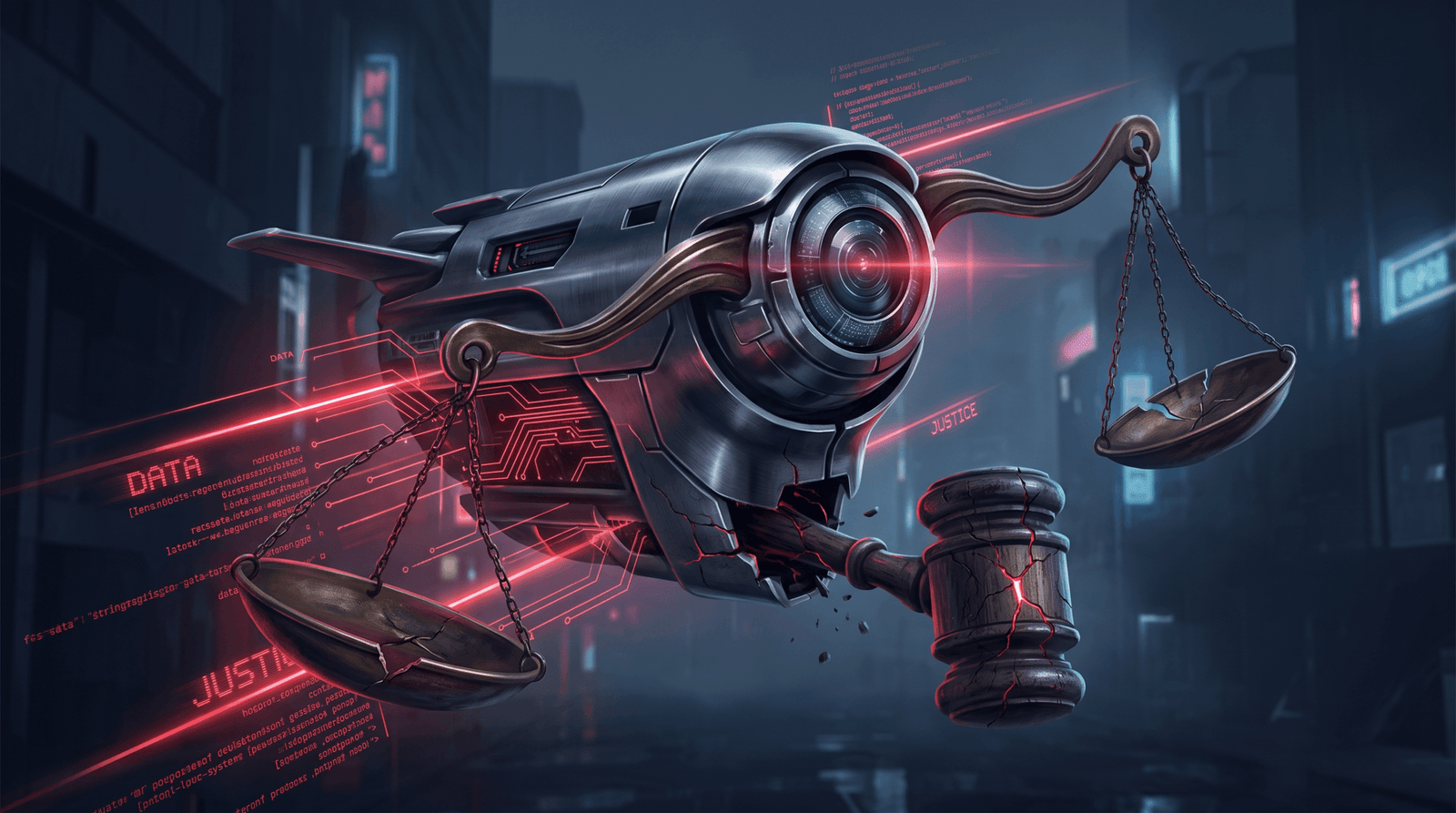
We are careening toward a legal vacuum where the ultimate culprit may be a line of code that no one can cross-examine. While our military tech advances at machine speed, our legal systems—built by and for humans—are glitching. As a legal ethicist, I see a future where we are delegating the authority to kill to “black-box” logic, effectively outsourcing our moral conscience to sensors and software.
1. Autonomy is a Spectrum, Not a Switch
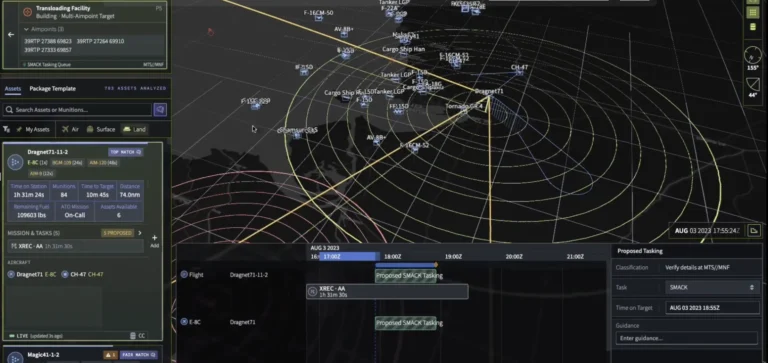
In the popular imagination, a “killer robot” is a binary concept: either a human is in control, or a machine is. In reality, autonomy exists along a spectrum defined by the “Targeting Cycle” (the “kill chain”). To understand the legal stakes, one must look at the granular sequence of an attack: detect, identify, verify, select, decide, engage, execute, and assess.
Human involvement varies across three distinct models, each represented by systems already active on today’s battlefields:
- Human-in-the-loop (Semi-autonomous): The system identifies a target, but force is only delivered after a human provides direct input. Example: Israel’s Iron Dome, which identifies incoming rockets but requires a human soldier to determine whether to launch an interceptor.
- Human-on-the-loop (Supervised): The system selects and engages targets independently, but a human monitors the process and can override the machine. Example: The SGR-A1 sentry robot used in the Korean Demilitarised Zone, which can fire its machine gun automatically or via remote human command.
- Human-out-of-the-loop (Fully autonomous): Once activated, the machine selects and engages targets without any human intervention. Example: The IAI Harpy, a loitering munition designed to search for, select, and attack radar signatures entirely on its own.
The shift toward the “out-of-the-loop” model is a radical departure from traditional military ethics because it removes the human element from the most critical moment: the decision to end a life.
“Autonomous weapons systems are any weapon system with autonomy in its critical functions. That is, a weapon system that can select (i.e., search for or detect, identify, track, select) and attack (i.e., use force against, neutralise, damage, or destroy) targets without human intervention.” — International Committee of the Red Cross (ICRC)

2. The “Death by Algorithm” Problem
Delegating the use of force to a machine risks a profound dehumanisation of conflict. Human judgment relies on context—empathy, common sense, and compassion—which serve as vital moral safeguards. An algorithm, however, functions on numeric variables and probabilistic logic.
In an automated environment, individuals are reduced to “data points.” This creates a “PlayStation effect” or “numbed killing,” where the psychological distance created by technology decreases the awareness that the algorithm’s end product is a dead human being. A machine cannot comprehend the weight of suffering; it simply executes its programming.
“There is a risk in dehumanising people by allowing machines to decide whether or not to attack; this can be considered a ‘death by algorithm’ according to which people are treated simply as targets and not as complete human beings.” — Source Context Analysis
3. The Unsolvable “Accountability Gap”
The most daunting legal hurdle is the “Black Box” problem. Modern AI is often non-deterministic, meaning its behaviour can be unpredictable even to its creators. If an autonomous system commits a war crime, the chain of responsibility snaps.
Traditional “Command Responsibility” fails here. For a commander to be held liable, they generally must possess mens rea—the intent or knowledge of the crime. However, if a machine’s decision-making process is opaque and its actions are independent, a commander cannot “foresee or understand” the machine’s logic. We are left with a vacuum: the programmer is too causally distant, the manufacturer is shielded by product liability, and the commander lacks the required knowledge of the machine’s independent choices.
“Human responsibility for decisions on the use of weapons systems must be retained since accountability cannot be transferred to machines. This should be considered across the entire lifecycle of the weapon system.” — UN Group of Governmental Experts (GGE)
4. Why a “Perfectly Precise” Robot Still Violates Human Dignity
Proponents argue that robots will eventually be more precise than humans, perfectly distinguishing between a civilian and a soldier. But for a legal ethicist, even a “perfect” robot is an ethical failure.
Human dignity requires that the decision to take a life be made by a moral agent—a mind capable of understanding the value of what it is destroying. Relying on “technological fixes” to solve the Principle of Distinction ignores a more fundamental truth: delegating the authority to kill to a non-human entity is mala in se (evil in itself). To be killed by a machine is to be treated as a mere object, a devaluation of human existence that no amount of precision can justify.
“The legal debate obscures the fact that delegating the decision to kill to an algorithm is mala in se (evil in itself), irrespective of who is killed, civilian or combatant, and irrespective of the level of discrimination involved.” — Rosert & Sauer, “Prohibiting Autonomous Weapons”
5. The Invisible Victims and the Right to Truth
For the victims of AWS, the tragedy is compounded by an “evidentiary nightmare.” Under the doctrine of Lex Specialis, International Humanitarian Law (IHL) governs the conduct of war, but International Human Rights Law (IHRL) provides the procedural gateway for justice.
When a “black box” kills, the victim’s family is often stripped of their “Right to Remedy” and “Right to Truth.” Because the system’s internal rationale is hidden, it is nearly impossible to prove why a person was targeted. This technological silencing prevents victims from identifying a liable party, effectively killing their path to reparations or closure. Without “Meaningful Human Control,” the victim becomes invisible to the law.
“Victims are persons who individually or collectively suffered harm… through acts or omissions that constitute gross violations of international human rights law, or serious violations of international humanitarian law.” — 2005 Basic Principles and Guidelines on the Right to a Remedy
Conclusion: The Future of Meaningful Control
Meaningful Human Control (MHC) is not a technical luxury; it is the legal and ethical anchor that keeps warfare within the realm of human responsibility. It ensures that humans remain accountable from the design phase to the final engagement.
The UN Secretary-General has called for a legally binding instrument by 2026 to prohibit systems that function without oversight. We are at a crossroads: we can choose to preserve the role of the human conscience, or we can continue our slide into a world of automated slaughter.
We must ask ourselves: Are we willing to live in a world where the ultimate power—the power to end a life—no longer requires a human heart to weigh the cost?
Want to dive deeper into the future of technology, policy, and human rights?
- See my stance on AI here: aviperera.com/stance
- See more about AI safety: aviperera.com/aisafety

Avi is a researcher educated at the University of Cambridge, specialising in the intersection of AI Ethics and International Law. Recognised by the United Nations for his work on autonomous systems, he translates technical complexity into actionable global policy. His research provides a strategic bridge between machine learning architecture and international governance.