Unitree B2 Combat Mod
Unitree B2 Combat Mod: Technical Dossier and Legal Analysis
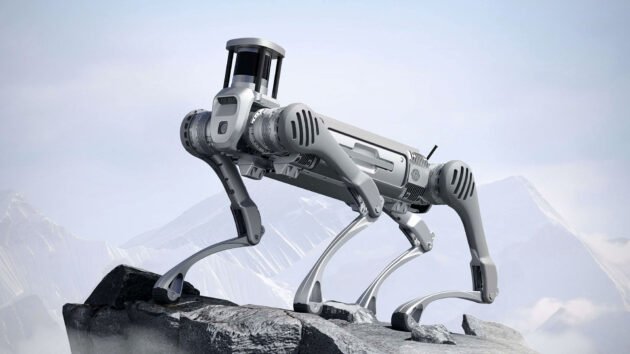
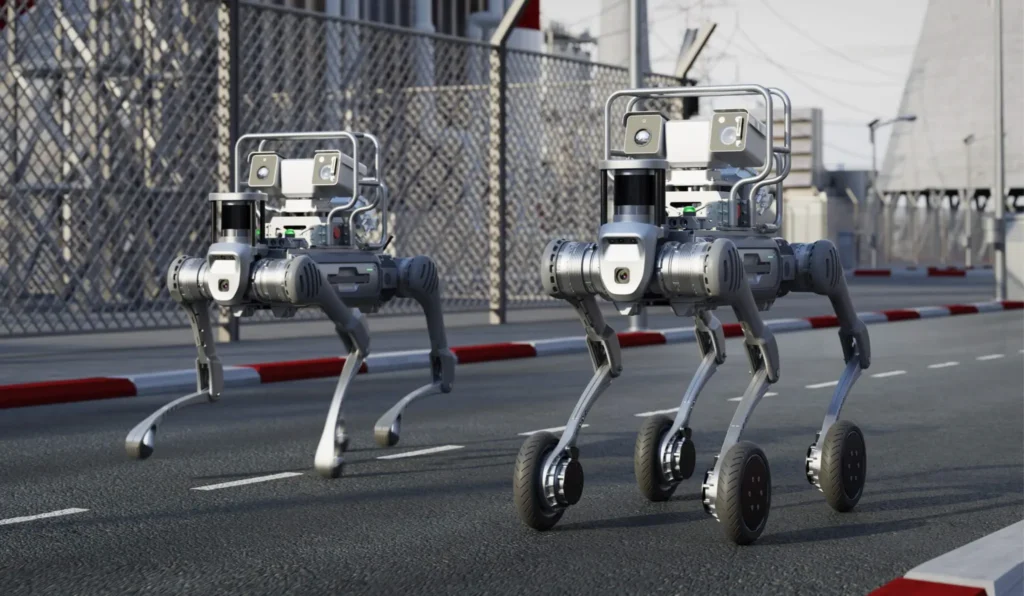
The Unitree B2 is a four-legged industrial robot made by Hangzhou Yushu Technology, trading as Unitree Robotics, one of the world’s largest producers of quadruped and humanoid robots. Unitree markets it for inspection, patrol and heavy load transport. I have catalogued it here because the platform has become a reference point for the weaponisation of cheap, commercially available legged robots. A clarification on scope is necessary. This entry examines the B2 as a weapon carrier, the armed Unitree configurations that have appeared publicly, and the military variants alleged to derive from it. Where evidence concerns a different Unitree model, I say so.
Key takeaways
- No verified “B2 Combat Mod” exists as a Unitree product. The record shows armed Unitree robots made by third parties and by state militaries, mostly on the smaller Go1, Go2 and B1 models.
- Unitree signed the 2022 industry pledge not to weaponise its robots, yet state television later showed its robots on joint military exercises, and a PLA video in 2025 showed a Unitree Go2 firing a rifle. kharon
- In June 2026 the Pentagon added Unitree to its list of Chinese military companies, calling it a contributor to the Chinese defense industrial base. defensenews
- Reuters reported on 18 August 2026 that Unitree’s best selling designs drew on US Army funded research. yahoo
- The CCW Seventh Review Conference meets in Geneva from 16 to 20 November 2026. reachingcriticalwill
Basic Weapon Facts
I. Background
| Field | Detail |
|---|---|
| Manufacturer | Hangzhou Yushu Technology Co., Ltd. (Unitree Robotics), Hangzhou, China. Founded in 2016 by Wang Xingxing, it was valued at about $1.7 billion in a June 2025 funding round that included state affiliated investors. |
| Suppliers | Unitree says it develops its own motors, reducers, controllers and some sensors. Reference configurations use Intel Core compute with optional NVIDIA Jetson Orin NX modules. Partners include Huawei, iFlytek and ZTE. Weapon integrators: Unknown |
| Country of origin | China |
| Developmental stage | Commercially available as an industrial platform. Weaponised configurations: demonstrated and experimental, with no confirmed series production |
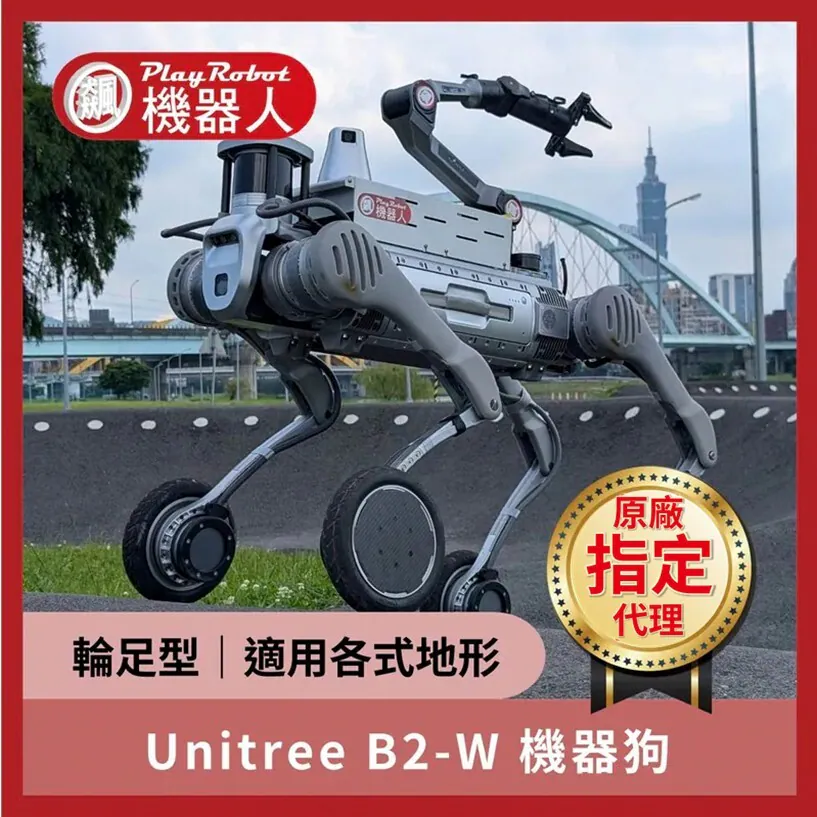
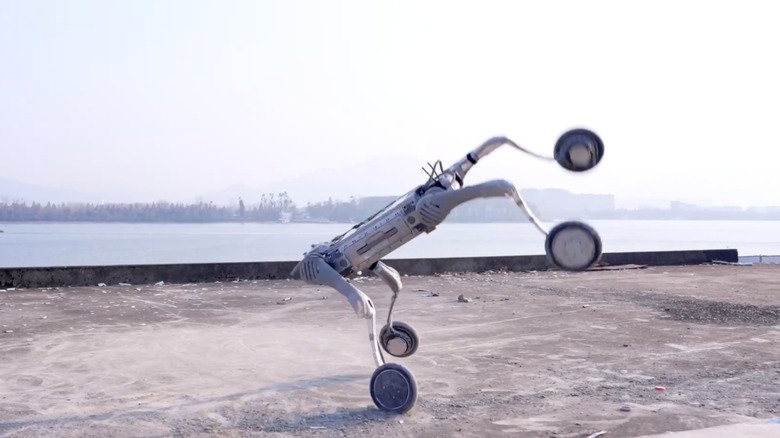
| System version | B2 (legged) and B2-W (wheel legged). “Combat Mod”: no official version exists |
| System type | Quadruped unmanned ground vehicle, industrial platform used as a weapon carrier At Unitree Robotics, a Star Chinese Firm, the Military Connections Keep Mounting +3 |
II. General Specifications
| Parameter | Specification |
|---|---|
| System dimensions | About 1,098 x 450 x 645 mm (reseller listing, check against the Unitree datasheet) |
| Weight | About 60 kg including battery |
| Max payload | Standing load of at least 120 kg and continuous walking load above 40 kg. The wheel legged B2-W is listed with a moving load of up to 240 kg. |
| Max operating time | More than 5 hours unloaded, and more than 4 hours with a 20 kg load |
| Max operating distance/reach | More than 20 km unloaded and more than 15 km with a 20 kg load. Control link range: Unknown |
| Max speed | 6 m/s (about 13 mph) per Unitree’s published figures. One European retailer lists 5 m/s. |
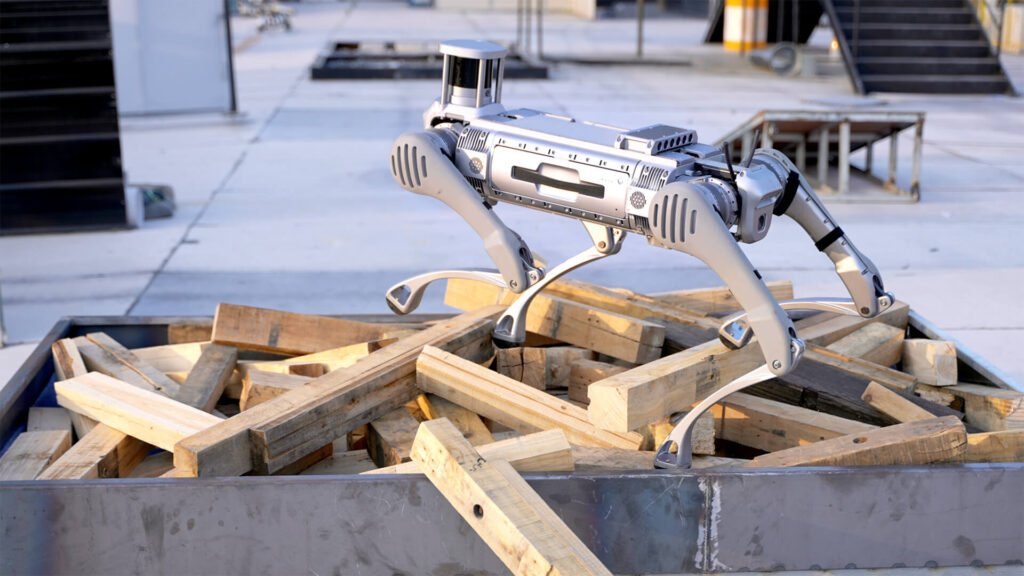
| Mobility | Climbs 40 cm steps and 45 degree slopes, IP67 rated, with 360 N·m joint torque |
| Unit cost | Unitree B series robots are listed below $100,000 in the United States. The B2-W is listed at $94,600. Unitree B2 delivers stability for industrial works – Toborlife AI |
One figure needs care. The House Select Committee on the CCP says the B2 platform has been upgraded with military grade thermal imaging and a 240 kg payload. That number matches the B2-W’s listed moving load, not the legged B2’s walking load. That is my inference, and it suggests the claim describes the wheel legged variant or mixes the two. I have not found an independent source that confirms either reading. toborlife
Origins and the record of armed use
Unitree built its reputation on price. It undercut Boston Dynamics by an order of magnitude with consumer robots, then moved up market with the B series. Former researchers told Reuters that the design of its first scaled robot grew out of an Army Research Laboratory funded programme at the University of Pennsylvania, and that the Go series closely matches MIT’s Mini Cheetah. The US government paid for the core locomotion research, and a Chinese firm commercialised it at scale. I raise that fact because it removes any comfortable notion that this is a story only about someone else’s technology. yahoo
The timeline of armed Unitree robots is the core of the evidence.
August 2022, Moscow. A black cloth covered robot armed with an RPG-26 grenade launcher appeared at Russia’s Army-2022 expo, resembling Unitree’s Go1. Unitree denied allegations that its Go1 was used by Russian forces. The same report noted that Unitree’s sales terms disclaimed warranty cover for unauthorised modification but did not forbid weaponisation, unlike Boston Dynamics’ terms of sale. Russian robot dog armed with rockets appears to be modified Chinese pet bot
November 2023, California. US Marines armed and tested a Unitree robot with a rocket launcher. The Marine Corps trial involved the smaller Go1, and I include it because it undercuts any claim that weaponising these robots is something only China’s military does. kharon
May 2024, Cambodia. State television showed Unitree B1 robots on joint PLA and Cambodian exercises, working alongside armed quadcopters during urban assault simulations, with a soldier saying they could replace humans in reconnaissance and target strikes. The Guardian reported the robot as a Go2 with an automatic rifle. The discrepancy between B1 and Go2 is worth noting. Models are hard to tell apart on state video, and a database like this one should record the disagreement. kharon, Wikipedia
April 2025, PLA propaganda. A PLA video titled “The Robot Dog’s Time to Kill Has Come” showed a Unitree Go2 with an automatic rifle on its back firing at a target while soldiers ran alongside. The Financial Times reported that the robot was remote controlled. kharondefencepk
July 2025, Chongqing. A vocational college jointly established with Huawei posted a training exercise with two weaponised Unitree dogs, one carrying a rifle and one launching a rocket, which state media said was developed by students, faculty and a military training team. kharon
September 2025, Beijing. The military parade displayed what Chinese media called robot wolves, quadrupeds shown in assault configurations. The Guardian covered it under the headline about nuclear triad and robot wolves. Wikipedia
The B2 specifically. The House Select Committee’s May 2025 letter says the B2 platform has been upgraded for battlefield use and resembles the PLA’s Machine Wolf developed by China South Industries Group and Chongqing Jianshe Industry, and that Unitree and Jianshe signed a formal partnership in 2025. That is an allegation from a legislative committee. Unitree has not confirmed it, and I am not aware of a published technical comparison. house
What Unitree says. Unitree has said it does not sell to China’s military, and it remains unclear how the PLA acquired the robots it showed. The company did not respond to Kharon’s questions on military exercises or any PLA agreements. Kharon’s review of procurement data found that at least eight Unitree university customers hold licences for classified defence research and manufacturing, and that Unitree sold products to universities with PLA links. The two statements can both be true. A company can sell to universities and distributors without selling to the army, and the army can still end up holding its products. That is how dual use trade usually works, and it is why I place little weight on corporate denials in either direction. At Unitree Robotics, a Star Chinese Firm, the Military Connections Keep Mounting
Autonomy: a forensic analysis
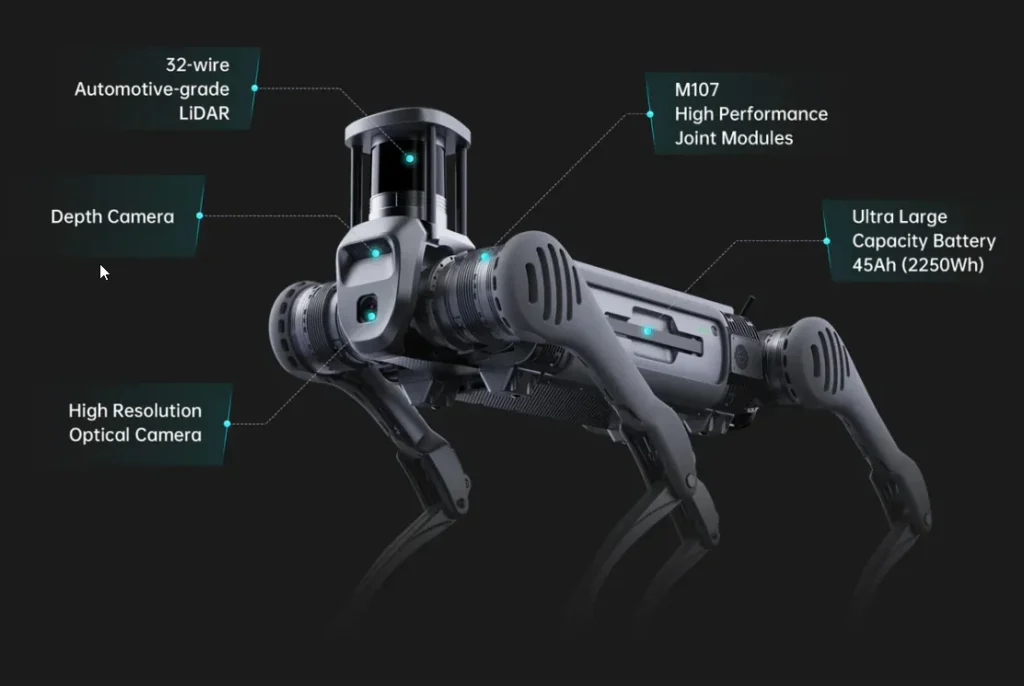
Sensors. Reference B2 configurations include one 3D LiDAR, two depth cameras and two optical cameras, depending on the bundle. Accessory options include a dual light pan and tilt camera with 32x optical zoom and thermal imaging. Thermal imaging and optical zoom are inspection tools in the product literature. They are also the sensor stack of a night capable weapon sight. robotsinternationalrobostore
Algorithms and compute. The platform carries Core i5 compute with a Core i7 user module, expandable with Jetson Orin NX for AI workloads. Unitree publishes an SDK with Python and ROS 2 resources. The robot receives over the air software updates. The documented autonomy concerns locomotion, mapping and inspection patrols. Nothing I found shows target recognition or engagement logic supplied by Unitree. Unitree B2: Specs, IP67, Payload & Price
Human intervention in the kill chain. On the public record, armed Unitree robots are remotely operated. The PLA’s rifle armed robot was reported as remote controlled. The weapons, fire control and operator interface appear to come from integrators, universities or state arms firms, not from Unitree. I found no evidence of autonomous target selection or engagement, and I would not claim any. defencepk
Why the architecture matters anyway. The combination that worries me is open and unusually accessible. An open SDK, spare compute capable of onboard perception, a standard payload interface with high power outputs, over the air updates, a payload capacity above 40 kg and a price below $100,000 means any competent integrator can add targeting software. One PLA expert told Kharon that the next phase is AI integration, which he summarised as putting the brain on the robot, though analysts said robot dogs have limited battlefield use for now. The weaponisation of the body is already routine. The only open question is when the brain follows, and who decides. My stance page sets out why I treat that as the point where meaningful human control either survives or does not, and I explore the concept in the meaningful human control article. For comparison within the database see Norinco Sharp Claw, Hanwha Arion-SMET and my entry on the Ghost Robotics Vision 60. kharon
Legal analysis
Weapons review and the missing owner
Article 36 of Additional Protocol I requires states parties to review new weapons for compatibility with international law. China is a party to Additional Protocol I, so the obligation falls on the PLA for any armed configuration it fields. The ICRC’s guidance is clear that the reviewed object is the weapon as configured. A manufacturer shipping an unarmed platform, a university adding a weapon and a military buying the result each hold a piece of the process and none holds the whole. I know of no public Article 36 review of an armed Unitree robot, Chinese or American.
Conduct of hostilities
The remote operation of armed quadrupeds engages the rules of distinction, proportionality and precaution in Articles 48, 51 and 57, and the protection of persons hors de combat in Article 41. These robots are designed for urban and close terrain combat, where screen mediated judgment is weakest. A cheap robot also lowers the cost of an attack to the attacker and raises the temptation to use it in areas where a human soldier would hesitate. I explained how automation bias compounds this problem in the MQ-9 entry.
Export controls, sanctions and the dual use trade
This is where the B2 entry differs from earlier ones. The legal questions here are mainly about who may sell what to whom. Article 6 and Article 7 of the Arms Trade Treaty require exporting states to refuse transfers where there is an overriding risk of serious violations of humanitarian or human rights law. China acceded to the treaty in 2020 and the United States is a signatory that is not a party. Dual use items fall mostly outside the treaty’s categories and into national and multilateral controls such as the Wassenaar Arrangement and the EU Dual Use Regulation. In the United States, Section 1260H of the National Defense Authorization Act drives the Pentagon’s list of Chinese military companies. Unitree was added in June 2026. defensenews
Designation does not always survive challenge. In Xiaomi Corp. v. Department of Defense (D.D.C. 2021) the court enjoined the Pentagon’s designation of Xiaomi on the predecessor list for insufficient evidence. That case is worth watching in any Unitree challenge. I flag it from memory, so check the citation.
State responsibility and the duty to ensure respect
Article 16 of the ILC Articles on State Responsibility makes a state responsible for knowingly aiding or assisting another state’s wrongful act. Common Article 1 of the Geneva Conventions obliges states to ensure respect for the Conventions. Both bear on states that supply or finance military use of such robots with knowledge of likely violations. The 2019 Court of Appeal ruling in R (Campaign Against Arms Trade) v. Secretary of State for International Trade [2019] EWCA Civ 1020 shows how courts treat failures to assess that risk in export decisions. Neither rule has been tested against legged robots.
Corporate pledges
In 2022 Unitree signed an open letter with US firms pledging not to weaponise their robots. The pledge was voluntary and carried no audit or sanction. Compare it with the earlier Vision 60 entry, where Ghost Robotics declined to sign and its armed variants are the manufacturer’s own disclosed products. In the Unitree case the signatory’s robots were weaponised by others. Both outcomes point to the same weakness. A pledge binds the signatory’s own conduct, and the supply chain is outside its reach. The UN Guiding Principles on Business and Human Rights offer a firmer standard of due diligence and still depend on enforcement that does not exist. gvwire
International relations implications
The symmetry that policy rhetoric avoids. Armed Unitree robots have appeared in Russian, Chinese and American hands. US Marines mounted a rocket launcher on one. A Chinese firm commercialised US funded research, and the US Army now faces rivals using its own technology lineage. I find the policy debate in Washington too often treats weaponised robot dogs as a Chinese problem, and the evidence does not support that framing. The Ghost Robotics entry shows the American supply side.
Military civil fusion and the limits of denial. Kharon’s investigation found Unitree’s ties to China’s defence ecosystem run deeper than previously understood, including university sales, Huawei and ZTE partnerships and state backed investment. Whether or not Unitree sells to the PLA directly, the structure of Chinese industrial policy makes the distinction hard to sustain. Wassenaar style controls assume a firm can be separated from a state’s military procurement. China’s policy deliberately removes that separation. kharon
Data, cyber and the installed base. The House committee letter alleges that a service enabled by default silently connects each robot to Unitree’s servers in the PRC and that Unitree robots operate in sensitive American institutions. I treat this as an allegation pending independent technical verification. If correct, it makes every deployed unit a possible sensor on foreign soil, which is a security problem separate from weaponisation and may drive procurement bans faster than any arms control argument. house
Proliferation. Unitree’s consumer Go2 launched at around $1,600 and helped the company dominate the global quadruped market. A heavier B series robot below $100,000 that can carry tens of kilograms puts a capable armed ground platform within reach of many states and some non state groups. Export control was designed for items that are hard to build. These are easy to buy. defensenews
Positions at the CCW. China has argued at the CCW for banning only systems it defines as unacceptable, using a narrow set of defining characteristics, and has pressed for a cautious approach to wider limits. I cite this from my knowledge of its 2018 position paper, so verify the wording before publishing. On 5 September 2026 the CCW Group of Governmental Experts reached consensus among 128 states on a document addressing lethal autonomous weapons systems, though critics argue major military powers weakened it. France says the text clarifies human control and judgment and that the Review Conference must decide next steps. The UN Secretary General and the ICRC jointly called on 25 August for the November conference to begin binding negotiations. The ICRC has urged states to launch negotiations on a new protocol. Cheap modular robots expose the weakness of any definition that waits for a fully autonomous weapon. They become autonomous through a software update, and the update does not need to come from the manufacturer. States reach agreement on autonomous weapons regulations in Geneva
My assessment
My first reaction to a robot dog with a rifle is the one most people share. It is unsettling because it looks like a pet. The more useful reaction, I think, is to ask what happens when a technology this cheap, this open and this capable meets an industry that has agreed no binding rule. The Unitree story shows the pattern clearly. A civilian robot built on publicly funded research is sold widely, adapted by whoever wants to adapt it, shown in military videos, denied by its maker, designated by one government and subsidised by another, while the legal framework has no clear point at which to intervene.
I do not think this is a reason to give up on law. It is a reason to move the rules upstream. That means due diligence obligations on manufacturers and integrators, transparent weapons review of modular configurations, export controls that follow function and not product category, and a legal standard of human control that attaches to each engagement. I set out that view on my stance page and explain how I came to this work in my story. The wider risks are on my AI safety page, and the policy context is tracked in my research and the AI Policy Tracker.
Frequently asked questions
Is there an official Unitree B2 Combat Mod?
Not that I could verify. Unitree markets the B2 as an industrial robot for inspection and patrol. Armed Unitree robots have been shown by third parties and by state militaries, mostly on smaller models.
Has the PLA used Unitree robots with weapons?
State media and PLA videos show armed Unitree robots, including a Go2 with a rifle in 2025 and robots in the 2024 China and Cambodia exercise. Unitree says it does not sell to China’s military, and how the PLA obtained them is unclear.
Are armed robot dogs autonomous?
On the public record the armed Unitree robots are remotely operated. I found no evidence of autonomous target selection, although the hardware could support it with additional software.
What are the B2’s specifications?
About 60 kg, a walking payload above 40 kg, endurance over 5 hours unloaded, a top speed of about 6 m/s and IP67 protection, according to Unitree’s published figures and resellers.
Is Unitree sanctioned?
It is not under US export sanctions as far as I found, but the Pentagon added it to its list of Chinese military companies in June 2026.
Sources
Manufacturer website: Unitree Robotics, B2
News reports and investigations
- Kharon, “The Robot Dog’s Time to Kill”: At China’s Star Robotics Firm, the Military Ties Keep Mounting (July 2025)
- Reuters via Yahoo, How US military funding propelled China’s robot dogs (18 August 2026)
- Defense News, How US military funding propelled China’s robot dogs (18 August 2026)
- Financial Times, China’s army tests gun toting robot dog
- Forbes, US Marines test robot dog armed with a rocket launcher (November 2023)
- Yahoo News, Russian robot dog armed with rockets appears to be a modified Chinese pet bot (2022)
- The Guardian, Nuclear triad and robot wolves: parade shows off array of Chinese weapons (3 September 2025)
- RobotShop, Unitree B2 specifications
- Toborlife, Unitree B2 and B2-W (reseller, check against the Unitree datasheet)
Government, military and diplomatic documentation
- US House Select Committee on the CCP, letter to Secretaries Hegseth and Lutnick and Chairman Carr (6 May 2025)
- ICRC, Autonomous Weapons advocacy paper (June 2026)
- France, GGE communiqué (10 September 2026)
- UNODA, CCW GGE LAWS briefing
- Reaching Critical Will, CCW Meeting of High Contracting Parties (November 2025)
- National Defense Authorization Act for FY2021, Section 1260H; Wassenaar Arrangement; EU Dual Use Regulation
Treaties, statute and case law
- Additional Protocol I, Arts 36, 41, 48, 51, 57 (ICRC database)
- Arms Trade Treaty, Arts 6 and 7
- Geneva Conventions, Common Article 1
- ILC Articles on State Responsibility, Art 16
- UN Guiding Principles on Business and Human Rights
- UNGA Resolution 78/241 (2023)
- Xiaomi Corp. v. Department of Defense (D.D.C. 2021)
- R (Campaign Against Arms Trade) v. Secretary of State for International Trade [2019] EWCA Civ 1020

Avi is a researcher educated at the University of Cambridge, specialising in the intersection of AI Ethics and International Law. Recognised by the United Nations for his work on autonomous systems, he translates technical complexity into actionable global policy. His research provides a strategic bridge between machine learning architecture and international governance.