Hi, I’m Avi 👋
Exploring the systems that govern our technology, our laws, and our world.
I’m a British researcher and Cambridge graduate focusing on the intersection of Artificial Intelligence, International Law and Global Policy. My work with the University of Cambridge and the United Nations is driven by a simple conviction: that the rapid evolution of technology requires a robust ethical and legal framework to ensure it serves humanity, rather than destabilising it.
My path hasn’t been a straight line. With a background spanning Mathematics, Machine Learning, and Law, I’ve navigated roles as an engineer, a scientist, and a lawyer. My mission is to bridge the gap between technical complexity and policy-level impact, translating the language of algorithms into the language of international cooperation.
Beyond research, I apply my background in engineering and data science to build high-impact digital solutions. I’ve spent years mastering the architecture of the web, turning complex technical needs into functional business systems. For me, development isn’t just about building sites, it’s about building the infrastructure that drives modern enterprise.
I travel and write extensively, and over the years, I’ve realised that the most valuable things I have to share are the stories and insights gathered along the way. Many people encouraged me to start putting these thoughts into words, and that’s what this space is for. Check out my blog here. I’ll be writing mainly about AI, technology and productivity, but you can expect much more than just that! I hope this space becomes a place to connect with like-minded individuals, share insights, and contribute to meaningful conversations about science, philosophy and the world we live in.
Thank you for reading! 🤗
Click each chapter below to explore the journey from London to the global stage.
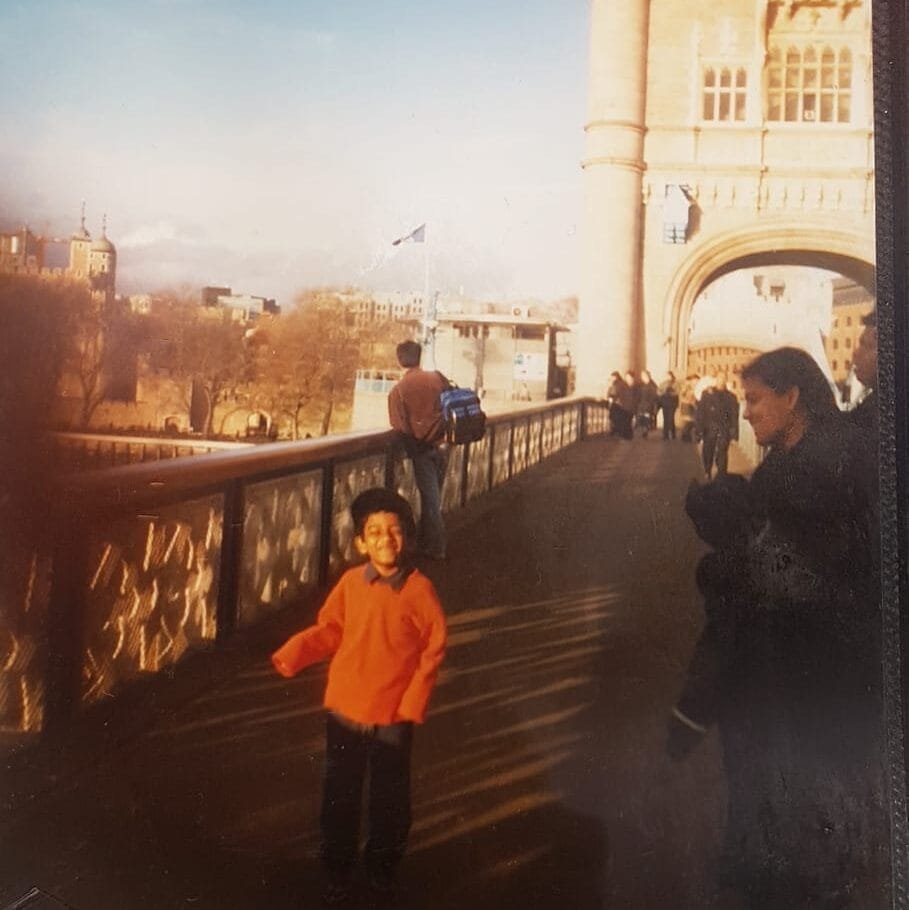
I was born in Colombo in 1995 and moved to London in 1999. Growing up in Harrow, my family didn’t have much, but I viewed the city as a massive opportunity to learn and forge a path.

The “Restless” Student
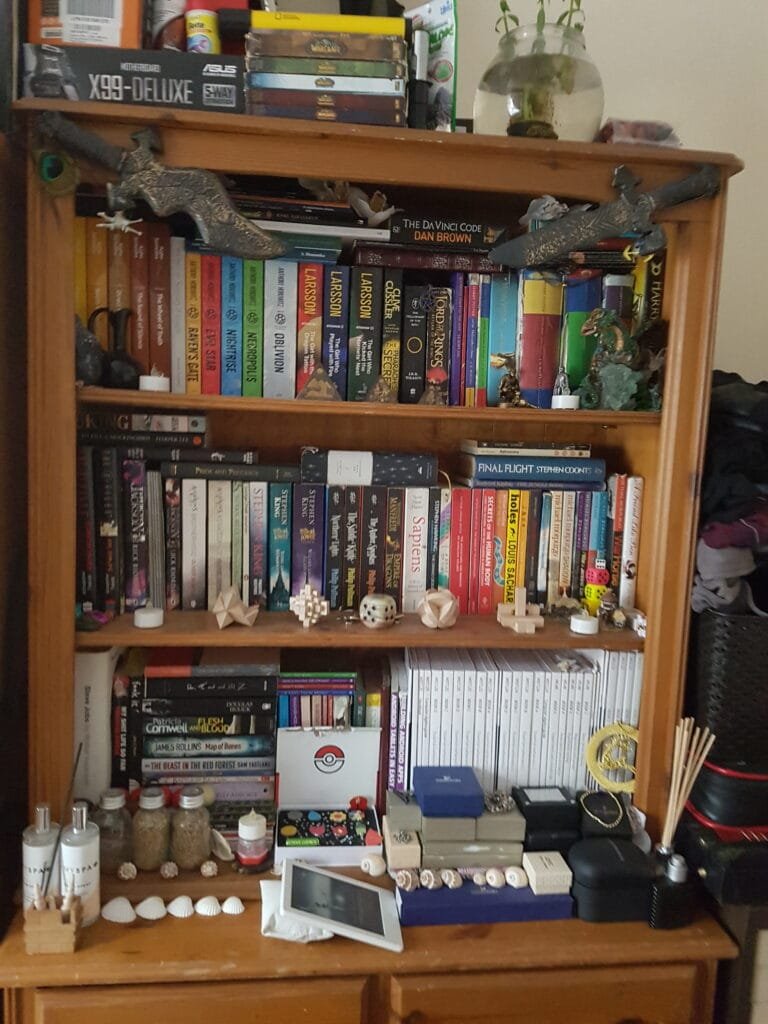
My academic path was fueled by a lifelong obsession with reading. Before I even started high school, I had already worked through hundreds of books—everything from Tolkien’s epics to Roald Dahl, Philip Pullman, Agatha Christie, Arthur Conan Doyle, JK Rowling, and much more. It is one of my main passions that has withstood the test of time.
I always excelled in school, though not in the traditional “quiet” way. I consistently hit record-high results, but because I’d often finish the classwork before the teacher had even finished explaining it, I’d spend the rest of the hour cracking jokes or messing around. To keep me from distracting the other students, the headteacher eventually started taking me out of class for private 1-on-1 lessons.
Choosing Community over Prestige
After middle school, I was invited to join some of the UK’s most prestigious private high schools. While my family couldn’t support the move financially, I actually asked to stay in the local public system with my childhood friends—the same group I’d known since nursery and primary school. Many of us are still close more than 25 years later.
I think staying in that environment was one of the best things that happened to me; it gave me a grounded perspective that a private bubble never could have provided. Choosing to remain in the public system allowed me to stay grounded in the community that shaped me, and looking back, that exposure to a wider, more diverse reality was as valuable as any private education could have been.
…the independence of creating something from nothing…
Building Something from Nothing
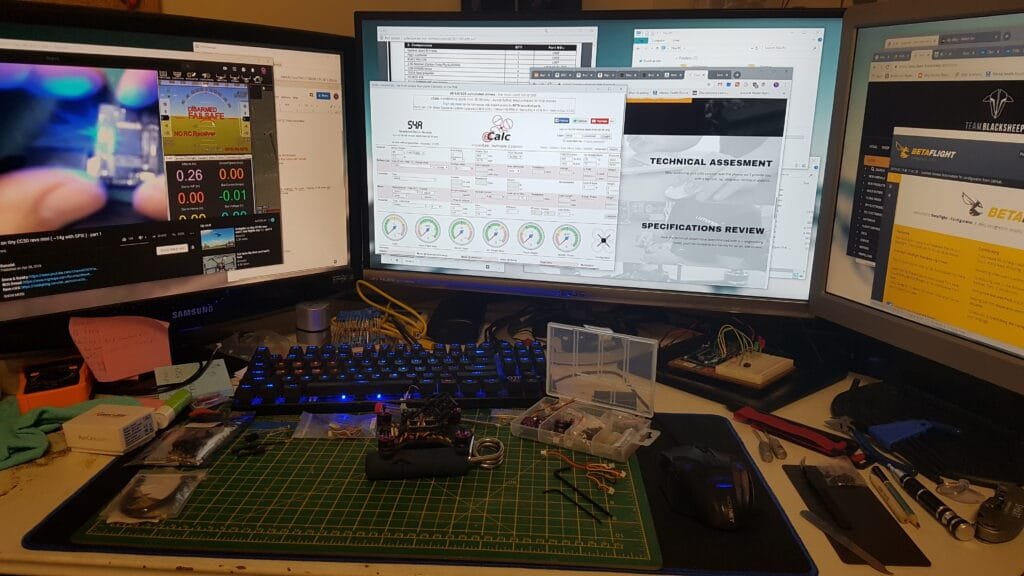
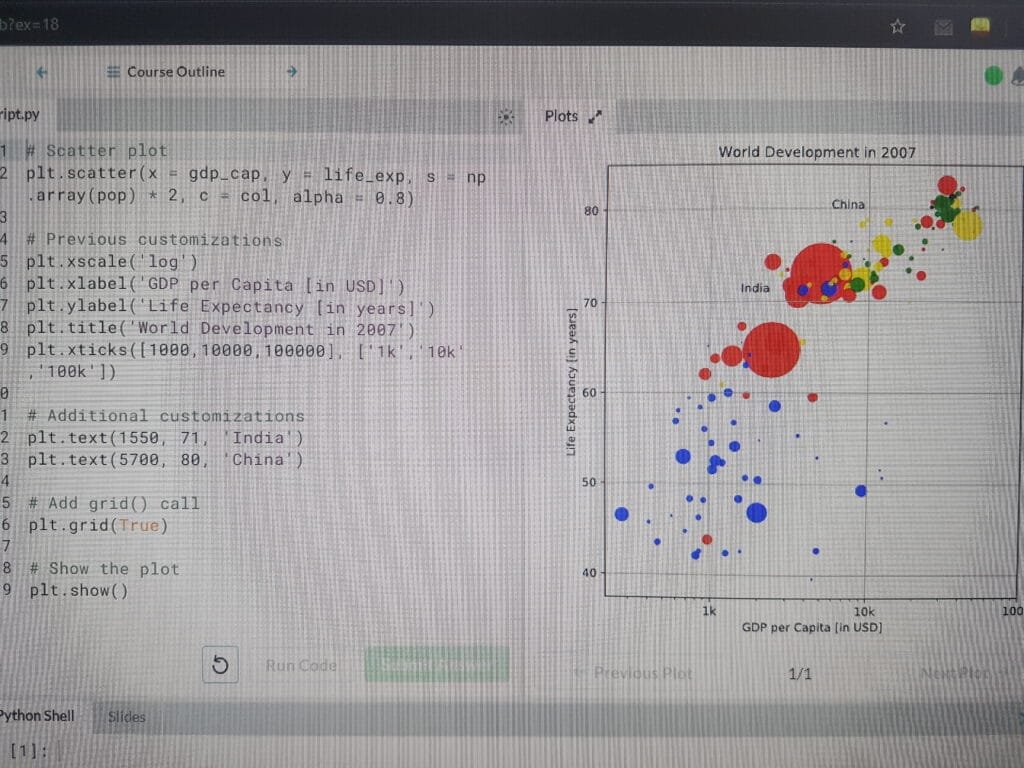
My teens were defined by a deep need to understand how the world was built. At 12, I taught myself to code and started earning money as a freelance developer and analyst (this funded my World of Warcraft addiction)—this was my first taste of earning money online.
That digital curiosity was matched by a physical one. I spent my time scavenging computer parts from school bins and old desktops to build my own machines. As hardware started piling up in my room, I began fixing or assembling PCs for others for spare change. For me, building those computers wasn’t just about the technology; it was about the independence of creating something high-functioning out of parts others had thrown away.
After finishing high school, my path was anything but traditional. I started by studying Fine Art in college before making a significant pivot to Mathematics with the Open University. Due to a lack of financial support and limited guidance from the adults around me, navigating an environment that was often unsupportive—and at times, intentionally obstructive—I began my degree a few years later than my peers.
I had actually completed my GCSEs years ahead of schedule, but at the time, I didn’t have a roadmap for how to harness that early success. This period was defined by a deep existential challenge, but it ultimately forced me to build my own foundation from the ground up.
The Self-Funded Scholar
Instead of rushing into debt or waiting for help that wasn’t coming, I spent those years working various jobs across London to save for my future. This period was a masterclass in autonomy. By the time I started my degree, I had saved enough to not only support my studies but also to fund travels across the UK and Europe.
I also used this time to dive into independent engineering—building drones, robots, and applications. It was a period of applied curiosity; I was finally connecting the dots between the code I learned at twelve and the physical world.


Mentorship and Mathematical Precision
When I finally focused my energy on formal academics, the results were definitive. In every university mathematics module, I consistently earned scores of 90-100%, maintaining an overall average above 90%.
It was during this time that I met my personal tutor and pure mathematics professor, Bob. A man with five decades of academic experience (including a long tenure at the University of Cambridge), he became one of the most significant mentors of my life. Bob was instrumental in helping me recognise and harness my own potential. He was the first person to truly push me to “just write and keep on writing.”
He used to refer to me as a “future mathematician in the making.” While he might be surprised to find me now applying that logical rigour to international policy papers rather than equations, his influence remains the bedrock of my academic discipline.
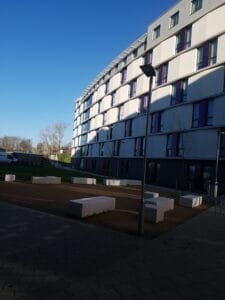
Moving from the self-directed world of the Open University to the “brick and mortar” campus of the University of Essex was a cultural shock I wasn’t prepared for. Up until that point, my idea of university was shaped by literature—I imagined it as a castle-like bastion for the learned, a place where scholars in robes and gowns walked through silent libraries, carrying tomes and scrolls, fueled by a pure pursuit of knowledge.

The Shattered Preconception
The reality was a stark departure from that fantasy. I found myself in an environment where academia often took a backseat to status-seeking and social posturing. For many of my peers, the university wasn’t a fortress of education, but a transactional phase. They weren’t there to become scholars; they were there to secure the “piece of paper” that would lead to a high-paying career, it was a purely financial transaction. The majority only cared about money.
Having learned to be deeply respectful and considerate of women and the history of their struggle to enter these institutions, it was jarring to see that privilege treated so lightly. I watched a confusing paradox play out: peers who often preached about respect and maturity would spend their time in cycles of hedonism, often gravitating toward the very toxic archetypes they claimed to oppose. The “fortress of learning” I had fought to reach being used as a playground by those who had every advantage but cared nothing for the pursuit of knowledge.
Scholarship vs Hedonism
I had to grapple with a massive disparity in effort and resources. Coming from a background where I worked tirelessly with no outside support, I spent every spare moment in the library, taking meticulous notes and fighting for every grade. Meanwhile, I watched students from wealthy backgrounds skip lectures, sleep through seminars, and rely on private tutors—or even paid services—to do the work for them, while I was doing it manually.
It was a nauseating realisation. While I was studying to understand the fundamental architecture of the world, it felt like the campus was more obsessed with who had the most expensive things or who was having sex.

The Imperial Specialisation
Despite the disillusionment, this period taught me a lesson more valuable than anything in the curriculum: the difference between an academic and a student. I chose to focus entirely on my own path. Studying mathematics at this level was also a lesson in humility. I realised that while I excelled, I wasn’t the next Einstein. My dreams of becoming a pure physicist began to wane, but my love for Engineering and Applied Mathematics grew in its place.
I became fascinated by first principles, not just in equations, but in human behaviour. I started attending neuroscience lectures, obsessed with the “why” behind the mind: how we learn, how intelligence works, and the inner workings of the human brain. My curiosity shifted toward Computational Neuroscience—the bridge between the biological and the logical—a fascination that led me to Imperial College London, where I specialised in Applied Mathematics for Machine Learning.
COVID disrupted everything. In 2021, I was the recipient of a scholarship from Google, which allowed me to work and study online during the height of the pandemic. However, this period was also one of intense personal difficulty. I found myself moving back with family during this time, and being back in a toxic environment—combined with the isolation of the lockdown—was a profound breaking point. While I watched my physical health decline from being stuck inside, I felt my mind shift into a different gear.
The “Aha!” Moment: The Insight of an Outsider
Luckily, I had a strange advantage: having been a bit of a “loner nerd ” in my teens, I was already well-versed in navigating the world from a screen. As a scientific person, I was deeply unsettled to see family, friends and society at large spiralling into wild conspiracy theories. Frustrated with the abandonment of logic, I began researching and investigating the “why” behind this radicalisation.
I eventually realised it wasn’t just ignorance—it was radicalisation driven by the AI algorithms governing our daily interactions online, particularly on search engines and social media platforms. I saw how recommendation engines and moderation systems were creating polarised echo chambers, amplified by the absence of real-world social interaction. It felt like the world was too busy taking precautions against the global pandemic to see the echo chamber effect taking root. While the world was focused on the biological pandemic, I became obsessed with the digital one.


The Royal Society and the Need for Law
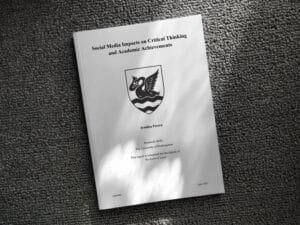
I spent several months writing an entire book on this topic, which was warmly welcomed by the academic community. This led to a significant milestone: I was recognised by The Royal Society, who were beginning their own research into the online information environment. I was invited to assist and advise researchers in their publication, volunteering my time to help shape the discourse.
However, this collaboration taught me a hard lesson: despite my technical expertise, my academic writing and policy skills needed refinement. I also realised that I could do very little about algorithmic radicalisation from a purely technical role—it required governance.
From Durham to Buckingham
To fund my next step, I moved to Durham in Northern England, working for St John Ambulance and various charities while studying Data Science and AI with Northumbria University. I eventually returned to London with a clear revelation: I needed to study Law. I joined the University of Buckingham to sharpen my academic writing and to find solutions to technological problems through the lens of international governance and legal frameworks.
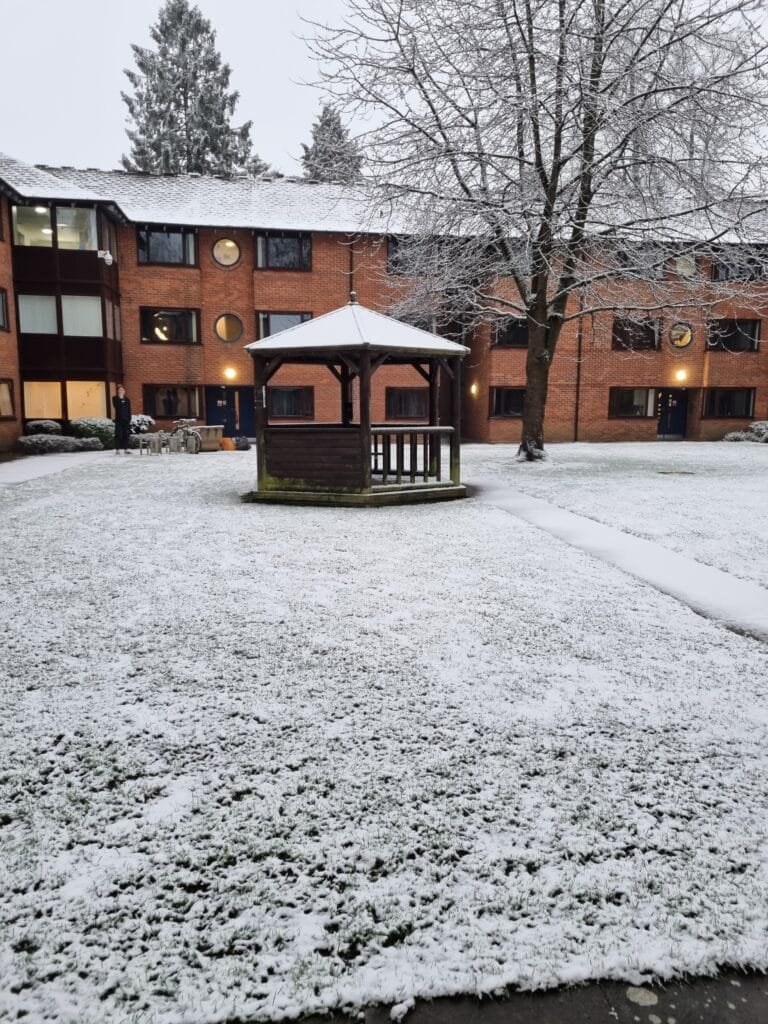
If Essex taught me the incorrect way to be a student, the University of Buckingham taught me the incorrect way to be a human being. As a private university in Buckinghamshire, the law school held the promise of being a place to cultivate my mind and prepare me for the world of policy. Instead, it nearly made me lose all hope in humanity itself.
Stepping into the Light
Initially, things started out well. I was welcomed by established academics and post-graduate students, some of whom had already heard of my work and wanted to meet me before my first week.
For the first time in my academic career, I stepped outside my comfort zone. I was studying a non-quantitative subject. In the past, (at university), I was the quiet student in the back of the room who spoke only through perfect exam scores. At Buckingham, I found my voice. Encouraged by my tutor and lecturers, I began to contribute. I noticed that when professors asked questions, the room would fall silent; I chose to fill that silence. Sometimes, my answers were even met with applause and cheers from my peers, but this visibility came with a price. I had put a target on my back.
The Darker Side of Privilege
However, I soon discovered a much darker reality. Because it was a private university, the campus was filled with individuals from the wealthiest and most insulated backgrounds in the country, as well as rich international students. Buckingham was a concentrated microcosm of wealth and entitlement. I quickly learned that they did not take kindly to competition from an outsider. I learned that for those born into insulated wealth, competence from an outsider isn’t just a challenge—it’s viewed as a threat to the natural order they’ve always known.
I encountered the worst of human nature: I watched as students attempted to take advantage of me, pretending to be friends while constantly insulting me and trying to manipulate me into unjustly enriching them or doing their work for them. The hostility was physical as well; after attending Psychology lectures to refresh my neuroscience knowledge, I was actually attacked by a disordered student exhibiting significant psychological volatility simply because I dared to “show them up” in a space that was supposed to be dedicated to the mind. This happened more than once.
Institutional and Systemic Failure
Buckingham taught me what true mental illness and racism look like in their most entitled forms. I encountered the worst of humanity there. Even when I tried to start a student organisation to help others learn about global issues and make a positive impact, it was systematically sabotaged and dismantled. It was taken down by an insecure racist who couldn’t stand to see a person with dark skin hold a position of power, aided by another deceitful and vengeful student who only wanted to use the society for posturing and personal gain.
The most harrowing part was that my attempts to communicate these issues or prevent the harm were met with antagonism from the institution itself. The environment was a cesspit of insecurity, prejudice and betrayal. This was my first true encounter with institutional and systemic racism. It was here I learned that systemic racism isn’t just about the actions of one individual; it is the silence and the active antagonism of the structure that protects them. It was a nightmare that is difficult to communicate; it taught me exactly what “real-world monsters” sound and behave like, what true evil looks like, but it also solidified my resolve.
The High Achiever’s Defiance
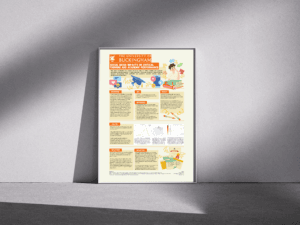
Despite the systemic friction and personal hostility, I refused to let the environment dictate my intellectual output. I channelled that intensity into my studies, earning several record-breaking results. I was later informed by the course directors that I had achieved the highest marks ever recorded for several modules since their inception. This academic performance was recognised through various awards, and I experienced the quiet satisfaction of seeing my work framed and displayed outside the faculty offices as a benchmark for others.
My tenure at Buckingham culminated in being honoured with “The High Achiever Award”—granted for maintaining the highest grade average among the entire cohort, across every discipline. In an environment that felt designed to break me, I walked away with the top prize. It was the definitive proof that excellence is the most potent form of defiance, and it was the final validation I needed before closing that chapter for good.
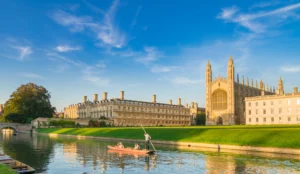
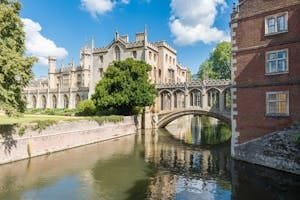
Driven by an iron resolve and a newfound understanding of institutional power, I transitioned from the disillusionment of the past to the academic sanctum I had always envisioned: the University of Cambridge.
The admissions process and the environment itself were a profound breath of fresh air. I was welcomed with open arms into a true “fortress for the learned.” While the reality of modern Cambridge was more about academics in hoodies carrying laptops than robed scholars with scrolls, the intellectual sacredness remained. Standing in those halls, I felt I was finally home where I truly belonged. I realised I had not just arrived, surrounded by people whose hearts and minds I admired; I had earned my place amongst them.
The Southeast Asian Pivot: From Decompression to Immersion
Following a particularly gruelling year, I accepted an invitation to visit Thailand to decompress. I landed with no preconceptions and an open heart, only to find a society that served as the total antithesis to the dreary, toxic norm I had endured in the UK.
Enamoured by the kindness of the locals, the rich culture, and the vibrant environment, I made a life-altering decision that changed the trajectory of my life. I made a definitive choice: I would not return to the UK. I chose to leave it behind, established a permanent base in Thailand, and moved into my own condo. Cambridge graciously enabled me to continue my studies in International Relations remotely—a gesture of trust I was determined to honour with exemplary work.


Empirical Research: The Regional Grand Tour
Living in Thailand provided more than just a home; it provided a laboratory. Since my research focused on international systems, I decided the most effective way to deepen my expertise was through direct experience.
Since I was now living the subject I was studying, I embarked on solo expeditions and immersions across China, South Korea, Japan, Vietnam, Laos, Malaysia, Singapore and more! This wasn’t just travel; it was the acquisition of a perspective that can only be gained through lived experience. By spending significant time in each country and mindfully respecting local cultures and customs, I gained a perspective on global systems that no book or screen could ever provide. I was no longer just studying the world or international law; I was navigating it.


Mentorship and the United Nations Milestone
My academic growth at Cambridge was championed by my personal tutor, Victoria, a veteran with more than15 years of experience as an international lawyer with the United Nations. She granted me the respect and autonomy to synthesise my technical background with policy, allowing me to focus every assignment on the implications of Artificial Intelligence as I want.
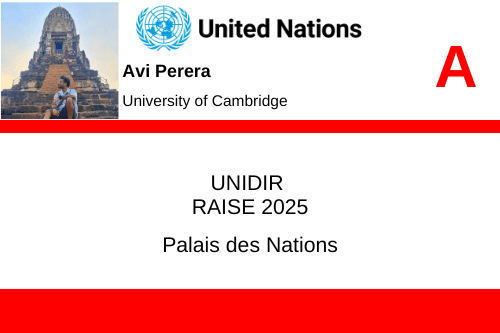
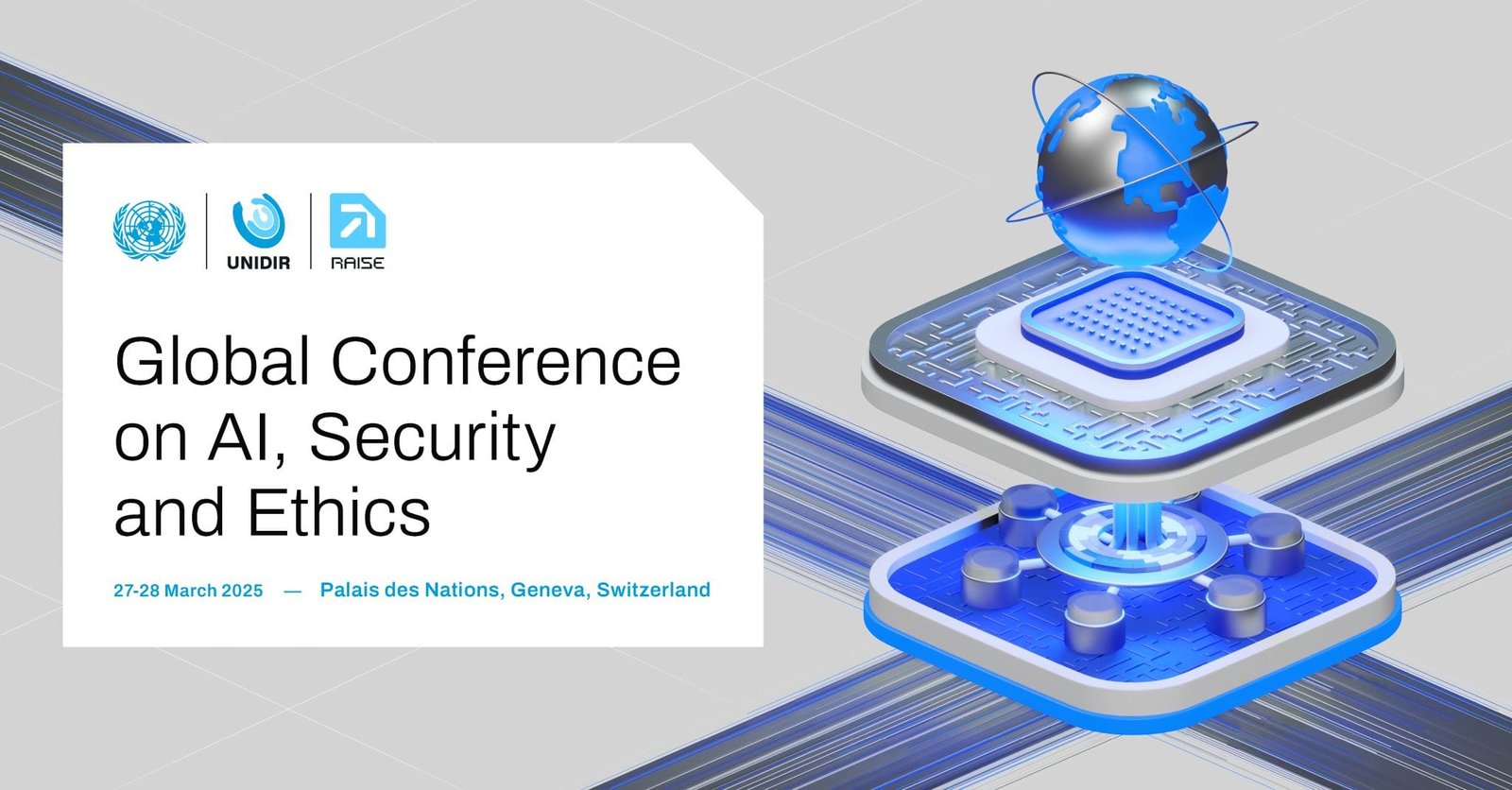
This research led to a definitive breakthrough. After submitting a research abstract with Campaign to Stop Killer Robots, I was invited to collaborate with the United Nations Institute for Disarmament Research (UNIDIR) for the inaugural Global Conference on AI, Security, and Ethics. Presenting the work before a panel of heads of state, military officials, and civil society leaders, who commended the submission for its high quality, reignited a flame within me that had nearly been extinguished.
The Present: Shaping the Military Domain
Today, my research has matured into actionable policy at the international level. I continue my research with Stop Killer Robots and the United Nations, focusing on foreign policy analysis, the societal implications of AI that I first identified years ago, and the ever-increasing number of new challenges AI presents to society.
I have since expanded my reach into disarmament research with UNODA (United Nations Office for Disarmament Affairs) and UNRCPD (United Nations Regional Centre for Peace and Disarmament in Asia and the Pacific), specialising in the critical intersection of Artificial Intelligence and the Military Domain. This website, aviperera.com, serves as the digital home for my journey and this synthesis—a bridge between the rigours of mathematical theory, the complexities of law, and the realities of global governance.


Stay tuned for more adventures and to see where my story goes.
Thank you for reading!





If you find value in this research and would like to support independent analysis, you can contribute here.
Every cup helps fuel more research, field reports, and the stories I share from around the globe.